
Houston air is thick for most of the year. Between the humidity, the pollen count, and the mold spores that thrive in our climate, a lot of homeowners start asking one question once allergy season hits: how does a HEPA filter work, and would one actually help inside my house? It’s a fair question.
Most articles online throw around the number 99.97% and move on, without ever explaining what that number means for a home where the air itself works against you. This guide breaks it down in plain language, covers what a HEPA filter really does, and shows where it fits into a Texas home’s HVAC system.
What Is a HEPA Filter?
HEPA stands for High Efficiency Particulate Air. The term isn’t a marketing phrase. It’s an actual government standard set by the U.S. Department of Energy, and a filter has to pass a specific lab test before it can legally carry the HEPA name.
To meet the DOE definition, a filter must capture at least 99.97% of airborne particles at 0.3 microns in size. That’s the benchmark. For comparison, a human hair is roughly 50 to 70 microns wide, so 0.3 microns is smaller than almost anything the eye could ever see.
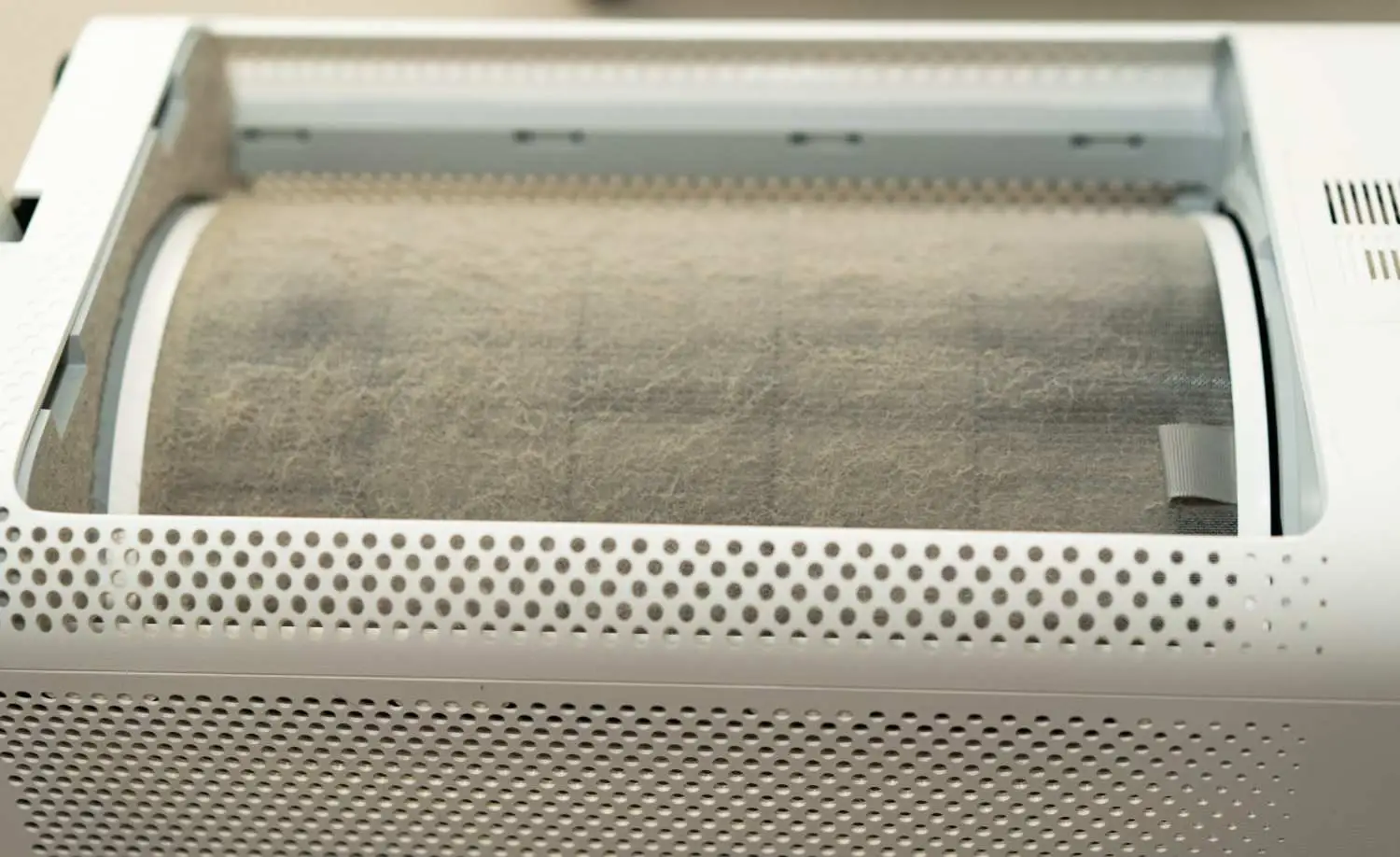
What is a HEPA filter, in practical terms? It’s a dense, pleated mat made of thousands of randomly arranged fibers, usually fiberglass or polypropylene. Air has to squeeze through that tangled maze, and along the way, particles get trapped. Dust, pollen, mold spores, pet dander, and even some bacteria and viruses get caught in the mesh instead of floating back into the room.
What Does “0.3 Microns” and MPPS Actually Mean?
Here’s something most articles skip entirely. Why 0.3 microns? Why not test at 0.1 microns, since that’s smaller and would seem like a tougher test?
The answer comes down to particle physics, and it’s actually the opposite of what you’d expect. Particles larger than 0.3 microns get caught easily because they’re too big and heavy to dodge the fibers. Particles smaller than 0.1 microns also get caught easily, because they move around so erratically (bouncing off air molecules) that they eventually bump into a fiber no matter which way the air flows.
The particles right in the middle, around 0.3 microns, are the hardest to catch. They’re small enough to slip through gaps but not quite small enough to bounce around chaotically. Engineers call this the Most Penetrating Particle Size, or MPPS. That’s why labs test HEPA filters at exactly 0.3 microns. If a filter can catch the size that’s hardest to catch, it can catch basically everything else too. Once you understand MPPS, the whole idea behind how does a HEPA filter work starts to make a lot more sense.
How Does a HEPA Filter Work? (4 Capture Mechanisms)
A HEPA filter isn’t a screen with tiny holes, like a lot of people assume. If it worked that way, it would clog instantly and airflow would drop to nothing. Instead, it relies on four separate physical mechanisms working together, each one better suited to a different particle size.
Impaction (Inertial Impact)
Large, heavy particles, think dust clumps or bigger pollen grains, travel in a straight line because of their own momentum. When the air stream curves around a fiber, these particles don’t curve with it. They just keep flying forward and slam directly into the fiber. This is impaction, and it’s the simplest of the four mechanisms. It handles the bigger stuff before it even gets deep into the filter.
Interception
Mid-sized particles are light enough to follow the curving air stream around a fiber, but not always by a wide enough margin. If a particle’s path brushes close enough to a fiber, it sticks on contact, even though it never collided head-on. Picture a car staying in its lane but clipping the curb on a tight turn. That’s interception.
Diffusion (Brownian Motion)
Very small particles, especially anything under 0.1 microns, don’t travel in a predictable path at all. Gas molecules in the air are constantly bumping into them from every direction, knocking them around in a random zigzag pattern known as Brownian motion. That erratic movement means these tiny particles are almost guaranteed to wander into a fiber sooner or later, even if the general air flow would have carried them past it.
Electrostatic Attraction
This is the mechanism most competitor articles leave out entirely, and it’s a real gap in how the topic usually gets explained. The fibers inside a HEPA filter carry a faint electrostatic charge. Charged particles, and a surprising number of airborne particles do carry some charge, get pulled out of the air stream and drawn straight to the fiber, similar to how a static-charged balloon pulls in small bits of paper. It’s a quieter mechanism than the other three, but it adds meaningful capture power, especially for ultrafine particles and some smoke particles.
Put together, these four HEPA filter mechanisms (diffusion, interception, impaction), plus electrostatic attraction, is really the full answer to how does a HEPA filter work. No single mechanism does all the work. They cover different particle sizes so nothing slips through untouched.
HEPA vs MERV Rating: What’s the Difference?
MERV stands for Minimum Efficiency Reporting Value, and it’s the scale HVAC professionals use to rate standard air filters, the kind you buy at any hardware store for your furnace or AC return vent.
The MERV scale runs from 1 to 16 for typical residential and commercial filters. A basic MERV 8 filter, which is common in a lot of homes, only catches larger particles like dust and lint. A MERV 13 filter does noticeably better, capturing much of the pollen and mold spore range.
HEPA filter efficiency sits above the standard MERV scale entirely. True HEPA performance is roughly equivalent to MERV 17 or higher, a level almost no standard home HVAC system installation is built to handle, because the filter media is so dense it restricts airflow more than a typical blower motor can push through. This is exactly why HEPA units are usually installed as standalone or supplemental systems rather than swapped directly into an existing filter slot.
True HEPA vs HEPA-Type Filters: Cutting Through the Marketing Confusion
This is where a lot of homeowners get misled, and honestly, it’s on purpose. Retailers slap labels like “HEPA-type,” “HEPA-like,” or “99% HEPA” on products that don’t actually meet the DOE standard. These filters might catch a decent amount of dust, but they are not tested or certified to the 99.97% at 0.3 micron benchmark.
True HEPA vs HEPA-type filter comparisons come down to one thing: certification. A true HEPA filter has been independently tested and can prove its efficiency number. A HEPA-type filter is a marketing term with no enforced standard behind it at all. If a product doesn’t say “True HEPA” or reference the actual DOE benchmark, assume it’s a lesser filter until proven otherwise.
What Can a HEPA Filter Remove?
|
Contaminant |
Typical Size (Microns) | Captured by True HEPA? |
| Dust and fine dust particles | 1 to 100+ |
Yes |
|
Pollen |
10 to 100 | Yes |
| Pet dander | 0.5 to 100 |
Yes |
|
Mold spores |
2 to 10 | Yes |
| Bacteria | 0.3 to 60 |
Yes |
|
Most viruses |
0.02 to 0.3 | Yes (often at even higher efficiency) |
| Smoke particles | 0.01 to 1 |
Yes, though odor needs an activated carbon filter too |
|
Volatile organic compounds (VOCs) |
Gaseous, not particulate |
No, HEPA does not remove gases or odors |
That last row matters. A HEPA filter is a mechanical filter built for particles, not gases. If odor control or VOC reduction (like from cooking, paint fumes, or formaldehyde off-gassing) is the goal, you need an activated carbon filter working alongside the HEPA media, not instead of it.
Benefits of HEPA Filtration for Your Home
- Real relief for allergy and asthma triggers, since HEPA-grade filtration removes the dust mites, pollen, and mold spores that set off symptoms
- Noticeably better indoor air quality, especially in homes with pets, carpet, or older ductwork that tends to circulate dust
- Less dust settling on furniture and surfaces between cleanings
- Support for respiratory health during pollen season and humid, mold-friendly months
- A cleaner, more sealed filtration system when paired with tight ductwork and good airflow rate
Where Are HEPA Filters Used?
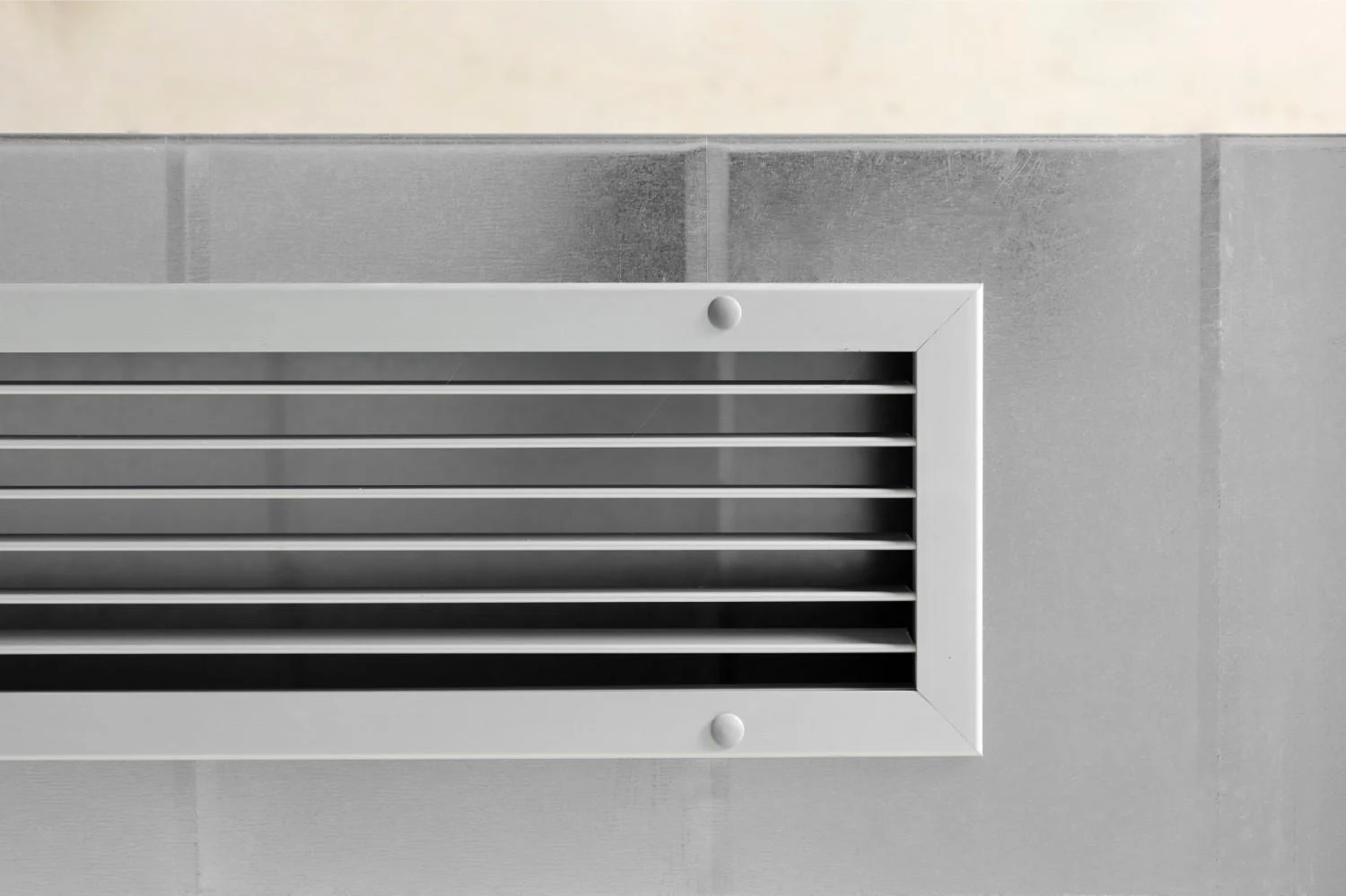
HEPA filtration shows up in more places than people realize. Hospitals rely on it for infection control. Cleanroom technology in manufacturing depends on it to keep air free of contaminants. Portable air cleaners and many vacuum cleaners use HEPA media to trap what they pick up instead of blowing it back into the room.
For homes, HEPA filtration is most often added as a dedicated whole-home air purification unit that works alongside the existing HVAC system, rather than replacing the standard filter. If you’re comparing your options, the team at 75 Degree AC can walk through whether a standalone HEPA unit or a different air purifier setup makes more sense for your ductwork and household needs.
How Long Do HEPA Filters Last & When to Replace Them?
Most residential HEPA filters last somewhere between 6 and 12 months, though the real answer depends on usage. A home with pets, a smoker, or heavy dust exposure will need replacements closer to the 6 month mark. A lighter-use household might stretch a filter closer to a year.
Airflow is the tell. If you notice reduced airflow rate from the unit, a musty smell, or dust building up faster than usual, the filter is likely overdue. Unlike a standard furnace filter, a true HEPA filter can’t just be rinsed and reused. Once the media is loaded with trapped particles, it needs to be swapped out.
Can You Add a HEPA Filter to Your Home HVAC System?
Technically, yes. Practically, it’s more complicated than most people expect, and this is the part competitor articles almost never mention.
Standard residential HVAC systems, including most systems in Texas homes, are built around a specific static pressure range. HEPA filter media is dense enough that forcing your existing blower motor to push air through it usually restricts airflow so much that the system overheats, short cycles, or wears out early. This is the retrofit challenge. A duct system sized for a MERV 8 or MERV 11 filter generally cannot handle true HEPA media without modification.
That doesn’t mean HEPA filtration is off the table for your home. It usually means the better route is a dedicated HEPA air purification unit installed alongside your HVAC system, one with its own fan built to handle the denser filter media, rather than trying to force HEPA filters into your existing return vent. Getting this wrong can mean a bigger repair bill down the road, so it’s worth having someone look at your specific duct layout and static pressure before buying any HEPA unit off the shelf.
Conclusion: Cleaner Air Starts With Understanding How It Works
So, how does a HEPA filter work? It comes down to four mechanisms, impaction, interception, diffusion, and electrostatic attraction, working together to catch particles across a huge range of sizes, all verified against a 99.97% capture rate at the hardest-to-catch particle size there is. That’s not marketing. That’s physics, tested and certified.
For a Houston home dealing with pollen, humidity, and mold spores most of the year, that’s the real first step toward fixing indoor air quality instead of just masking it. If you’re ready to reach out whether HEPA filtration fits your home’s HVAC setup, or if a different air purification solution makes more sense for your ductwork, 75 Degree AC can walk your home through the options and help you land on a system that actually works with what you already have.
FAQs
Do HEPA filters really work?
Yes. True HEPA filters are independently tested to capture at least 99.97% of airborne particles at 0.3 microns, which is the hardest particle size to catch. That certification is backed by lab testing, not just a marketing claim.
Is a HEPA filter better than a regular filter?
For particle capture, yes, by a wide margin. A standard MERV 8 furnace filter mostly catches larger dust and lint. A HEPA filter reaches a level closer to MERV 17, capturing far smaller particles like mold spores, bacteria, and many viruses.
Can HEPA filters remove odors?
No, not on their own. HEPA filters are built to trap solid and liquid particles, not gases. Odor and VOC removal requires an activated carbon filter working alongside the HEPA media.
Do HEPA filters help with allergies?
Yes. By removing pollen, dust mites, mold spores, and pet dander from circulating air, HEPA filtration reduces exposure to some of the most common asthma triggers and allergens in a home.
Are HEPA filters expensive to maintain?
They cost more upfront than standard furnace filters, and replacements typically run higher too. Most homeowners replace them every 6 to 12 months. The cost is usually offset by fewer allergy flare-ups and better overall indoor air quality.