An electric furnace uses heating elements to warm air, then a blower motor sends that air through your ducts. If you are learning how to install electric furnace equipment, the job involves much more than placing the cabinet and turning it on. Sizing, electrical load, ductwork, airflow, thermostat controls, clearances, and final testing all affect safe operation. For the broader furnace process, see our guide to how to install a furnace.
For most homes, electric furnace installation should be handled by trained HVAC and electrical professionals. The exact wiring, heat-kit setup, breaker size, and controls depend on the unit. This guide explains the full process, what each stage does, common mistakes, costs, and when professional help is needed.
What You Need to Know Before Installing an Electric Furnace
How an Electric Furnace Heats Your Home
An electric furnace does not burn gas to make heat. Instead, electricity passes through heating elements, also called heat strips. These elements become hot as electrical current flows through them.
The blower motor returns air across the heated elements. The warmed air then enters the supply plenum and travels through the supply ducts. It leaves through registers throughout the home.
The thermostat starts the heating cycle when the indoor temperature falls below its set point. The control board manages the heating sequence, blower operation, and safety controls.
The main parts include:
- Electric furnace cabinet
- Heating elements or heat strips
- Blower motor
- Control board
- Thermostat
- Supply plenum
- Return plenum
- Air filter
- Supply ducts
- Return ducts
Good airflow matters because the blower must move enough air across the heating elements. A dirty filter or restricted duct system can reduce airflow and affect temperature rise.
Electric Furnace vs. Gas Furnace
Both systems use a blower and ductwork to move heated air. The main difference is the heat source.
A gas furnace burns natural gas and needs combustion controls and a venting system. An electric furnace uses heating elements and does not produce combustion gases.
Electric systems can be useful where natural gas is not available. They also have no gas burner, gas line, or flue for combustion exhaust.
The electrical demand can be much higher than that of a gas furnace because electric resistance heat uses electricity directly for heating. That means the electrical panel, branch circuit, circuit breaker, wiring, and service capacity must be checked before installation.
If you are comparing the two systems, our gas furnace installation guide explains the gas side of furnace installation in more detail.
When Should You Install or Replace an Electric Furnace?
An electric furnace may need replacement when repair costs keep rising or the unit no longer heats the home well.
Common warning signs include:
- Frequent repairs
- Poor heating performance
- Uneven room temperatures
- Major component failure
- Electrical problems
- An aging furnace
- Rising energy use
- Repeated blower or control problems
A repair can make sense when the furnace is in good shape and the failed part is minor. Replacement may make more sense when several major parts are failing or the equipment no longer matches the home’s heating needs.
A proper electric furnace replacement should start with an assessment. Do not assume the new unit should be the same size as the old one.
How to Choose the Right Electric Furnace for Your Home

Determine the Heating Load
Furnace sizing should not be based only on home square footage.
A proper Manual J load calculation estimates how much heat the home loses during cold weather. The calculation considers the home’s size, insulation, windows, air leakage, ceiling height, building layout, orientation, and local climate.
The result is a heating load. That number helps the installer select equipment with the right BTU/h output.
An oversized furnace can heat the home quickly but may cycle more often than needed. An undersized furnace may struggle to maintain the desired temperature during colder weather.
Your home’s building envelope matters too. Better insulation and tighter windows can reduce heat loss. Older homes with more air leakage may need a different heating capacity than a newer home of the same size.
Choose the Correct Heating Capacity
Electric furnace capacity is often shown in kW, while heating output may also be discussed in BTU/h.
The correct choice depends on the heating load and the equipment’s rated performance.
Heat-strip capacity also matters. A larger heat kit can require more electrical capacity. Some systems use staged heating so that all heating elements do not operate at once.
The installer should check:
- Heating load
- Furnace capacity
- kW rating
- Heat-strip capacity
- Blower capacity
- Equipment specifications
- Heating stages
- Required airflow
Do not choose a furnace only because it has a larger capacity. More capacity does not automatically mean better comfort.
Check Electrical Service Capacity
This is one of the most important steps before an electric furnace is selected.
The installer must check the electrical panel and determine whether the home’s service can support the expected load. The furnace may require a dedicated branch circuit and specific overcurrent protection.
The nameplate and manufacturer instructions provide key information about voltage and rated current. The required circuit breaker and conductor size must match the equipment requirements and applicable electrical code.
A home with an older electrical panel may need additional work before a new furnace can be installed.
How to Prepare for Electric Furnace Installation
Inspect the Existing Furnace and Ductwork
Start by inspecting the current equipment and the air distribution system.
The installer should check the:
- Existing furnace
- Supply duct
- Return duct
- Supply plenum
- Return plenum
- Filter location
- Duct sizing
- Duct leakage
- Equipment access
A new furnace cannot correct major duct problems by itself.
A restricted return duct can reduce airflow. Leaky supply ducts can waste heated air before it reaches the rooms. A poorly sized transition can also create unwanted pressure and noise.
If the old furnace is being replaced, the installer should inspect the surrounding area before bringing in the new equipment.
Check the Installation Location
The furnace needs a stable and suitable location.
The installer checks:
- Service access
- Manufacturer clearances
- Equipment orientation
- Level mounting
- Cabinet stability
- Access panels
- Clearance from materials
- Drainage where applicable
The exact clearance must come from the manufacturer’s installation manual. Do not use a generic clearance number for every furnace.
Drainage may also matter when the furnace is part of a system with an evaporator coil or heat pump. The complete equipment setup must be checked rather than treating the furnace as an isolated box.
Plan Electrical and Control Connections
Electric furnaces have both high-voltage and low-voltage parts.
Line-voltage power supplies the heating equipment and blower. Low-voltage controls allow the thermostat and control board to communicate.
The installation may include:
- Electrical disconnect
- Circuit protection
- Grounding
- Low-voltage thermostat wiring
- Control board
- 24-volt control circuit
- Heat-stage controls
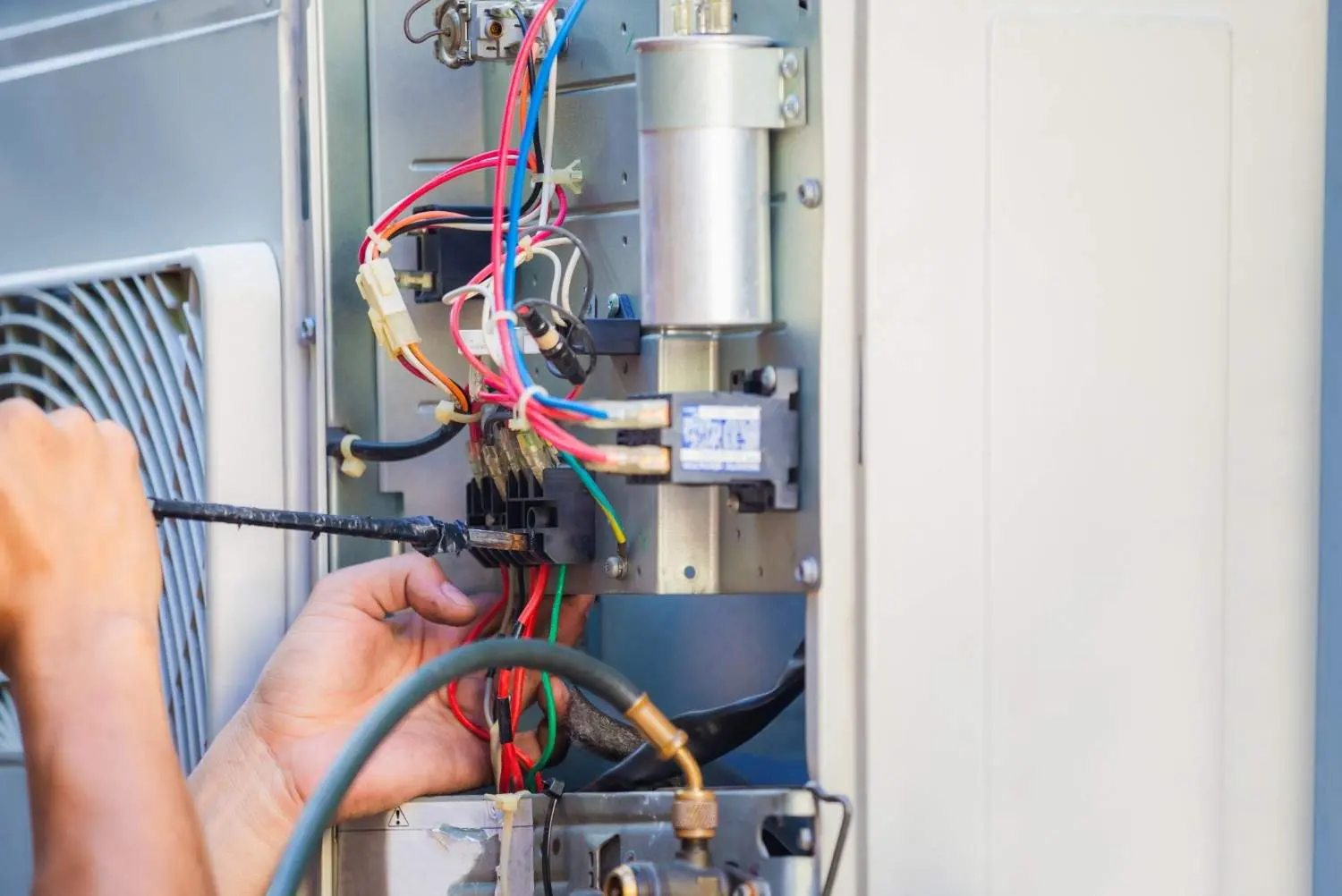
Electric furnace wiring varies by model, voltage, heat-kit configuration, and manufacturer. The wiring diagram supplied with the unit must control the installation.
How to Install an Electric Furnace Step by Step
The actual installation sequence can vary by equipment and home. A professional installation generally follows this order.
1. Shut Down and Verify the Existing Electrical Supply
Power must be shut off before electrical work begins.
The installer identifies the correct circuit breaker and disconnects. Some systems may have more than one power source.
Power should be verified with proper test equipment before wiring is touched. Turning off a thermostat or local switch does not prove that the equipment is electrically safe.
Qualified workers also follow proper lockout and tagout practices when needed.
2. Remove the Existing Furnace
For a replacement job, the old furnace is disconnected and removed.
The installer separates the existing electrical and control connections. Duct transitions are then disconnected, and the old cabinet is removed from the installation area.
The site should be inspected after removal. This is a good time to find damaged ductwork, poor supports, old wiring, blocked returns, or other problems that could affect the new system.
3. Position and Secure the New Furnace
The new cabinet is placed according to the manufacturer’s requirements.
The installer checks the furnace orientation, platform, service access, and cabinet stability. The unit must align with the duct system.
A poor position can make future service difficult. It can also create problems when connecting the supply and return plenums.
4. Connect Supply and Return Ductwork
The supply plenum connects the furnace to the supply duct system. The return plenum brings room air back to the furnace.
Transitions may be needed when the new cabinet has different dimensions from the old unit.
Duct joints should be sealed correctly. Mastic and approved foil tape are commonly used for suitable duct connections.
The goal is to limit air leakage and keep the duct system working as designed.
5. Complete Electrical Connections
The electrical portion must follow the furnace nameplate, manufacturer wiring diagram, and applicable electrical code.
The work can include:
- Line-voltage connection
- Circuit protection
- Disconnect
- Grounding
- Heat-kit connections
- Blower power
- Control power
The required wire size and breaker are not universal. They depend on the actual equipment and its rated electrical load.
This is why copying a wiring setup from another furnace can be unsafe.
6. Connect Thermostat and Low-Voltage Controls
The thermostat communicates with the furnace through a low-voltage control circuit.
Common terminals can include R, W or W1, W2, G, and C. Their exact use depends on the equipment and control setup.
W or W1 may call for first-stage heat. W2 can control a second heating stage. G commonly controls the blower, while C provides the common connection for compatible controls.
Heat-pump systems can use additional controls for auxiliary heat and other operating modes.
The installer must follow the wiring diagram for the actual furnace and thermostat rather than assuming every system uses the same terminal layout.
7. Configure the Blower and Heating Stages
The blower must move the correct amount of air for the equipment.
The installer checks blower speed, CFM airflow, heating stages, and heat-strip staging.
If airflow is too low, the system may not perform as expected. If airflow is too high, comfort and temperature control can also suffer.
Static pressure is useful during testing because it shows how much resistance the air faces as it moves through the system.
The filter, ducts, coil when present, blower, and registers all affect airflow.
8. Restore Power and Commission the System
Starting the furnace is not the end of the job.
The installer should run the system through a complete heating cycle and check:
- Thermostat operation
- Heating sequence
- Airflow
- Temperature rise
- Electrical operation
- Safety controls
- Error codes
- Blower operation
- Heat-stage operation
Temperature rise should be compared with the manufacturer’s rated range. Airflow and static pressure should also be checked when needed.
A final inspection helps confirm that the system is not simply running, but running correctly.
How to Wire an Electric Furnace Safely
High-Voltage vs. Low-Voltage Wiring
High-voltage wiring carries the electrical power needed by the furnace and heating elements. Low-voltage wiring handles control signals between the thermostat and furnace controls.
These circuits serve different purposes and must be installed according to the equipment design.
What Determines Breaker and Wire Requirements?
The furnace nameplate and manufacturer instructions are the starting points.
The installer considers:
- Furnace voltage
- Rated amperage
- Heat-kit configuration
- Electrical load
- Circuit protection
- Conductor requirements
- Electrical code
- Existing service capacity
A larger heat kit can change the electrical demand. The same wire or breaker setup should never be assumed for every electric furnace.
How Thermostat Wiring Works
Thermostat wiring sends low-voltage control signals to the furnace.
Common terminals include R, W/W1, W2, G, and C, but not every system uses the same arrangement.
Heat pumps can add more control functions. Auxiliary heat, staging, and defrost operation can also change the control setup.
Why Electric Furnace Wiring Should Be Professionally Installed
An electric furnace can draw substantial current. Incorrect wiring can cause shock, fire, equipment damage, or a failed heating system.
Common risks include:
- Incorrect breaker sizing
- Incorrect conductor sizing
- Poor grounding
- Loose electrical connections
- Incorrect heat-kit wiring
- Equipment damage
- Code violations
- Warranty or inspection problems
If you need to understand how to wire an electric furnace, focus on the system’s electrical requirements rather than copying a generic wiring diagram. High-voltage work should be handled by a qualified professional.
How Much Does It Cost to Install an Electric Furnace?
The cost depends on the furnace, labor, electrical work, ductwork, permits, and job complexity.
Electric Furnace Equipment Cost
Equipment price varies with capacity, heat-kit configuration, blower type, controls, and manufacturer.
A larger system can require more electrical capacity and may also require larger duct connections.
Labor Cost
Labor depends on access and how much work is needed beyond a basic replacement.
A simple changeout is different from a job that needs electrical upgrades, duct changes, or a new platform.
Electrical Upgrades
Electrical work can include:
- New branch circuit
- Circuit breaker
- Wiring
- Disconnect
- Panel upgrades
- Service upgrades when required
These costs should be identified before work starts.
Ductwork Modifications
Old ductwork may not match the new furnace.
Possible work includes a new supply plenum, return transition, duct repair, sealing, or airflow changes.
Permits and Inspection
Permit requirements depend on the location and project. The contractor should confirm the applicable local rules before work begins.
What Makes Electric Furnace Installation More Expensive?
Costs can increase because of:
- Difficult access
- Old ductwork
- Electrical limitations
- Furnace replacement
- New thermostat
- Heat-pump integration
- Structural changes
- Panel upgrades
- Extra labor
For the question “how much does it cost to install an electric furnace,” there is no useful single price for every home. A proper quote should account for the actual equipment and site conditions.
How Long Does Electric Furnace Installation Take?
A simple replacement can often be completed in one workday when the electrical service, ductwork, and installation area are ready.
Standard Replacement
A basic job includes removing the old furnace, preparing the area, setting the new unit, connecting ductwork and controls, and testing the system.
Installation With Electrical Upgrades
New circuits, breakers, wiring, or panel work can extend the project.
The electrical work must be planned around the furnace’s actual load.
Installation With Ductwork Modifications
New plenums, transitions, duct repairs, or airflow changes can also add time.
What Homeowners Should Do Before the Installer Arrives
You can make the job easier by:
- Clearing the furnace area
- Keeping the access path open
- Securing pets
- Providing clear access to the electrical panel
- Moving stored items away from the equipment
- Keeping thermostat information available
The installer can then focus on the equipment instead of moving household items.
Common Electric Furnace Installation Problems and How to Avoid Them
Incorrect Furnace Sizing
A furnace should be selected from the heating load, not a guess based on square footage.
Manual J helps identify the home’s actual heat loss.
An oversized or undersized system can lead to poor comfort, higher energy use, and unwanted cycling.
Undersized Electrical Circuit
An electric furnace needs electrical capacity that matches its rated load.
An undersized circuit, wrong breaker, or incorrect wire gauge can create a serious safety problem.
Poor Duct Connections
Poorly sealed supply or return connections allow air to escape.
Use suitable duct sealing methods, such as mastic or approved foil tape, where appropriate.
Incorrect Airflow
Airflow problems can come from:
- Dirty filters
- Small return ducts
- Restricted supply ducts
- Poor blower setup
- High static pressure
- Blocked registers
The blower and duct system must work together.
Incorrect Thermostat Configuration
A thermostat must match the furnace and control setup.
Incorrect W1, W2, G, or C connections can prevent proper operation. Staging errors can also cause the system to heat in the wrong sequence.
Skipping Final Commissioning
A furnace can turn on and still have a problem.
Final commissioning should verify temperature rise, airflow, electrical operation, safety controls, and the heating sequence.
Electric Furnace Installed as Backup Heat for a Heat Pump
An electric furnace or electric heat kit can work with a heat pump as auxiliary or backup heat.
The heat pump may handle normal heating while electric heat operates when extra heat is needed.
This setup can require careful control of:
- Heat pump operation
- Auxiliary heat
- Heat strips
- Heating stages
- Defrost operation
- Thermostat controls
- Airflow
Heat-strip capacity and staging must match the equipment and electrical system.
This setup is different from installing a stand-alone electric furnace. The installer must consider how both heating sources communicate and operate together.
When to Hire a Professional for Electric Furnace Installation
Professional Installation Is Recommended When
Professional help is important when:
- A new electrical circuit is required
- Panel capacity is uncertain
- The furnace is being replaced
- Ductwork needs major changes
- Heat strips need configuration
- Thermostat controls are changing
- Permits are required
- Existing wiring is unclear
- Final commissioning is needed
The same rule applies when you are planning to install electric furnace equipment in a new part of the home.
Why Professional Installation Matters
Correct installation protects the home and helps the furnace perform as designed.
A professional installation should address:
- Safety
- Correct sizing
- Electrical code
- Airflow
- Equipment performance
- Manufacturer requirements
- Warranty requirements
- Long-term reliability
The goal is not just to make the furnace run. The goal is to make sure it runs safely and delivers the expected heat.
Electric Furnace Installation in Houston
Houston homes can have different heating setups. Some use gas furnaces, while others use electric furnaces or heat pumps with electric backup heat.
Local homes can also have older duct systems, limited electrical capacity, attic equipment, or tight mechanical spaces.
For homeowners who need professional help, furnace installation in Houston can include equipment sizing, electrical planning, ductwork connections, permits, startup, and final testing.
75 Degree AC also handles electric furnace installation and replacement for Houston homes. The service process includes checking the existing system, matching the equipment to the home, and testing the new system after installation.
Final Thoughts
Whether you plan to install electric furnace equipment yourself in part or hand the whole job to a pro, the steps above cover everything that matters: sizing, electrical capacity, ductwork, wiring, and final testing. Skipping any one of them is where most problems start.
Frequently Asked Questions
Can I install an electric furnace myself?
Some basic preparation can be done by a homeowner, but high-voltage electrical work, equipment sizing, controls, and commissioning should be handled by qualified professionals.
What size electric furnace do I need?
The correct size comes from the home’s heating load. A Manual J load calculation is a better starting point than choosing a unit from square footage alone.
Does an electric furnace need its own circuit?
Many electric furnaces require dedicated electrical circuits because their heating elements can draw substantial current. The exact requirements depend on the equipment.
Can you replace a gas furnace with an electric furnace?
Yes, but the change requires more than removing the gas furnace. The electrical service, ductwork, equipment size, controls, and installation requirements must all be checked.
Does an electric furnace need a disconnect?
The electrical installation may require a disconnect based on the equipment and applicable code. The installer should confirm the requirement for the actual location and unit.
What electrical service is required for an electric furnace?
The required service depends on the furnace’s voltage, rated amperage, heat-kit configuration, and other electrical loads in the home. The existing panel and service capacity should be checked before installation.
How long does an electric furnace last?
Service life depends on equipment quality, installation, operating conditions, airflow, electrical condition, and maintenance. A properly installed and maintained system can provide many years of service.