
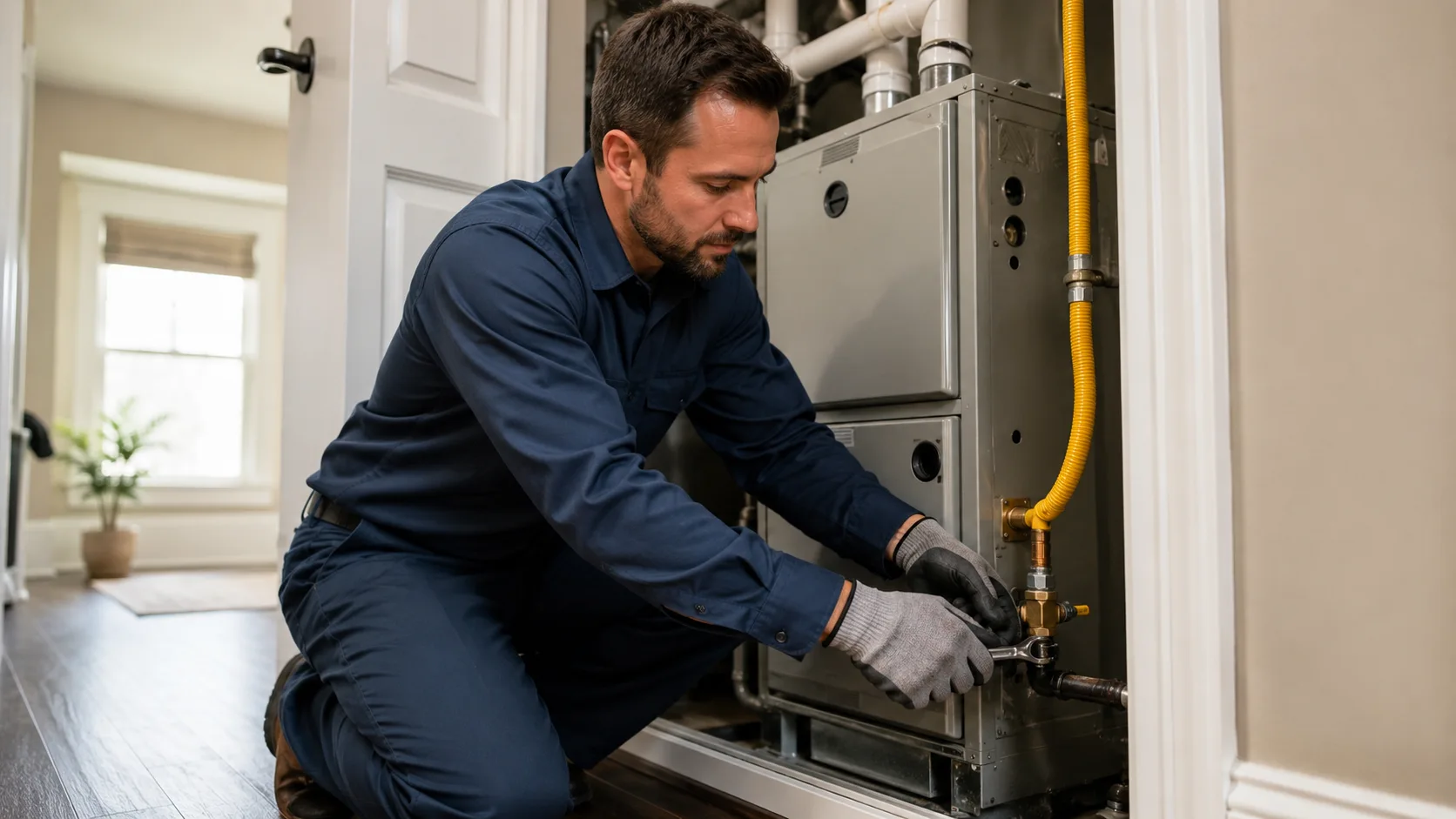
Learning how to install a furnace means understanding eight connected systems: sizing, ductwork, gas or electrical hookup, venting, condensate drainage, controls, safety testing, and final commissioning. A furnace install is not a single task. It is a sequence of steps that must happen in the right order, or the system will run poorly and unsafely.
This guide walks through the full process a licensed technician follows during furnace installation, from the first inspection to the final safety check. You will also learn what parts of the job carry real risk if done wrong.
How a Furnace Works Before Installation
Before you can understand installation, you need to know what you are installing. A furnace is a heating unit that burns fuel or uses electricity to warm air, then pushes that air through your home.
The main parts work together like this:
- Heat exchanger: a metal chamber that heats the air without letting combustion gases mix with it
- Burners: ignite the fuel (gas, oil, or propane) to create heat
- Gas valve: controls fuel flow to the burners
- Ignition system: lights the burners, either with a pilot light or an electronic igniter
- Blower motor: pulls cool air in and pushes warm air out through the ducts
- Control board: the “brain” that manages timing, safety limits, and blower speed
Cool air enters through the return duct, passes over the heat exchanger, and comes out warm through the supply duct. Combustion gases exit separately through a flue or vent pipe. These two air paths never mix in a properly working system. If they do, it usually means the heat exchanger has cracked, which is a safety hazard.
What Should You Check Before Installing a Furnace?
The best installations start with an assessment. Replacing a furnace with the same size unit is not always the right answer.
Determine the Home’s Heating Load
Furnace size should match the home’s actual heat loss.
A professional load calculation considers factors such as:
- Home size
- Insulation
- Window area
- Ceiling height
- Outdoor design temperature
- Building materials
- Air leakage
- Orientation
- Local climate
ACCA Manual J is a widely used residential load calculation standard. It helps determine the heating and cooling load instead of relying on square footage alone. ACCA also connects proper equipment selection with Manual J and duct design with Manual D.
Square footage can give you a rough idea, but it should not decide furnace capacity by itself.
Check the Existing Ductwork
The furnace and duct system must work as one system.
The installer should inspect:
- Supply ducts
- Return ducts
- Supply plenum
- Return plenum
- Filter location
- Duct size
- Air leaks
- Static pressure
- Airflow restrictions
A powerful blower cannot fix a poorly sized return system. Restricted airflow can increase static pressure and reduce system performance.
Check the Fuel and Electrical Supply
For a gas system, the installer checks the gas line, shutoff valve, pipe capacity, and operating pressure.
For an electric system, the installer checks voltage, circuit size, breaker capacity, disconnect requirements, wiring, and grounding.
The new unit must match the home’s available utilities.
Check Venting and Combustion Air
Gas furnaces need a safe path for combustion gases.
The installer must confirm that the vent system matches the furnace design. High-efficiency condensing furnaces use different venting and drainage methods than older non-condensing units.
Combustion air also matters. A furnace cannot operate safely if it lacks the air needed for proper combustion.
Check Furnace Location and Orientation
Furnaces can be installed in different positions.
Common configurations include:
- Upflow
- Downflow
- Horizontal
The cabinet must fit the available space and allow proper service access. The installer also needs to follow the manufacturer’s clearance and installation requirements.
What Type and Size of Furnace Should You Install?
Picking the right furnace type shapes the entire installation of furnace equipment that follows.
Fuel type:
- Gas furnaces run on natural gas and are the most common choice in homes with gas lines already in place
- Electric furnaces skip gas lines entirely and are simpler to install, though they usually cost more to run
- Oil furnaces are common in older homes in the Northeast
- Propane furnaces work well for homes without natural gas access
Efficiency type:
- Standard-efficiency (non-condensing) furnaces vent hot exhaust through a single flue and are less complex to install
- High-efficiency (condensing) furnaces capture extra heat from exhaust gases, need a second heat exchanger, and produce condensate that must drain somewhere
AFUE rating. This number tells you how much fuel becomes usable heat. An 80% AFUE furnace turns 80 cents of every fuel dollar into heat. A 96% AFUE furnace turns 96 cents into heat. Higher AFUE means lower monthly bills but a higher upfront cost.
Configuration. Furnaces come in upflow, downflow, and horizontal versions. The one you need depends on whether your ductwork sits above, below, or beside the unit.
Sizing matters more than most homeowners realize. An oversized furnace short cycles, meaning it turns on and off too often. This wastes energy and wears out parts faster. An undersized furnace runs constantly and still can’t keep the house warm on cold days.
Can You Install a Furnace Yourself?
You may find DIY furnace projects online, but a complete furnace install involves more than basic mechanical work.
A gas system can involve fuel piping, combustion, venting, electrical controls, and carbon monoxide risks. An electric system can involve high-voltage circuits and electrical shock hazards.
What Makes Furnace Installation Risky?
The main risks include:
- Gas leaks
- Fire
- Electrical shock
- Carbon monoxide exposure
- Improper combustion
- Unsafe venting
- Damaged heat exchangers
- Failed safety controls
Gas and electrical work should follow local codes and manufacturer instructions.
Do You Need a Permit?
Permit and licensing rules vary by state, county, city, and project type.
Some areas require permits and inspections for furnace replacement. Others have different rules for like-for-like replacements.
Do not assume that a permit is either always required or never required. Check the local authority having jurisdiction before starting work.
What About the Warranty?
Manufacturer warranties can have registration, installation, and coverage requirements. The exact terms depend on the manufacturer and model.
Keep the model number, serial number, installation paperwork, and warranty documents after the job.
For most homeowners, professional installation is the safer choice because the technician can size, connect, test, and commission the complete system.
What Tools and Equipment Are Used for Furnace Installation?

A professional furnace install uses tools most homeowners don’t own and tools that verify the job was done right.
- Basic tools: wrenches, screwdrivers, tin snips, a level, and a tape measure for cutting ductwork and securing the unit.
- Gas pressure gauge and manometer: measure gas pressure at the valve and static pressure inside the ductwork. Both numbers need to fall inside a specific range.
- Combustion analyzer: checks the exhaust gases coming from the burners to confirm clean, complete combustion.
- Voltage tester: confirms electrical connections are safe before the technician touches any wiring.
- Leak detector: finds gas leaks at every joint and connection before the system is turned on for the first time.
These tools exist because a furnace that looks installed correctly can still be dangerous or inefficient if the numbers underneath aren’t right.
How to Install a Furnace Step by Step
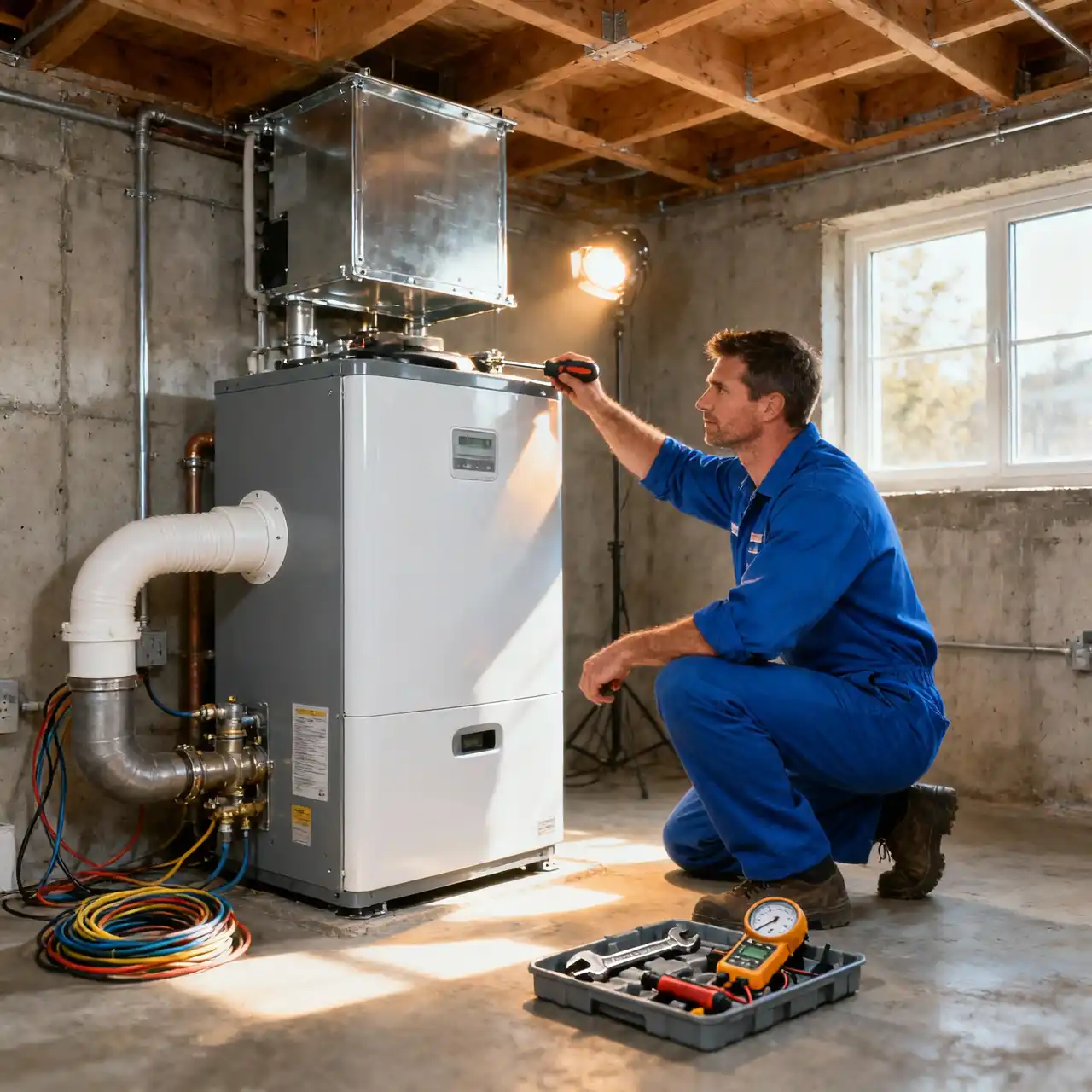
Here is the full process a technician follows when learning how to install a furnace the right way, whether it’s a new furnace installation or a straight replacement.
1. Prepare the Installation Site
The technician protects the work area and clears access to the equipment.
The surrounding area is checked for water damage, unsafe wiring, damaged ducts, or other problems.
2. Shut Off Power and Fuel Sources
Power is disconnected before equipment is removed.
For gas equipment, the fuel supply is shut off using the appropriate shutoff procedure.
These steps should be performed by someone qualified to work on the system.
3. Remove the Existing Furnace
The old furnace is disconnected and removed.
This is also a useful inspection point. Problems hidden behind the old unit may become visible once it is out.
The installer checks the plenum, duct connections, floor or platform, wiring, gas connection, and venting.
4. Prepare Ductwork, Gas, Electrical, and Venting Connections
The new unit may not match the old cabinet perfectly.
The supply and return plenums may need new transitions. Duct connections must be sealed correctly.
Gas piping, electrical connections, and venting are also prepared according to the new furnace requirements.
5. Position and Secure the New Furnace
The cabinet is placed in the correct orientation.
The unit must remain stable and have the required service clearance.
The installer follows the manufacturer’s instructions for positioning and support.
6. Connect Supply and Return Air
The furnace connects to the home’s supply and return ductwork.
Poor connections can leak air or create unwanted pressure changes.
The goal is not simply to make the ducts fit. The duct system must support the airflow required by the furnace.
7. Connect the Gas or Electrical System
Gas furnaces require a proper fuel connection, shutoff, pressure check, and leak test.
Electric furnaces require the correct circuit, breaker, wiring, disconnect, and grounding.
These connections should meet the applicable code and equipment instructions.
8. Install Venting and Combustion Air
The vent system must match the furnace type.
A condensing furnace may use approved plastic vent materials and a separate combustion-air intake. A non-condensing furnace may use a different flue system.
The vent must terminate in an approved location and maintain required clearances.
9. Connect Condensate Drainage
Condensing furnaces create water during normal operation.
The installer connects the condensate drain and trap as required.
Some installations also need a condensate pump.
Poor drainage can cause water damage, furnace shutdowns, or repeated service calls.
10. Connect the Thermostat and Controls
Low-voltage wiring connects the thermostat to the furnace control system.
The installer checks the control board, heating call, blower operation, and thermostat setup.
If the furnace works with an existing air conditioner, the controls must support both heating and cooling modes.
11. Start Up and Commission the Furnace
Starting the furnace is not the final step.
The technician should verify gas pressure, temperature rise, airflow, static pressure, combustion, safety controls, venting, and thermostat operation.
This final stage separates a complete installation from a simple equipment swap.
How Do You Test and Commission a New Furnace?
This step separates a finished furnace install from a correct one. Many installers skip parts of this process, and it shows up later as higher bills or an early breakdown.
Check gas pressure and combustion. The technician measures inlet and manifold gas pressure and checks the flame with a combustion analyzer.
Measure temperature rise. This compares the air temperature going into the furnace with the air temperature coming out. Every furnace has a manufacturer-specified range, and staying inside it protects the heat exchanger.
Test airflow and static pressure. The technician measures CFM (cubic feet per minute) airflow and total static pressure to confirm the blower is working within its design limits.
Check safety controls. This includes the flame sensor, limit switch, and pressure switch, which shut the furnace down if something goes wrong.
Verify venting and carbon monoxide safety. The technician confirms the vent pipe has no blockages and tests for carbon monoxide near the unit and throughout the home.
Test the complete heating cycle. The thermostat calls for heat, and the technician watches the full cycle from ignition to shutdown to confirm everything responds correctly.
How Do You Know a Furnace Was Installed Correctly?
Signs of a proper installation: correct furnace size for your home, sealed duct connections, steady airflow, temperature rise inside the manufacturer’s range, safe combustion, and a thermostat that responds normally.
Common installation problems happen when steps get skipped. Here is how they connect to real consequences:
- An oversized furnace leads to short cycling, which causes uneven heat and faster wear
- A restricted return duct raises static pressure, which reduces airflow and strains the blower motor
- Poor duct sealing lets heated air escape before it reaches your rooms
- Improper venting raises the risk of combustion gases or carbon monoxide entering your home
None of these problems are obvious right away. They show up over weeks or months as higher bills, uneven temperatures, or a furnace that needs repairs sooner than it should.
How Does Furnace Installation Affect Your Air Conditioning System?
If you have central air conditioning, your furnace and AC share more than people expect. The blower motor inside the furnace moves air for both heating and cooling. The evaporator coil for your AC often sits directly on top of the furnace’s supply plenum.
When you replace only the furnace, the new blower needs to work correctly with your existing AC coil and ductwork. A mismatch here can reduce your air conditioner’s performance even though nothing about the AC itself changed. This is one reason a full system evaluation matters, not just a furnace swap.
How Long Does Furnace Installation Take?
A straightforward replacement, using the same furnace type and existing ductwork, typically takes 4 to 8 hours.
Jobs that take longer usually involve one or more of these:
- Ductwork modifications or repairs
- Gas line changes or upsizing
- Electrical panel upgrades
- Switching from standard to high-efficiency venting
- Difficult access, like tight attics or crawl spaces
- Local permit and inspection scheduling
New construction or a full system replacement, including ducts, can take one to two full days.
How Much Does Furnace Installation Cost?

Furnace installation cost varies across the country based on furnace type, efficiency, and labor rates in your area. Here are typical national ranges:
| Furnace Type | Installed Cost Range |
| Standard gas furnace | $2,500 – $6,000 |
| High-efficiency gas furnace | $4,500 – $10,000 |
| Electric furnace | $2,000 – $5,500 |
| Propane (LP) furnace | $3,000 – $8,000 |
| Oil furnace | $4,000 – $9,000 |
Labor typically runs $75 to $150 per hour, though many companies quote a flat rate for the full install. Permits usually add $50 to $500 depending on your city.
What pushes costs higher: ductwork replacement, electrical panel upgrades, difficult access, switching furnace types, and any gas line work beyond a simple connection. What keeps costs lower: a same-type replacement using your existing ducts, gas line, and venting.
For efficiency and cost guidance backed by federal data, the U.S. Department of Energy and ENERGY STAR both publish helpful reference guides on furnace efficiency standards.
Common Furnace Installation Mistakes to Avoid
- Skipping the load calculation and guessing on furnace size
- Reusing ductwork that’s too small for the new unit’s airflow needs
- Ignoring gas pressure settings after the connection is made
- Installing high-efficiency venting incorrectly, since it uses different materials than standard venting
- Forgetting to test static pressure and temperature rise before calling the job done
- Leaving the condensate line unsealed or unsupported, which leads to leaks
Every one of these mistakes is preventable with proper commissioning, which is why that step matters so much.
What Should You Do After a New Furnace Is Installed?
Review the system with your technician. Make sure you understand the thermostat, filter location, and shutoff switches for both power and gas.
Register the warranty. Most manufacturers require registration within 60 to 90 days to get the full warranty term. Keep your model and serial numbers on file.
Understand your filter. Filters are usually rated by MERV number. Check your furnace’s manual for the recommended MERV range and replace the filter every 1 to 3 months.
Schedule routine maintenance. An annual tune-up catches small issues, like a dirty flame sensor or a loose electrical connection, before they turn into bigger repairs.
Keep your records. Save your installation paperwork, permit, and warranty documents together. You’ll need them if you ever sell the home or file a warranty claim.
How to Choose a Furnace Installer
Not every installer follows the same standard for heating furnace installation. Here’s what to look for before you hire one.
- Credentials to check: a valid state contractor license, liability insurance, and recognized industry certification for technicians. You can usually verify a license number through your state’s licensing board website.
- Questions to ask: Will you run a load calculation? What furnace size and AFUE rating do you recommend, and why? Will you test static pressure and temperature rise before finishing the job? Is a permit included in your quote?
- What a complete installation includes: proper sizing, sealed duct connections, correct venting for your furnace type, full commissioning with real measurements, and a walkthrough of the finished system.
- What the installer should test before leaving: gas pressure, temperature rise, static pressure, safety controls, and carbon monoxide levels. If a company skips these steps, ask why.
If you’re in the Houston area and want a team that runs every one of these checks on every job, 75 Degree AC offers full-service furnace installation services in Houston, with licensed technicians who handle sizing, permits, and commissioning from start to finish. Call (713) 598-2737 or contact us online to schedule a free estimate.
Furnace Installation FAQs
Can I replace a furnace without replacing the ductwork?
Often yes, if your existing ducts are properly sized and sealed. If they’re too small or leaky, replacing only the furnace won’t fix your airflow problems.
Does a new furnace need a new thermostat?
Not always. Older thermostats sometimes lack the wiring or features needed for a new high-efficiency furnace, so it’s worth checking compatibility.
Does a high-efficiency furnace require different venting?
Yes. High-efficiency furnaces use PVC venting because their exhaust is cooler and slightly acidic, while standard furnaces use metal flue pipes.
What is furnace commissioning?
It’s the final testing stage where a technician measures gas pressure, airflow, static pressure, and temperature rise to confirm the system runs within manufacturer specifications.
Why do HVAC technicians measure static pressure?
Static pressure shows how hard the blower motor has to work to push air through your ducts. High static pressure means restricted airflow, which strains the system and raises energy bills.

