
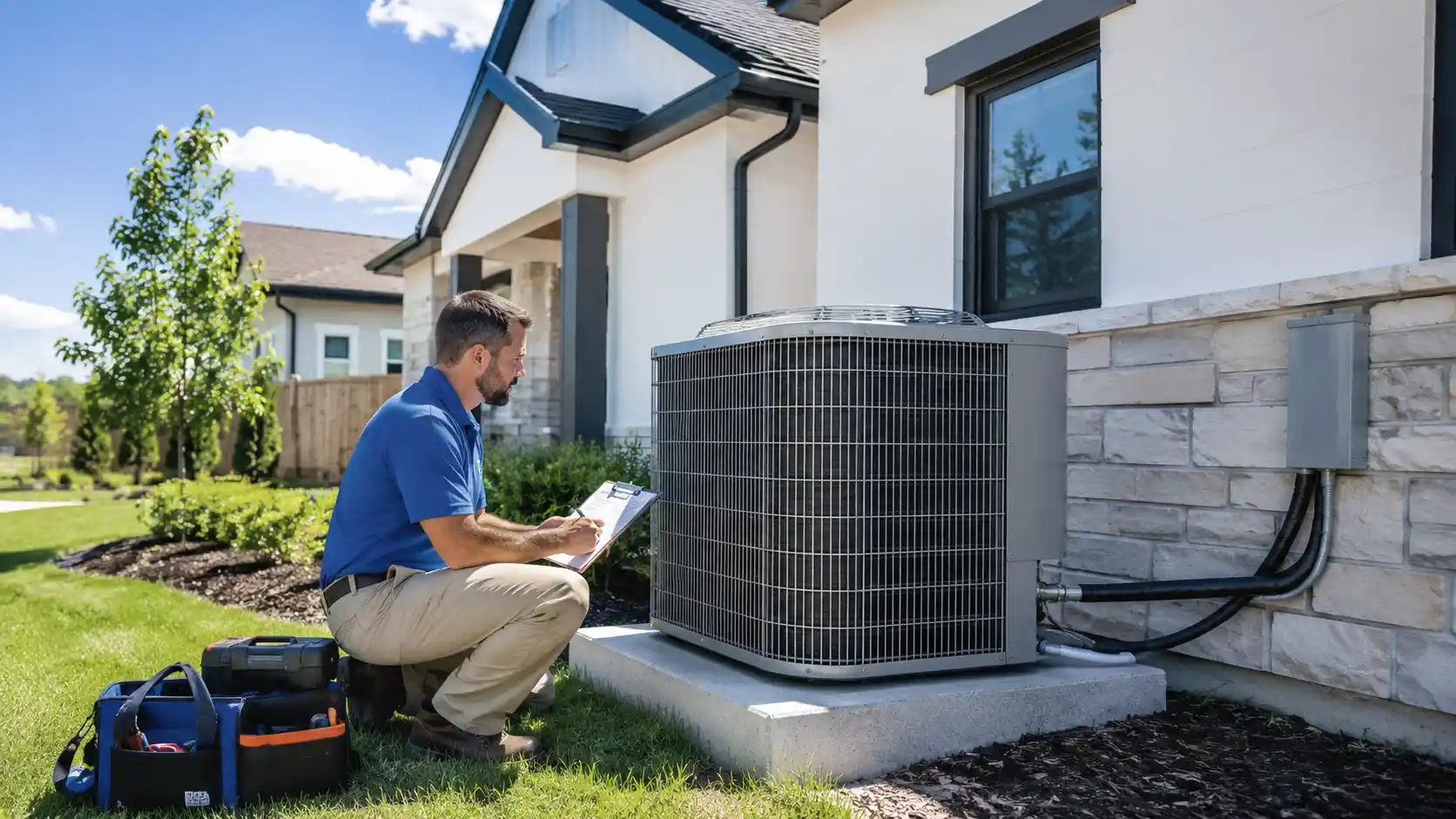
The right size of your air conditioner plays a big role in its performance and lifespan as a brand new unit or replacement for an existing AC unit. Do you think: what size air conditioner do I need? Then think beyond just size.
However AC unit sizing may not be as straightforward since it is not solely dependent on the space. There are various factors to take into account including the insulation amount of your house and the AC tonnage of the whole building Window type in your house (are they single or double-paned, shaded?) Ceiling area in your house How hot or cold is your region?
Why Choosing the Right AC Size Matters
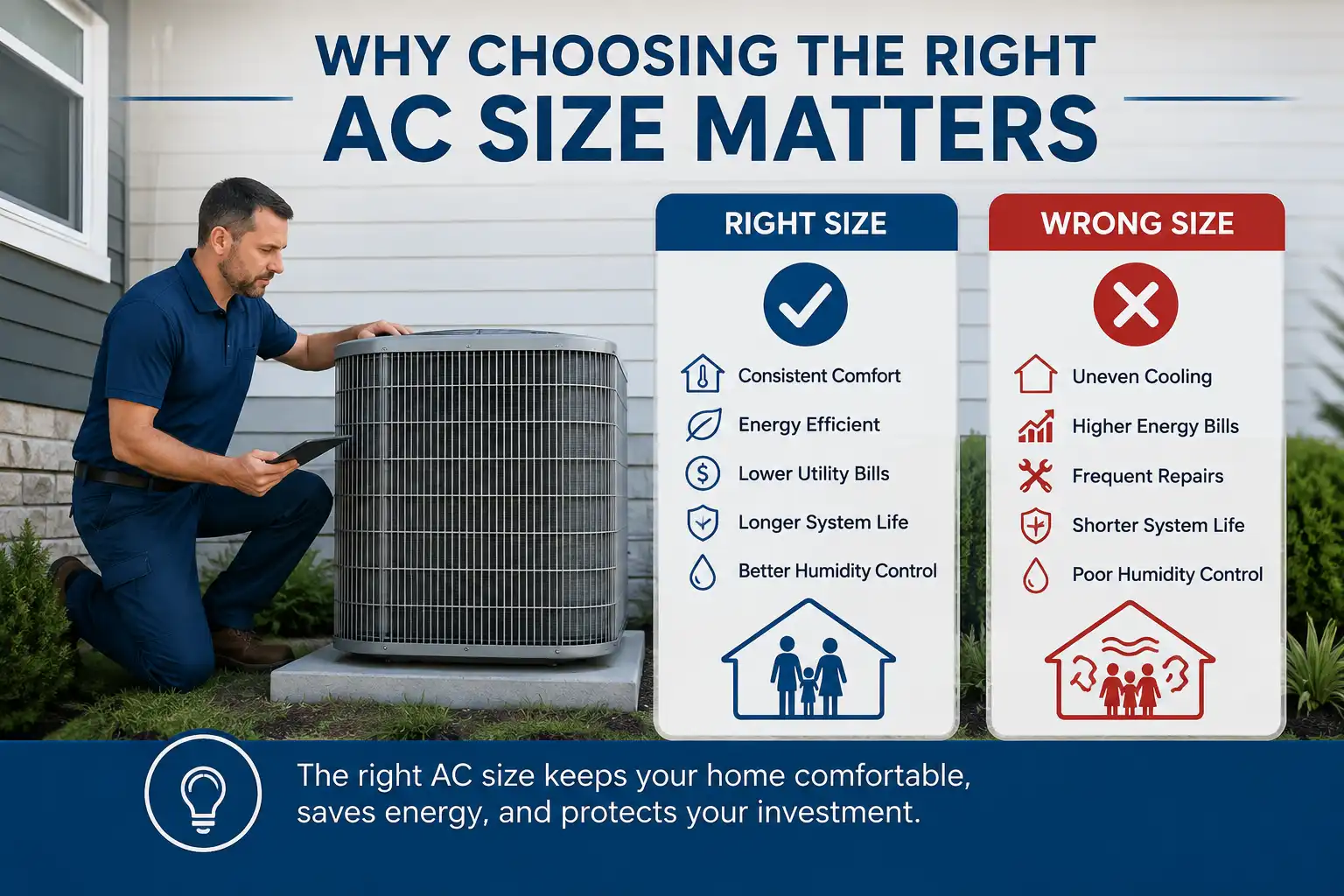
The purpose of an air conditioner is to perform two very important tasks; Cool your house and remove the excess humidity in the air inside. Having the correct size system can help your system perform both duties sufficiently.
An Undersized AC Can Struggle
Having a system that is too small will cause the air conditioner to work much harder to keep your indoor temperature comfortable during the worst of the hot summer.
You might experience:
- The AC is running all the time.
- Certain rooms will remain hotter than other parts of the house.
- It will take a long time for the house to cool off.
- Higher electric bill.
- Extra wear and tear on the air conditioner.
It will be unable to reach its intended thermostat temperature during peak summer temperatures.
An Oversized AC Can Also Cause Problems
It might feel like picking an overly large AC will give you a much better and cooler house, but bigger doesn’t necessarily mean better.
The oversizing of the system can make the AC short-cycle at times. The system will cool the room way too quickly and shut itself off before even finishing a full cooling cycle. This sort cycling can lead to less energy efficient use and potentially an uncomfortably moist atmosphere because the system isn’t running long enough.
The objective of buying an air conditioner will never be to buy the biggest air conditioner you can, instead the objective is buy an air conditioner that has the right amount of cooling to adequately satisfy your home’s air conditioner needs.
How to Size an Air Conditioner for My Home
One of the most common questions that homeowners pose to HVAC contractors is how to size an air conditioner for my house depending upon the space.
It would be an advisable start to size an air conditioner in space yet; size should not be merely a calculation to define AC setup.
A certified AC system contractor estimates quite a lot of other information about your dwelling apart from area to select appropriately AC setup.
A few of the information are:
- Overall trained area
- Surroundings
- Home insulation quality
- Number of glasses
- Their sizes and area
- Glasses and also location
- Flooring number
- Height and also width of flooring
- Structure configuration
- Variety of people at home
- Apparatus producing warmth
- Ducts accessibility
- Atmosphere leak
The accurate calculation can provide a far more precise answer over dimensions.
What Size AC Unit Do I Need for My House?
If your question about your home’s cooling is what size AC unit do I need for my house you might have seen a basic sizing chart based on square footage. These sizing charts are helpful, but they are just an approximation rather than a real air-flow calculation.
Let’s dig deeper: You’ll get better air flow and performance when using appropriately sized AC units and save energy and prolong your HVAC system’s life since too small AC’s run constantly without efficiently cooling your place and too big ones operate cyclically.
It, for example, is possible to see similar sized houses with vastly different cooling load requirements.
One such house may be superbly insulated and windows more efficient on house is very efficient and have less than expected cooling requirement.
At the same time, a second such house with poor insulation and not efficient windows may be subject to higher direct sunlight during the afternoon and the high height to ceiling it may become higher capacity than the previous house in size.
To know the proper and real size needed for cooling the air-flow calculation for house HVAC by a license is required instead of reading and choosing size for AC based on the size of the house.
How Many Tons of AC Do I Need?
Another frequently asked question is “How many tons of AC do I need”?
In air conditioning a ton of cooling capacity isn’t a 2,000 pound dead weight.
One ton of air conditioning provides approximately 12,000 BTUs of cooling capacity per hour.
Therefore:
- 1 ton = approximately 12,000 BTUs
- 1.5 tons = approximately 18,000 BTUs
- 2 tons = approximately 24,000 BTUs
- 2.5 tons = approximately 30,000 BTUs
- 3 tons = approximately 36,000 BTUs
- 3.5 tons = approximately 42,000 BTUs
- 4 tons = approximately 48,000 BTUs
- 5 tons = approximately 60,000 BTUs
These numbers help explain AC capacity, but they do not automatically tell you which size is right for your house.
For example, choosing your house needs an 3-ton framework without considering several other factors as far as square foot coverage could put you with a poorly suited AC.
Can an AC Sizing Calculator by Square Footage Give Me the Right Size?
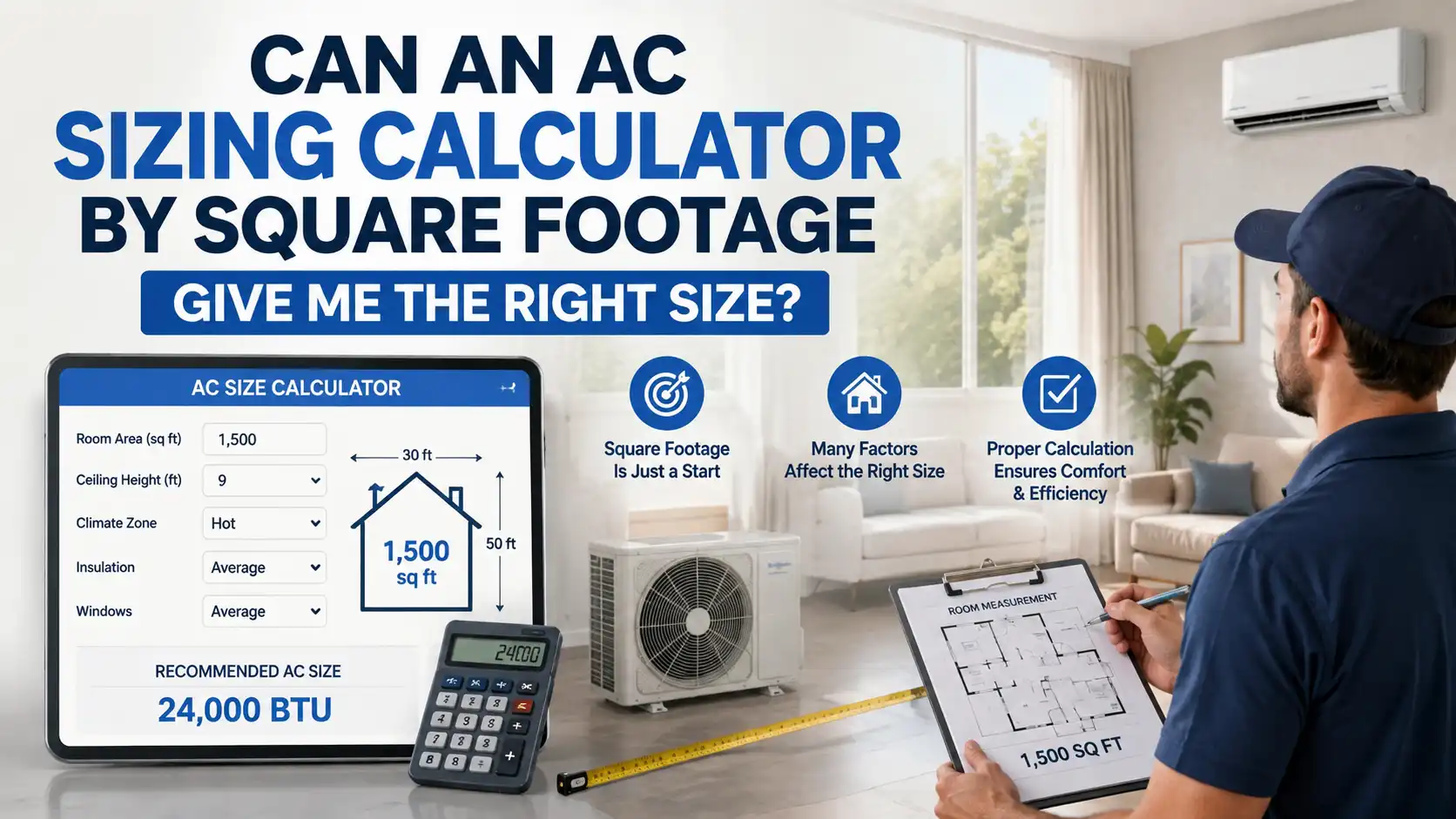
An AC size calculator by square footage is effective for providing you a rough idea of the cooling power you might need to maintain comfort.
However, homeowners must not accept them as the definitive sizes in relation to your home.
Square footage alone does not consider all of the variables contributing to the cooling load of a house.
Consider two homes that are both 2,000 square feet-one with:
- New insulation
- Energy-efficient windows
- Cool exterior walls
- An airtight duct system
- Reduced direct sunlight
The other home, with the following;
- Old windows
- Lack of insulation
- Lots of cracks and air leakage
- High ceilings
- Large west-facing windows
- More heat introduced to the house
The latter home might need significantly more cooling power than the first. An online calculator is an excellent initial step, yet sizing is best handled by trained professionals.
Your house architecture If ducting is functioning properly? The section below will walk you through all the steps to size AC for my home, what AC tonnage is, why space is not the best parameter, and other criteria you need to consider prior to purchasing an AC unit.
What Factors Affect Air Conditioner Sizing?
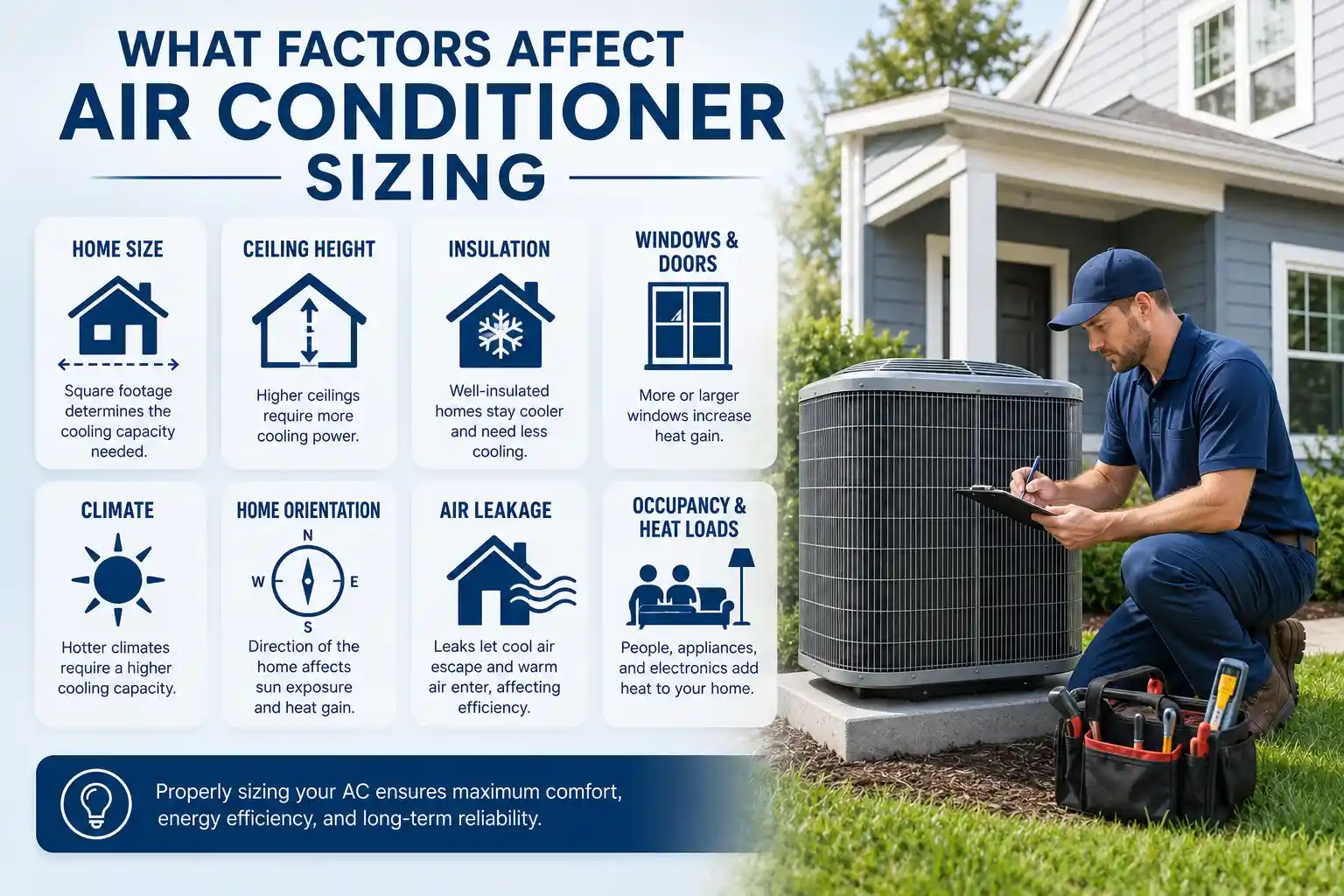
A number of different factors affect the size of air conditioner you should have in your house.
Home Square Footage
The volume of the conditioned space in your house is a starting point. Square footage alone can not give enough information for accurately sizing equipment.
A larger house needs a more powerful unit.
Insulation
It can keep cool air from leaking outside and heat from coming in through your walls and ceilings.
If your insulation is good you will not need as much cooling power.
Windows and Doors
Windows can significantly affect the heat that your AC system has to take away. Poorly sealed or old windows and large windows can put extra load on your unit. The directional facing of your windows also plays a role.
For example windows facing south will get more solar heat when used with certain configurations.
Ceiling Height
Homes with only 8 ft ceilings are not the same as homes with vault ceilings or very tall ceilings. Again this plays into why square footage alone does not give you all the info you need.
Climate
Outside temperature and humidity levels.
Hot homes require more conditioning than homes kept at average temperatures and homes with higher humidity will put a strain on your system to cool it effectively.
Number of Occupants
People also produce heat in their homes, the more people in a home, the more work an AC system will have to do.
Ductwork
The ducting in your home matters.
If your ductwork is in repair with leaks or inadequate sizing, it could be putting an unnecessary burden on your system even the biggest AC system won’t compensate for poorly working ductwork.
Sun Exposure
If a home receives significant direct sun, it will add to the heat. Protection from neighboring buildings, trees, awnings, and other buildings can lessen heat exposure.
What Is a Manual J Load Calculation?
A Manual J load calculation, performed by an HVAC technician, is a more precise suggestion than sizing an AC to square footage.
This type of calculation measures a home’s heating and cooling demands, based upon information about the building itself and local conditions.
The calculation can even take into account the:
- Building dimensions
- Insulation
- Windows
- Doors
- Climate
- Orientation
- Occupancy
- Interior heat sources
All of which can be affected by materials in the building.
This will allow an HVAC technician to make the most accurate size recommendation based on how much cooling power the home truly needs.
Signs Your Current AC May Be the Wrong Size
If you’re having your present unit replaced, take note of how your AC is now functioning. These indications could mean that there’s an issue with the system’s size:
Your AC Runs Constantly
An undersized air conditioner could struggle to find its way down to the temperature set point and end up running all day during the hottest parts of the year.
Your AC Turns On and Off Frequently
Air conditioner cycling or “short cycling” can be caused by one or two things. It could be that the air conditioning unit was installed one size too large for the home. Or maybe it could just be some more generally unrelated trouble.
Uneven Temperatures
If some sections of your home aren’t reaching your desired temperature or are warmer than the others, it could not be about your air conditioning unit’s measurements but its duct work or insulation. You might want to call an air-con technician if not all your home segments are being cooled just as equally.
Excessive Humidity
An air conditioning equipment might be cutting off to0 short and could then be unsuccessful at eliminating excessive humidity levels from air quality inside your house.
High Energy Bills
Energy Bills are High Insufficient capacity is an important consideration because a too-large AC runs less than ideal, however higher energy bills may be a symptom of other issues such as outdated equipment, lack of maintenance, leaking ducts, poor insulation, etc.
Should You Replace Your AC With the Same Size?
Don’t assume a larger unit is the solution for one of these problems-instead have a professional evaluate the system and offer some expertise.
When Should I Change the Size of My AC Should the air conditioner that is replaced be the same size If a previous unit or contractor replaced the AC for you, do not assume you should just buy one with the same size capacity (tons).
The configuration of your ducts may have changed; your home may now feature more, or differently types of Windows.
Insulation and layout of your house can also be a concern. Therefore, you can use the replacement job to perform re-calculation of your cooling needs. Contact an HVAC service company for a survey and evaluation of present and future HVAC performance.
Why Professional AC Sizing Is Important
AC sizing goes further than just purchasing a system.
There has to be a unit that is appropriately sized for the exact cooling load of your home, and compatible with your ductwork and other parts of your HVAC system service.
Professional sizing can allow you to:
- Increase comfort
- Decrease energy consumption
- Increase humidity control
- Decrease cycling
- Save your system from damage
Achieve a more even cool air distribution and increase value.
Don’t Choose an AC Based on Square Footage Alone
While you may be shopping for an AC size calculator per square footage, we want to be certain that square footage doesn’t provide the entire picture.
A chart might specify a size for your home if based only on floor space, yet won’t properly take into account the particulars of your individual property.
Rather than asking merely: “What tonnage of AC do I need?”
It may be beneficial to ask the local HVAC contractor for assessment of the entire house.
An adequately sized unit will better suit your cooling load than an overly sized one.
Final Thoughts
So, what size air conditioner do I need? The answer is more complex than square footage; though square footage does play a key role in determining AC size, other components such as insulation, window quality, ceiling height, climate of your region, amount of ductwork, sun exposure, number of occupants, and a variety of other factors need to be taken into consideration before AC size can be properly determined.
If you’re trying to answer, how do I size an air conditioner for my home, online charts should not be your primary choice as it is not likely to accurately assess your homes cooling needs. Appropriately size an AC unit by carefully measuring your homes specific cooling needs.
Whether you’re looking to replace an aging unit or install brand new air conditioning, 75 Degree AC is happy to help you get a grasp of what options and procedures need to occur for your home.
FAQs
What Size Air Conditioner Do I Need?
The overall size of AC that you’ll require will depend on you room sizes, amount of insulation, window sizes, height of your ceiling, local environment, and a host of other issues, and square footage will take you no more than halfway.
How Many Tons of AC Do I Need for My Home?
Air conditioners’ sizes vary – the tonnage of an air conditioner refers to the cooling capacity, one tone of AC is equivalent to approximately 12,000 British Thermal Units each hour. In terms of what tonnage of AC your house will take will only be confirmed after the proper evaluation.
Can I Use an AC Sizing Calculator by Square Footage?
Yes, a square footage calculator can tell you the ballpark size of an AC unit needed for a space; however, it should not be used as a final method for purchasing an AC unit. With the guidance of professionals, you can consider more components of the space.
What Size AC Unit Do I Need for My House?
The size of an air conditioner that you need depends entirely on the details of the house you will be cooling. Two houses of the same square footage will have different AC capacities depending on insulation, the amount of windows, sunlight, ductwork, ceiling height etcetera.
Is a Bigger AC Unit Better?
No. An oversized AC unit might short-cycle and it may not properly dehumidify your home. However, an undersized AC unit will fail to reach a certain temperature and maintain comfortable living temperatures within your home. Sizing is essential more so than a big AC unit.
How Can I Know If My Current AC Is Properly Sized?
These could include consistently poor temperatures, short cycling, too much humidity within the home, or energy bills that are too high. However, these signs can also indicate other issues that could be going wrong within your AC unit and professional intervention will likely be necessary.
A load calculation done by hand rarely accounts for every variable in a real house — our AC installation team runs the full Manual J calculation before recommending a size.