
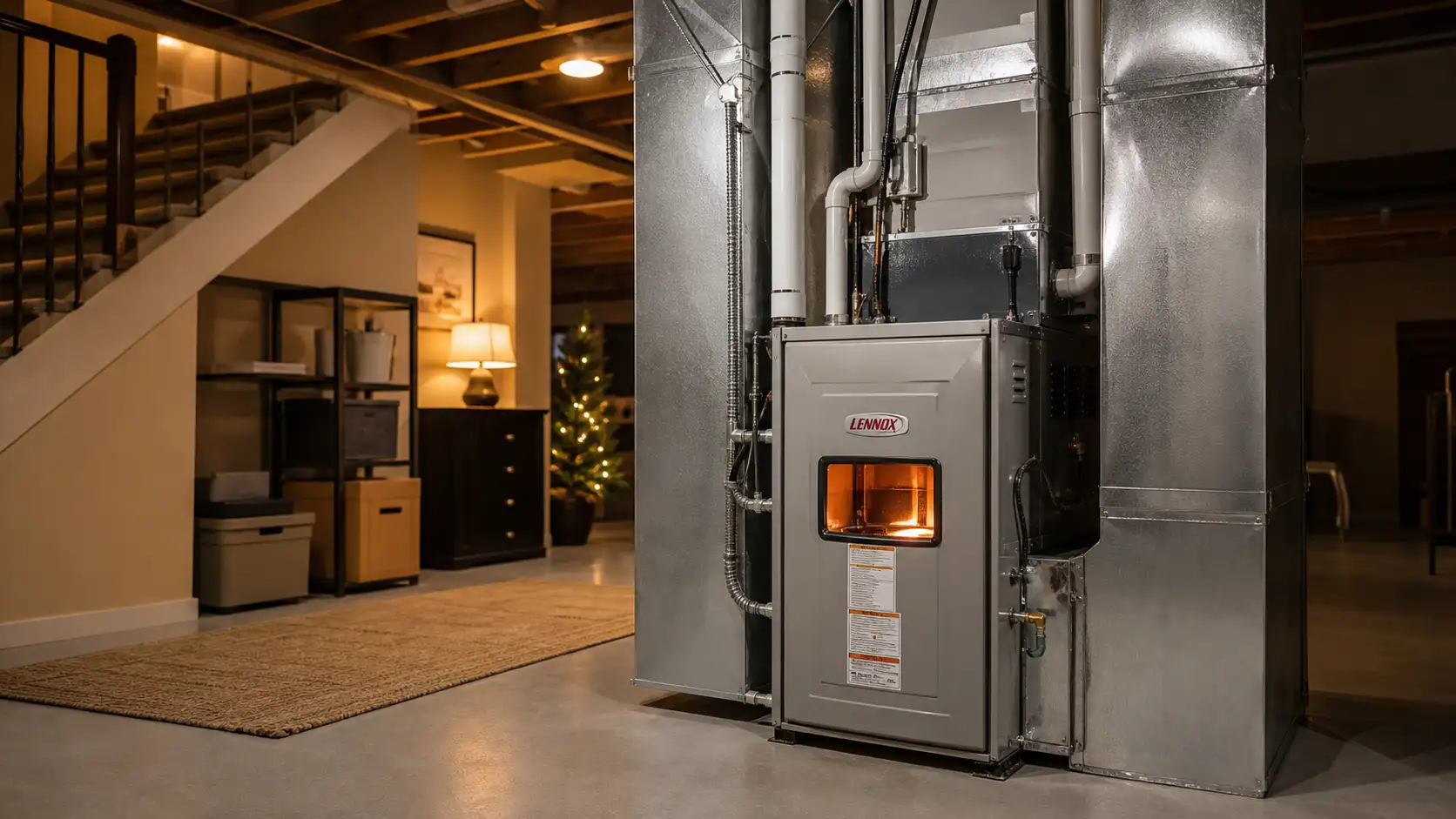
Winter is coming; it’s cold outside, and you need a furnace to warm your house. But what exactly does a furnace do? While the procedure may appear to be extremely involved, the underlying principle is a lot simpler. A furnace produces heat, transfers it to the indoor air, and then distributes the warm air through your home via ductwork.
There are many different types of furnaces, the most popular being gas and electric furnaces. Furnaces are also built as single-stage or two-stage systems. A single-stage furnace runs at one fixed output, while a two-stage furnace has two heat settings low and high which lets it run more efficiently by matching output to how much heat the home actually needs.
A good quality single-stage furnace can be installed horizontally, vertically, or end to end. When you understand what your furnace is doing, it is easier to spot problems, improve efficiency, and know when it is time to call in the professionals.
Furnace – What Exactly Is It?
A heat-producing device in a sealed environment, such as a furnace. Warm air furnace: A warm air furnace is a forced air heating system that sends warm air through ducts and registers in your home.
The furnace’s when to turn itself on and off is determined by the thermostat. If you are wondering why your furnace keeps shutting off and on, it might tend to overexert itself to keep pace when the indoor temperature drops below the temperature that is set on your thermostat.
Heat is produced by the burning of natural gas or propane, or by electric heating elements (based on the type of furnace). When heat is created, a blower pushes the air across the furnace and through the ductwork.
Warm air is finally delivered into rooms through supply vents, while cooler air is drawn back to the furnace to be reheated.
Basic Furnace Heating Cycle
The basic furnace cycle is as follows:
- The thermostat senses that heat is required.
- A signal is sent to the furnace.
- The furnace starts the heating process.
- Heat is produced through the combustion of gas or through electrical elements.
- The blower circulates indoor air.
- Indoor air is heated as it passes through the furnace.
- Warm air is distributed throughout the home via the ductwork.
- Heated air is delivered to the rooms.
- Cooler air goes back to the furnace.
- The furnace then turns off at the thermostat’s desired temperature.
This repeats every time the house needs more heat.
How Does a Gas Furnace Work?
A furnace that uses gas is commonly known as a natural gas furnace.
When your thermostat calls for heat, the gas valve will open up on the control board of the furnace and let the gas into the gas furnace burners, where it will be ignited by an igniter.
The resulting flame from the burners then heats the heat exchanger of the furnace.
The indoor air should never be heated directly by the open flame; instead, the blower circulates the air over the heated heat exchanger in order to warm it up.
The fuel gases of combustion generated in the process are exhausted out of the building through the furnace vents. Safety switches continually observe the furnace while it’s running and will turn it off if there is a problem.
Explanation of the Furnace Ignition Process
The furnace ignition process plays an essential role in the functioning of a gas furnace.
Gas furnaces may have either standing pilot lights or electronic ignition systems, which are modern alternatives. Inside the electronic ignition systems, there may be either hot-surface or intermittent ignition systems.
The thermostat’s requirement of heat initiates the furnace’s ignition process. However, the first thing that the furnace control board does before starting the process is to run a set of diagnostics to make sure that everything is in order.
The igniter creates the spark needed to ignite the gas, and the flame sensor makes sure that there is a flame, which means the furnace has ignited. In case of failure, the furnace’s safety features ensure that the gas valves close, cutting off the gas supply to the furnace.
Overall, the furnace ignition process may vary depending on the type of furnace. However, the main principle of the ignition process remains the same, that is, to provide combustion.
Furnace Heat Exchanger Explained

A device that allows heat from the combustion chamber to be transferred to the air in your home while keeping the two isolated from each other.
In short, a heat exchanger is the part of the furnace which gets heated up by the burners and then warms up the air that circulates through the house.
The process is as follows: the air from the house is blown by the blower near the heated walls of the heat exchanger, further absorbing its heat, and then the air is distributed by the furnace’s duct system to the rooms.
The heat exchanger is a vital part of any gas furnace, one whose malfunction may lead to serious safety issues.
This is why any inspection that involves checking the integrity of the heat exchanger should be carried out by an HVAC professional.
How Does an Electric Furnace Work?
As you may already know, gas and electric furnaces are two of the most popular ways to heat a house. The main difference between the two lies in the mechanism of the heating process. Unlike gas furnaces, electric ones do not use gas to heat the air.
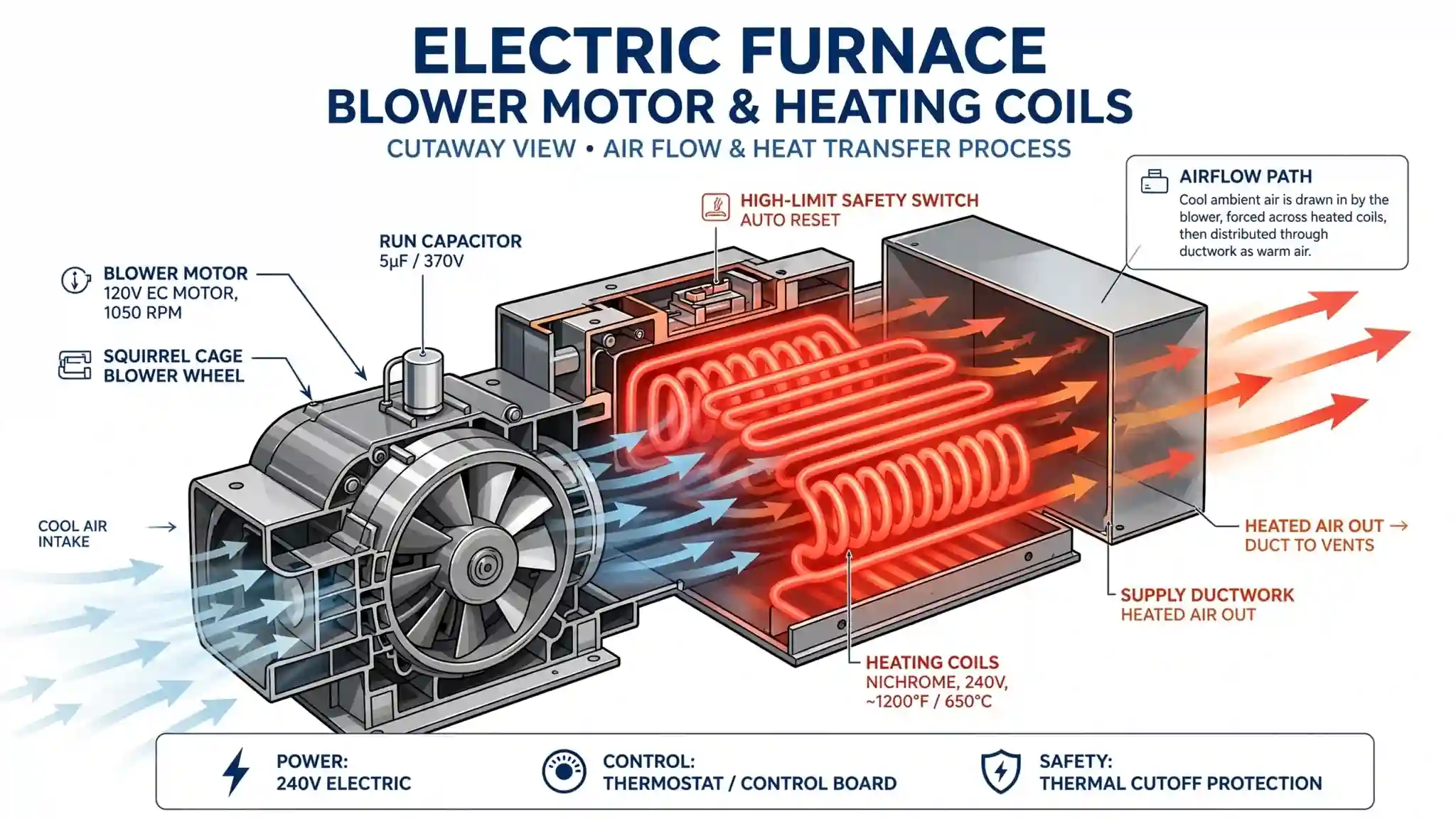
Instead, a heating element is used for the purpose. When the thermostat is set to heat, the circuit breaker opens, and electricity flows to the desired heating elements.
The elements heat up, and then the blower motor sends the air over them to pick up the heat. The heated air is then circulated through the vents and into the rooms.
It is important to note that almost all electric furnaces come with more than one set of heating elements. Various combinations of them can be used during the process. It also should be noted that there are no gas burners or combustion in electric furnaces. Nonetheless, there are also things that need to be taken care of, such as electricity, airflow, and maintenance.
What Does the Blower Motor Do?
Apart from that, the blower motor is a significant component in a furnace. Its main purpose is to allow air circulation.
The blower motor’s primary function is to move air through the heating system.
- After the heating elements have warmed up, the blower will distribute the air through the furnace.
- The air passes through the heat exchanger in gas furnaces, while it moves over the heating coils in electric furnaces.
- The air that has been warmed will then flow to the supply ducts and reach the house’s living space.
In addition to bringing the heated air into the house, the blower also reverses the flow of the air to suck the cooled air back to the furnace through return ducts. Without proper circulation of the air, the furnace will not efficiently heat your house. A clogged filter, blocked return vent, or narrow ducts can cause insufficient airflow, resulting in poor functioning of the furnace.
What Happens When the Desired Temperature Is Reached?
A furnace is constructed not to be on all the time.
Therefore, when the thermostat senses the temperature desired by the users, it will turn the furnace off to avoid running it longer than it should.
Depending on what type of furnace one has, either the burners will be shut off (if one has a gas furnace), or the heating elements (if one has an electric furnace).
The blower might continue running for a while to distribute the remaining heat.
After the temperature drops once again, the thermostat will inform the furnace to turn on once again.
Gas Furnace vs. Electric Furnace
Both types of furnaces are able to effectively heat up the house, but their principles of operation are greatly different.
Gas furnaces contain burners, a heat exchanger, and proper ventilation to produce hot air by burning gas. On the other hand, electric furnaces use electric coils to heat the air rather than burning gas, and thus are highly reliant on an electric supply.
Therefore, the decision between a gas or an electric furnace should be based on regional prices of electricity and gas, home’s size, climate, and other utility features. Furnace efficiency is usually measured by its AFUE (Annual Fuel Utilization Efficiency) rating the U.S. Department of Energy’s ENERGY STAR program sets the efficiency criteria that qualifying furnaces must meet.
Common Furnace Problems
Common problems with furnaces are:
- Dirty air filters
- Poor airflow due to various reasons
- Thermostat malfunctions
- Ignition switch problems
- Faulty flame sensor
- Blower motor issues
- Obstructed vents and ducts
- Electrical problems
- Gas line difficulties
- Heat exchanger cracks
Gas furnaces need to be taken care of with special attention because gas burning and gas exhaust must not have any issues.
How to Keep Your Furnace Working Efficiently
The furnace needs regular servicing.
Replace dirty or compromised air filters according to the manufacturer’s directions. Make sure vents are open and not obstructed by furniture or window treatments.
It is crucial to have a professional service company come and do a furnace tune-up/inspection before the heating season. The technician will examine the entire system, including all system components and parts, such as electrical wiring and safety devices, heating and air-conditioning systems.
Proper maintenance keeps the furnace running well and helps you avoid unnecessary repair costs.
Final Thoughts
It is much easier to comprehend how a furnace works if we split the process into major steps involved. These are as simple as the thermostat calling for heat, the furnace responding by creating heat, moving it with a blower, and finally sending it through ducts into your living space.
A gas furnace uses a combination of gas and air in the combustion process, whereas electric furnaces use heating elements for that purpose. The process of furnace ignition becomes even more important in gas furnaces due to the nature of open flame.
On a general note, regardless of what type of furnace you have, proper circulation of air, regular maintenance, and visits to a professional heating company can keep your system safe and efficient.
Frequently Asked Questions
How does a furnace work to heat a house?
The furnace makes use of its mechanism to create heat and push it to the house. The blower will then take the hot air and spread it to the house through the ducts. Part of the cooled air will then be sucked back to the furnace to repeat the process.
How does a gas furnace work?
Gas furnaces are known to make use of natural gas or propane to generate heat. The generated heat will then be used to heat the heat exchanger. The blower will then push the heated air to the house through the ducts. The exhaust gases will then be disposed of outside the house.

