
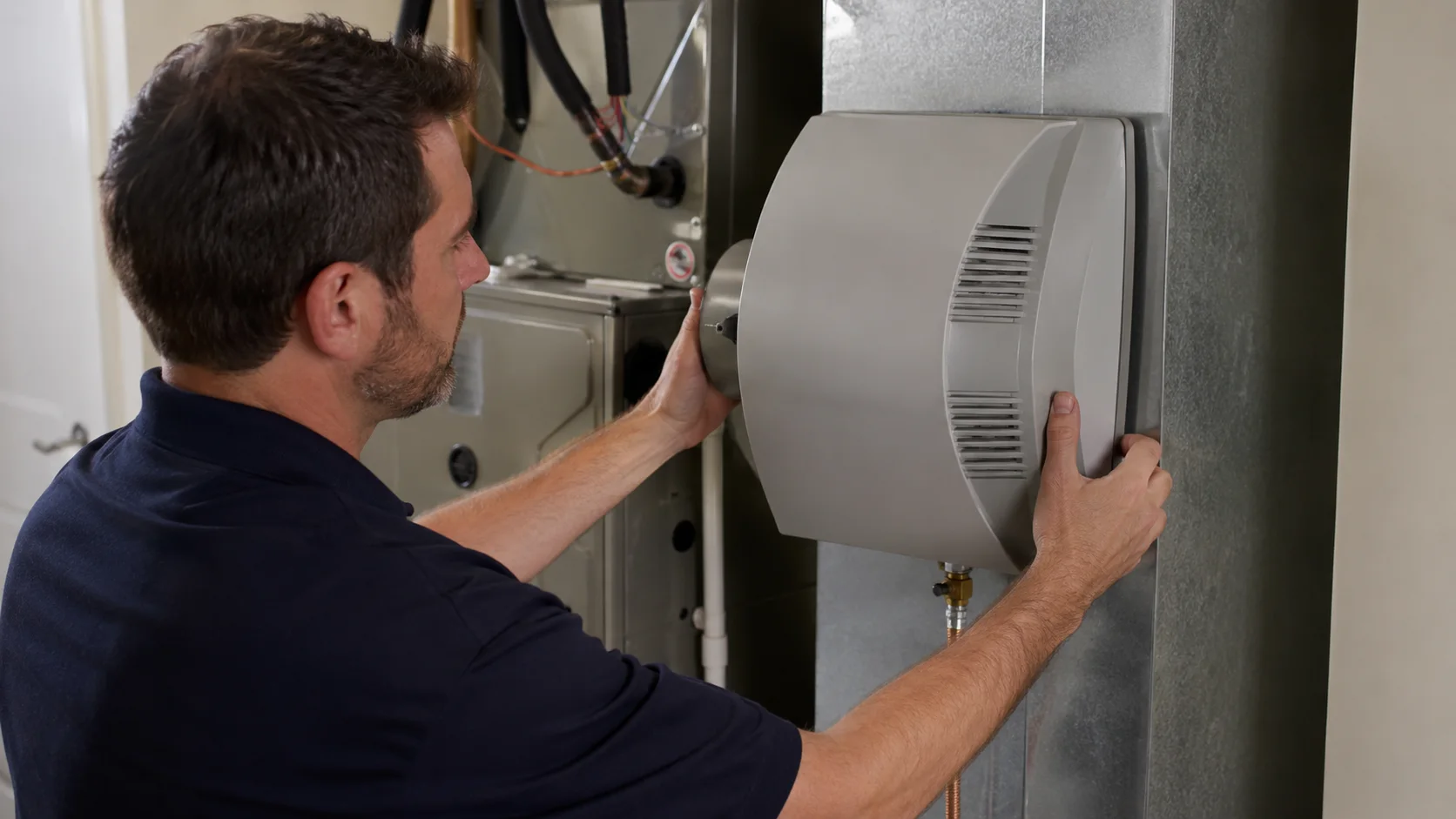
Installing a whole-house humidifier means connecting a moisture-control system to your HVAC equipment, water supply, drain, and controls. The correct setup depends on your furnace or air handler, ductwork, humidifier type, and indoor humidity needs.
If you plan to install a humidifier at home, start by checking HVAC compatibility and the manufacturer’s installation instructions. A poor setup can cause leaks, weak humidity output, airflow problems, or excess moisture.
How Does a Whole-House Humidifier Work?
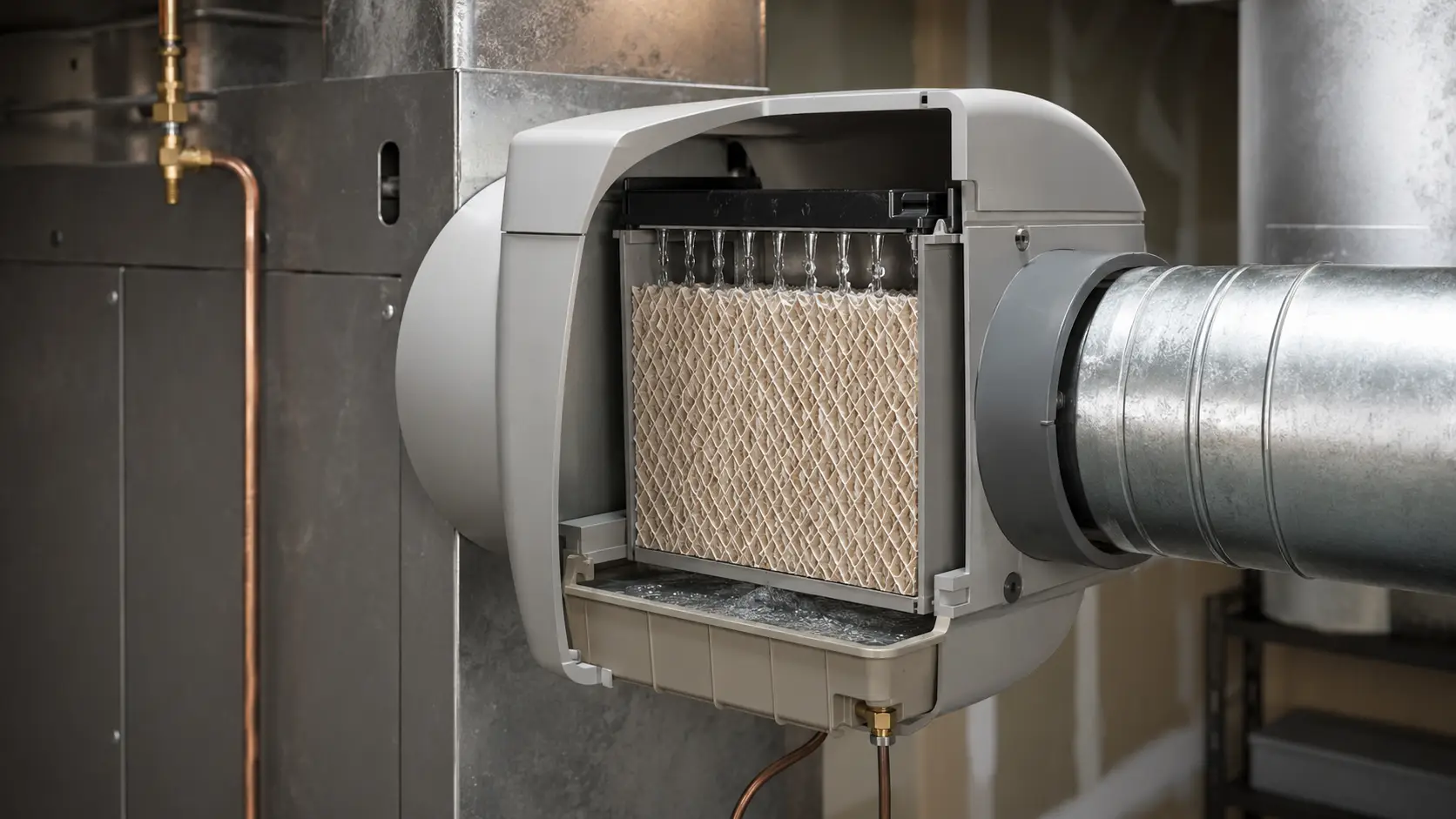
A whole-house humidifier adds controlled moisture to the air moving through your central HVAC system. Unlike a portable unit, it can treat air throughout the home through the existing ductwork.
The basic process is simple:
Water supply → humidifier → HVAC airflow → moisture added to air → ductwork → living spaces
The humidifier usually mounts near the furnace or air handler. Depending on the model, air passes through a water panel, or the unit creates steam before adding moisture to the air stream.
A humidistat controls when the system runs. It measures indoor relative humidity and calls for moisture when the air falls below the selected level.
The furnace blower or air handler then moves the treated air through the supply ducts. The result is more even humidity than a small portable humidifier can provide.
Before any home humidifier installation, measure indoor relative humidity. A humidifier only makes sense when the indoor air is actually too dry. Adding moisture to a home that already has high humidity can create condensation and moisture problems.
What Type of Whole-House Humidifier Should You Install?
The three common options are bypass, fan-powered, and steam humidifiers. Each has different airflow, electrical, water, and control needs.
Bypass Humidifiers
A bypass humidifier uses the HVAC blower to move air across a water panel or evaporator pad. A bypass duct connects the supply and return sides of the system.
Air moves through the wet panel, picks up moisture, and returns to the air stream.
Bypass models are often a practical choice for homes with suitable duct space and standard forced-air systems. They have fewer powered components than fan-powered or steam models.
Fan-Powered Humidifiers
A fan-powered humidifier has its own small fan. It moves air across the water panel without relying as much on a separate bypass duct.
This design can provide stronger moisture output in some applications. It can also make sense when the existing duct layout does not provide a good bypass path.
Steam Humidifiers
Steam humidifiers heat water and produce steam before releasing moisture into the HVAC airflow.
They can provide precise humidity control and high output. However, steam systems have more complex electrical and control requirements.
They are usually better suited to homes that need higher humidity output or more precise control.
How to Choose Between Bypass, Fan-Powered, and Steam
Consider:
- Home size
- HVAC capacity
- Duct configuration
- Desired humidity output
- Water supply
- Drain access
- Electrical requirements
- Maintenance needs
- Installation space
- Budget
Do not select a humidifier based only on price. The right unit must match the HVAC system and the home’s moisture needs.
Can You Install a Whole-House Humidifier on Your Existing HVAC System?
Most whole-house humidifiers are designed to integrate with forced-air HVAC systems. However, that does not mean every model works with every furnace or air handler.
A technician should check:
- Furnace or air-handler type
- Blower operation
- Duct size and layout
- Airflow direction
- Available mounting space
- Control-board compatibility
- Water access
- Drain access
- Electrical requirements
- Service clearance
- Manufacturer specifications
A humidifier can often work with gas and electric furnaces, air handlers, and some heat-pump systems. High-efficiency and variable-speed systems need closer attention because their controls and airflow patterns can differ.
Existing ductwork may also need modification. A bypass model may require a bypass duct, while a fan-powered unit may not. Steam models can require dedicated electrical work and different control connections.
Never assume compatibility because another house has the same brand of furnace. The model, controls, airflow, and installation requirements still matter.
Where Should a Whole-House Humidifier Be Installed?
The best location depends on the humidifier design and the HVAC system.
Common installation areas include the supply plenum or return plenum near the furnace or air handler. The location must provide suitable airflow and enough room for maintenance.
A good location should also have:
- Easy water-line access
- Suitable drain access
- Electrical access when needed
- Enough service clearance
- Correct airflow direction
- Solid mounting space
- Access for changing the water panel
- Room for control wiring
Do not place the cabinet wherever it is easiest to cut the duct. The humidifier needs the right airflow and must remain accessible for service.
How to Determine the Best Installation Location
Follow the humidifier manufacturer’s template and clearance requirements. Check the duct interior before cutting. Avoid placing the unit where internal parts, dampers, or other components interfere with the cabinet.
For bypass systems, the bypass duct also needs a suitable path between the supply and return sides.
Where Should the Humidistat Be Installed?
The humidistat must measure representative indoor air conditions. A poor location can give false readings and cause the humidifier to run too often or not enough.
Some systems use a separate humidistat. Others integrate humidity control into a smart thermostat or HVAC control system.
Follow the manufacturer’s instructions for sensor placement rather than choosing a location based only on convenience.
What Do You Need to Install a Whole-House Humidifier?
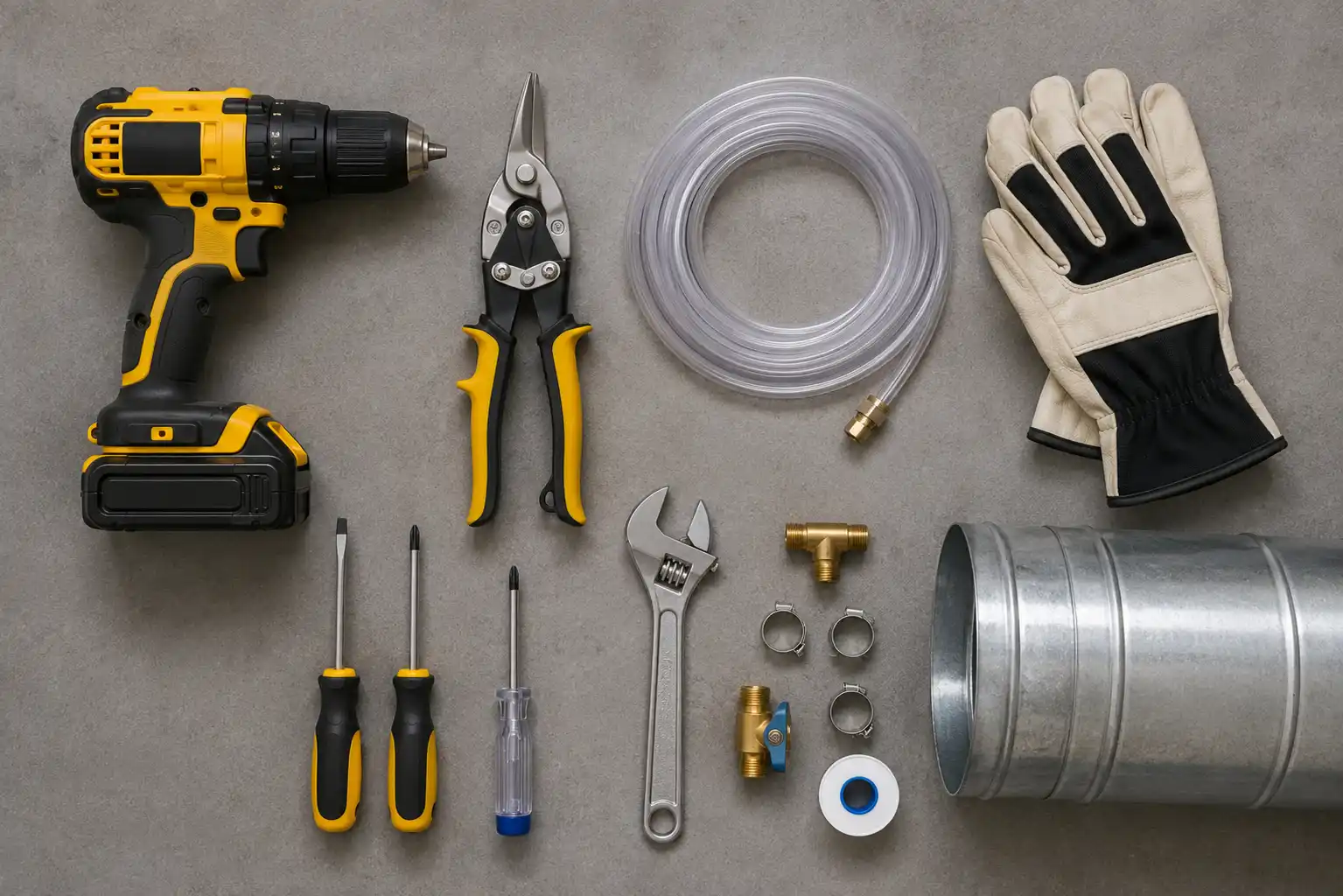
A typical installation may require:
- Humidifier cabinet
- Water panel or evaporator pad
- Humidistat
- Water distribution system
- Solenoid valve
- Water tubing
- Drain tubing
- Bypass duct, if required
- Low-voltage control wire
- Transformer, if required
- Mounting hardware
- Gaskets and approved sealant
Common tools include a drill, screwdriver, level, measuring tools, marker, and aviation snips for suitable ductwork.
The exact parts vary by manufacturer and model. Always use the installation kit and wiring instructions supplied with the unit.
How to Install a Whole-House Humidifier Step by Step
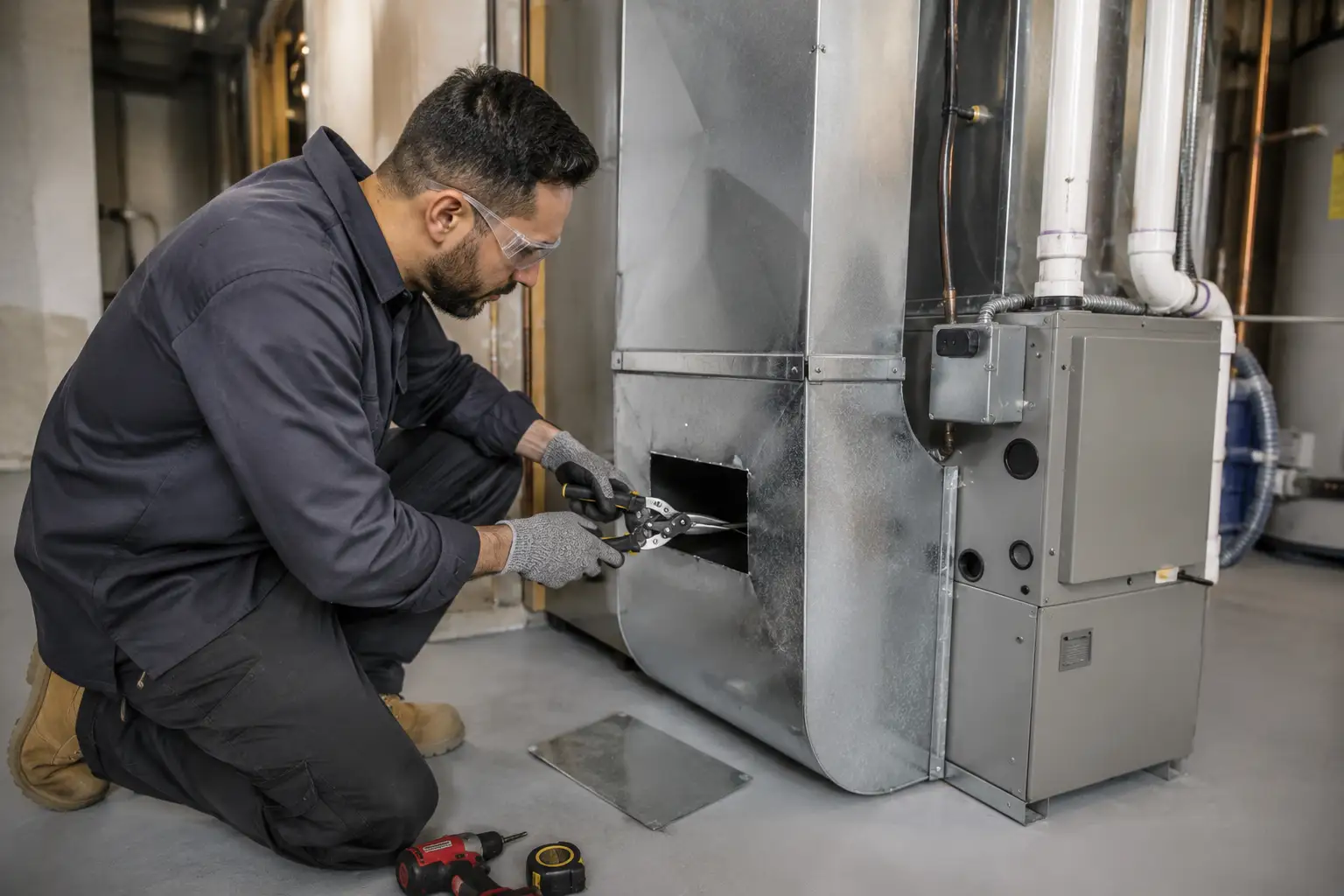
The basic whole house humidifier installation process follows the same sequence, but the exact details vary by model.
1. Turn Off the HVAC System and Power
Turn off the HVAC equipment before working around the furnace, air handler, ductwork, or controls.
If electrical work is required, follow the manufacturer’s safety instructions and local requirements. Do not work on live electrical connections.
2. Inspect the HVAC System and Confirm Compatibility
Check the furnace or air handler, ductwork, airflow direction, controls, water access, and drain location.
This is the point where you should discover problems, not after cutting the duct.
3. Mark the Humidifier Mounting Location
Use the manufacturer’s template. Check cabinet clearance and make sure the unit will remain accessible.
Confirm that the selected location has the correct airflow and enough room for future water-panel replacement and cleaning.
4. Cut and Prepare the Duct Opening
Mark the opening carefully and cut only the required area.
Keep the opening square and clean. Make sure no internal duct component will block the humidifier cabinet.
The opening size must match the manufacturer’s template. A poor fit can create air leaks and make the cabinet difficult to secure.
5. Mount and Level the Humidifier
Place the cabinet against the duct and secure it with the specified fasteners.
Use the required gasket or seal to limit air leakage. The cabinet should sit securely and remain level when the design calls for leveling.
A loose cabinet can vibrate, leak air, or create problems during maintenance.
6. Connect the Bypass Duct When Required
Bypass humidifiers use a separate duct connection between the supply and return sides.
The bypass path must follow the manufacturer’s airflow requirements. Do not add a bypass duct to a humidifier that does not use one.
7. Connect the Water Supply
Connect the water supply according to the humidifier instructions.
The system may use tubing, a water valve, and a solenoid valve to control water flow.
After making the connection, check every fitting for leaks. A small water leak can become expensive when it remains hidden near HVAC equipment.
8. Install and Route the Drain Line
Some humidifiers discharge water during operation. Route the drain according to the manufacturer’s instructions.
A gravity drain needs a suitable downward path. Avoid kinks, blockages, and unnecessary upward loops.
The drain should also terminate at an approved location. If gravity drainage is not possible, the equipment may require a suitable condensate pump.
9. Connect the Electrical and Humidity Controls
Connect the humidifier controls according to the manufacturer’s wiring diagram.
Depending on the system, this can involve low-voltage wiring, a control board, transformer, humidistat, or thermostat integration.
This is an area where professional help is wise if you are not trained to work with HVAC controls.
10. Seal the Duct and Humidifier Cabinet
Inspect the cabinet and duct connection for gaps.
Use the approved gasket or sealant for the application. Proper sealing reduces unwanted air leakage and helps the HVAC system deliver the intended airflow.
11. Restore Power and Start the System
Restore power after checking the installation.
Set the humidistat to the manufacturer’s recommended starting range. Do not immediately set humidity to the highest available level.
12. Test Humidifier Operation
Run the system through a humidity call.
Check water flow, airflow, drainage, controls, and the humidifier’s response. Look closely for leaks around the water connection and drain.
How Do You Test a Whole-House Humidifier After Installation?
A successful humidifier installation is more than a cabinet attached to ductwork.
The system should be checked as a complete HVAC component.
Check Water Flow
Confirm that water reaches the humidifier when there is a humidity demand.
Check for Water Leaks
Inspect the water inlet, valve, tubing, cabinet, and nearby connections.
Verify Drainage
Make sure water leaves the system without backing up.
Test the Humidistat
Lower indoor humidity enough to create a demand and verify that the humidifier responds correctly.
Verify HVAC Blower Operation
The blower must operate in the manner required by the humidifier and HVAC controls.
Check Airflow Through the Humidifier
Confirm that air follows the correct path through the cabinet or bypass duct.
Verify Humidity Output
The home’s relative humidity should respond over time. Do not expect an immediate whole-home change after a short test.
Check Duct and Cabinet Sealing
Look for unwanted air leakage around the installation.
This final testing stage is often called commissioning. It confirms that the humidifier works with the HVAC system rather than simply working by itself.
Common Whole-House Humidifier Installation Mistakes
Common mistakes include:
- Choosing the wrong humidifier type
- Ignoring HVAC compatibility
- Installing against airflow requirements
- Cutting the wrong duct opening
- Poor cabinet sealing
- Incorrect bypass setup
- Loose water connections
- Poor drain routing
- Incorrect control wiring
- Poor humidistat placement
- Blocking service access
- Setting humidity too high
- Skipping leak checks
- Skipping final system testing
These errors can lead to leaks, poor humidity output, duct leakage, excess water use, control problems, or condensation.
Excess indoor moisture is also a concern. More humidity is not always better.
Can You Install a Whole-House Humidifier Yourself?
Some homeowners can handle basic mounting work. A complete installation is more involved because it can combine HVAC, ductwork, plumbing, drainage, and electrical controls.
Professional help makes more sense when the system has:
- A steam humidifier
- A high-efficiency furnace
- A variable-speed blower
- A heat pump
- Complex HVAC controls
- Difficult ductwork
- Limited water access
- Limited drain access
If you are comfortable with basic tools but not HVAC wiring or plumbing, do not guess at the connections. A wrong connection can damage equipment or create a water or electrical hazard.
How Much Does Whole-House Humidifier Installation Cost?
In the U.S., current 2026 cost data places professional whole-house humidifier installation around $392 to $768, with an average near $580 in Angi and HomeAdvisor data.
Your actual price can be higher when the job needs additional work.
The main cost factors are:
- Humidifier type
- Home size
- Unit capacity
- Existing ductwork
- Water-line installation
- Drain installation
- Electrical changes
- Humidistat or smart control
- Installation access
- HVAC modifications
- Labor rates
Angi also reports annual humidifier maintenance visits around $75 to $200.
Treat online prices as planning numbers, not guaranteed quotes. A proper estimate should account for your HVAC system and the work required at the installation site.
How Do You Maintain a Whole-House Humidifier?
Maintenance keeps the humidifier working and helps prevent water and airflow problems.
Check the:
- Water panel or evaporator pad
- Distribution tray
- Water line
- Drain
- Solenoid valve
- Humidistat
- Cabinet
- Duct connection
Mineral scales can build up where water is used. The water panel also needs replacement based on the manufacturer’s schedule and local water conditions.
Clean the unit during scheduled maintenance and inspect the drain for buildup or blockage.
How Often Should a Whole-House Humidifier Be Serviced?
Inspect it at least once each heating season when the humidifier is being used. Some homes need more frequent attention because of water quality, heavy use, or mineral buildup.
When Should the Water Panel Be Replaced?
Replace the water panel when the manufacturer recommends it or when scale and buildup reduce water distribution and humidifier performance.
What Indoor Humidity Level Should a Whole-House Humidifier Maintain?
The right humidity level depends on indoor temperature, outdoor weather, the home’s construction, and condensation risk.
Use the humidistat to control relative humidity instead of running the humidifier continuously.
Watch windows, exterior walls, and other cold surfaces. Persistent condensation can indicate that indoor humidity is too high for the current conditions.
A humidity sensor gives you a better picture than guessing from how the air feels.
What Happens If Indoor Humidity Gets Too High?
Excess moisture can cause condensation and contribute to moisture-related problems.
That is why a whole-house humidifier should not be treated as a system that simply adds as much moisture as possible. The goal is controlled humidity, not maximum humidity.
Does a Houston Home Need a Whole-House Humidifier?
Houston is a useful example of why climate matters. Outdoor air can be humid while indoor air still becomes dry under certain heating and cooling conditions.
Before adding a humidifier, measure indoor relative humidity and identify the reason for the dry conditions.
In a humid climate, adding more moisture without checking indoor RH can be the wrong solution. Some homes may need better humidity control or a dehumidifier instead.
The same decision applies across the U.S. A dry winter climate may create a stronger need for humidification, while a damp climate may require moisture removal.
Humidifier vs Dehumidifier: Which Does Your Home Need?
If indoor humidity is too low, humidification can help.
If indoor humidity is too high, a dehumidifier or HVAC moisture-control solution may be more appropriate.
If humidity is abnormal despite normal HVAC operation, have the HVAC system inspected before buying another device.
Professional Whole-House Humidifier Installation
If you prefer to have the work handled by an HVAC professional, humidifier installation services in houston can help homeowners who need system selection, installation, control setup, and final testing.
75 Degree AC focuses on HVAC and indoor air quality systems and serves Houston homeowners with professional installation support.
The important part is not just installing the cabinet. A proper job should match the humidifier to the HVAC system, connect the required water and drain lines, integrate the controls, check for leaks, and verify operation.
Need help choosing or installing a whole-house humidifier? Contact 75 Degree AC to discuss your HVAC setup and get a professional installation estimate.
Frequently Asked Questions
Can I install a whole-house humidifier myself?
You can handle simple work on some systems, but complete installation may involve ductwork, plumbing, drainage, and HVAC controls. Professional installation is safer for complex systems.
Can a whole-house humidifier be installed on any furnace?
No. Compatibility depends on the furnace, blower, ductwork, controls, water supply, drain, and humidifier model.
Where should a whole-house humidifier be installed?
It is commonly installed near the furnace or air handler on suitable ductwork. The exact location depends on airflow, humidifier design, access, and manufacturer requirements.
Does a whole-house humidifier need a drain?
Many evaporative systems need drainage. The exact drain setup depends on the humidifier model and how it uses water.
Does a whole-house humidifier need a water line?
Most central humidifiers need a water supply. Steam and evaporative models can have different water requirements.
How long does whole-house humidifier installation take?
A straightforward installation may take a few hours. More complex jobs take longer when duct, plumbing, electrical, or control changes are needed. Current DIY installation guides commonly estimate about three hours for a basic project.
How do I know if my whole-house humidifier is working?
Check for the correct control response, water flow, airflow, drainage, and gradual changes in indoor relative humidity.
Can a whole-house humidifier cause mold?
Excess moisture can contribute to condensation and moisture problems. Correct humidity control, drainage, cleaning, and proper installation help reduce that risk.
Can a humidifier work with a variable-speed furnace?
It can, but the humidifier and controls must be compatible with the furnace’s blower and control system.
Should I use a humidifier or dehumidifier?
Measure indoor humidity first. Low indoor humidity points toward humidification, while excessive humidity may call for dehumidification or an HVAC inspection.