
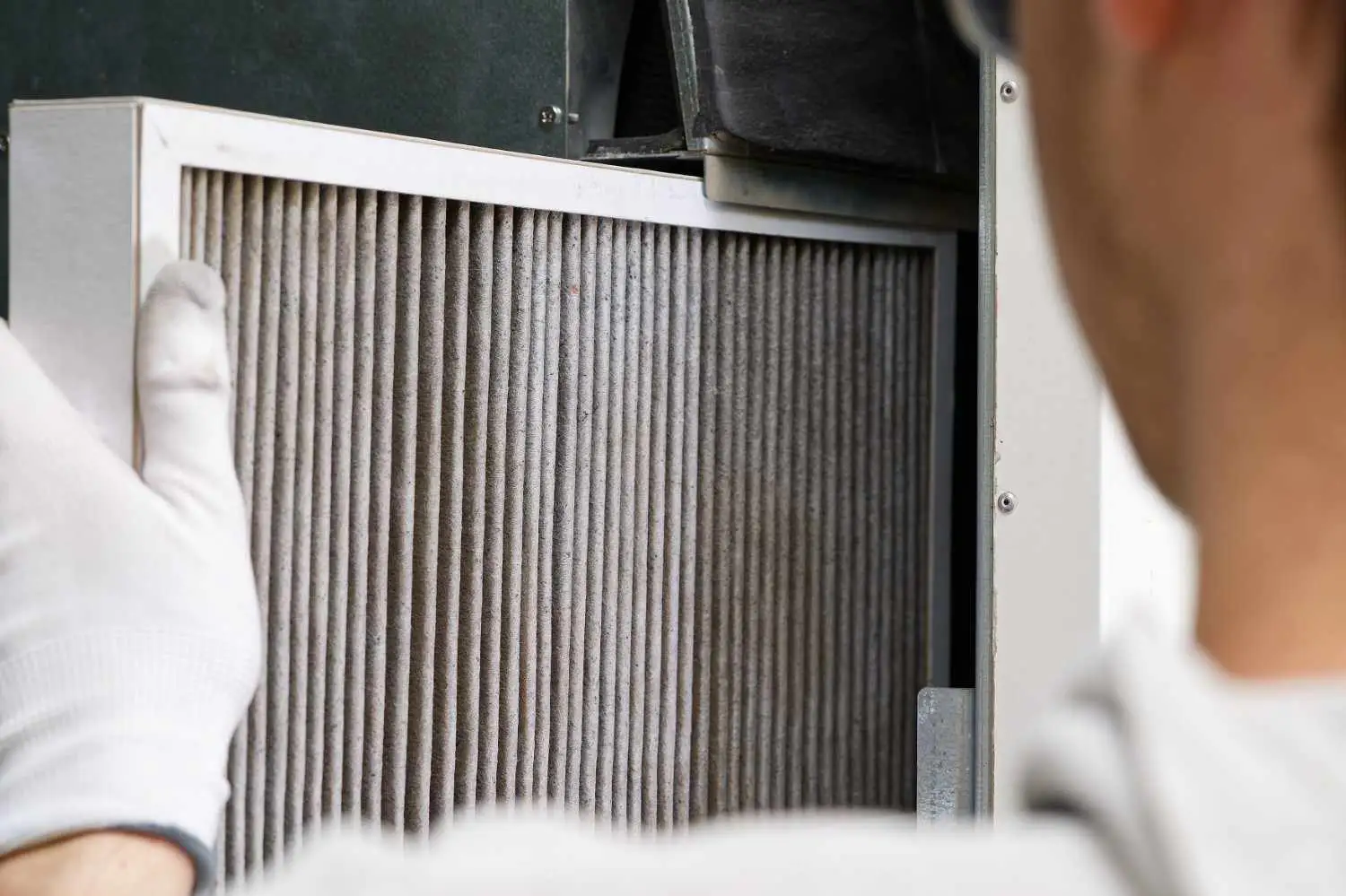
You’re standing in the filter aisle at a Houston hardware store, and the shelf in front of you has three nearly identical boxes. One says MERV 8. One says MERV 11. One says MERV 13. They cost different amounts, they look about the same, and nothing on the packaging tells you which one your furnace actually needs. Pick wrong and you either waste money on filtration your system can’t use, or you choke off airflow and stress a blower motor that was never built to pull air through something that dense.
That confusion is exactly why we put this guide together. What does MERV mean on furnace filters? It’s a question we hear on service calls more than almost any other, usually right after someone tells us their energy bill jumped or their system seems to be running longer than it used to. Kenny Ho (TACLA72152E), our lead technician here at 75 Degree AC, has swapped out enough filters in Houston attics and closets to know exactly where homeowners get tripped up. This guide walks through what MERV actually measures, how the rating scale works, and what makes sense for a typical Houston home, not a lab in a manual nobody reads.
What Does MERV Mean on Furnace Filters? The Real Definition
MERV stands for Minimum Efficiency Reporting Value. It’s a rating system, not a brand, and every furnace filter you’ll find at a hardware store or supply house carries one somewhere on the box.
Here’s where it gets interesting. The scale was built by ASHRAE, the American Society of Heating, Refrigerating and Air-Conditioning Engineers, back in the late 1980s under a standard called ASHRAE 52.2. Before that standard existed, filter manufacturers pretty much made up their own claims. One company’s “high efficiency” filter might perform nothing like another’s. ASHRAE wanted a number that meant the same thing no matter who made the filter, so they built a lab test around it.
So what does MERV mean in practice, once you strip away the acronym? Think of it this way: MERV tells you the smallest particle size your filter can reliably catch, not how thick or stiff the filter feels in your hand. A dense-looking filter with a low MERV number can actually let more fine dust through than a thinner filter rated higher. The number is about performance, not bulk.
How the MERV Scale Actually Works (1 to 16 Breakdown)
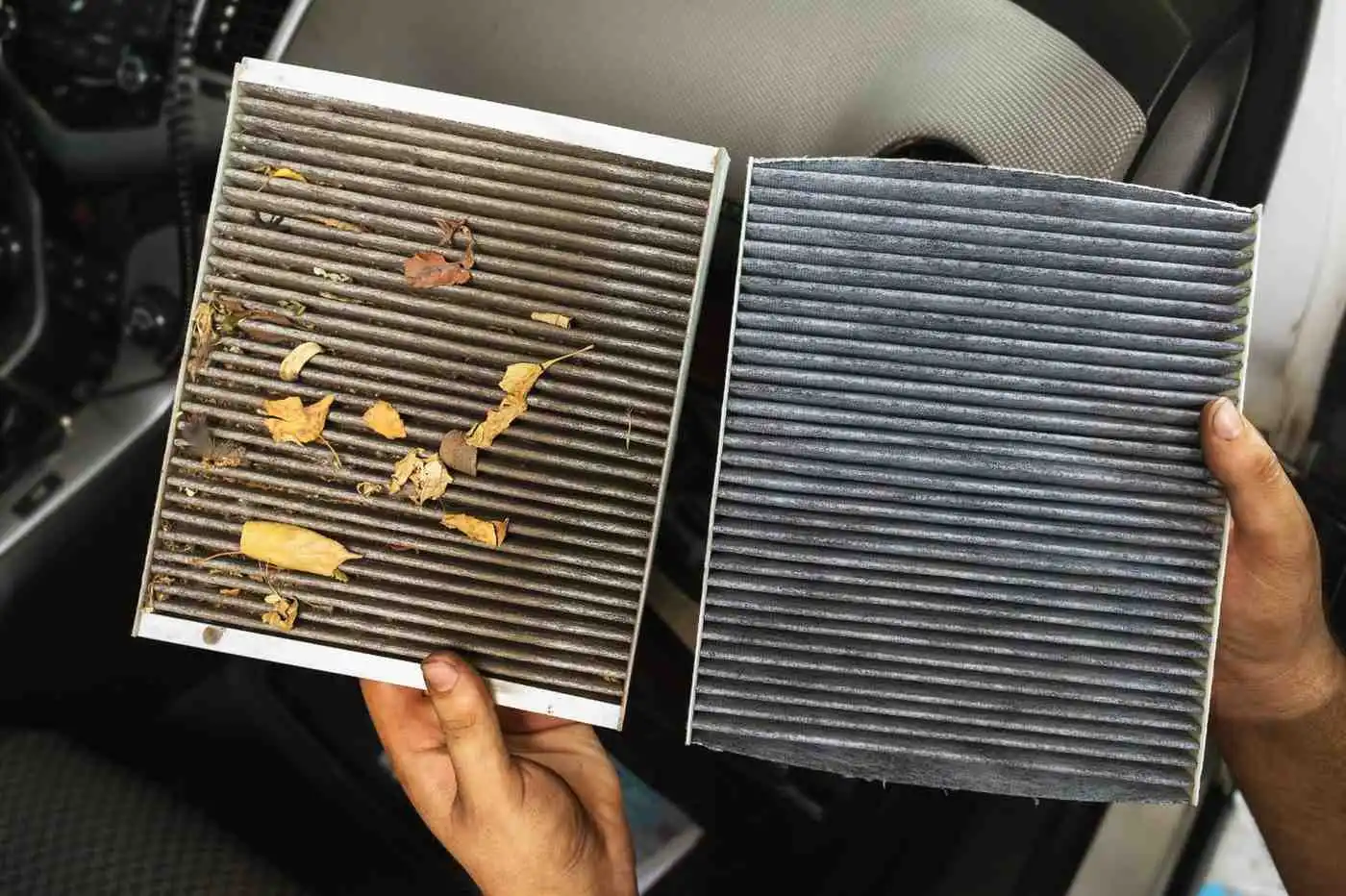
The lab test behind every MERV rating challenges a filter with particles ranging from 0.3 to 10 microns, which is smaller than you can see with the naked eye. A human hair runs about 70 microns wide, so we’re talking about particles far below that. The filter gets tested across multiple particle sizes, and here’s the part most articles skip: your MERV number reflects the worst result across those size ranges, not an average.
That matters. A filter doesn’t get to claim a high rating just because it’s great at catching big dust and mediocre at catching small allergens. It has to perform at that level across the board, at its weakest point. That’s a conservative, honest way to rate a filter, and it’s why the system has stuck around for almost forty years.
MERV 1 to 4: Basic Debris Protection
These are your bare-minimum filters, usually flat fiberglass panels. They stop carpet fibers, lint, and larger dust before it hits your blower and coils. They do almost nothing for allergies or fine dust. If you’ve got a filter this thin in your furnace right now, it’s protecting your equipment, not your lungs.
MERV 5 to 8: Standard Residential Range
This is where most residential systems land, and it’s also where a MERV 8 furnace filter shows up constantly on our service calls. MERV 8 catches mold spores, pet dander, and most household dust. It’s a pleated filter in most cases, offering a reasonable step up from fiberglass without demanding much extra pull from your blower motor.
MERV 9 to 12: The Sweet Spot for Most Houston Furnaces
Here’s where filtration starts catching finer particles, things like auto emissions residue and finer dust that MERV 8 lets slide through. For a lot of homes we service around Houston, this range hits the right balance. You get noticeably better indoor air quality without asking your blower to work overtime.
MERV 13 to 16: Hospital-Grade Filtration
This tier catches bacteria, smoke particles, and some virus-sized droplets. It sounds great on paper. But most residential furnaces were never engineered for the airflow resistance a filter this dense creates, and that’s where problems start. We’ll get into exactly why in a minute.
|
MERV Range |
What It Captures | Typical Fit |
| 1 to 4 | Carpet fibers, large dust, lint |
Basic equipment protection only |
|
5 to 8 |
Mold spores, pet dander, common dust | Standard residential furnaces |
| 9 to 12 | Fine dust, auto emissions, smaller allergens |
Most Houston homes, allergy-aware households |
|
13 to 16 |
Bacteria, smoke particles, fine virus droplets |
High-efficiency systems only, check manual first |
So when someone asks us what does MERV mean on furnace filters in the context of picking one off the shelf, the honest answer is: it means ” how fine a particle this filter can catch,” and the right number depends far more on your specific furnace than on how badly you want cleaner air.
MERV vs MPR vs FPR: Why the Numbers Don’t Match on the Shelf
Here’s something almost nobody explains clearly, and it trips up more homeowners than the MERV chart itself. Walk into a big box store and you won’t always see a MERV number on the box. Some brands use their own scales instead.
3M’s Filtrate line uses MPR, which stands for Micro-Particle Performance Rating. It runs on a completely different numeric scale, often in the hundreds or thousands, so an MPR 1500 filter is not comparable to a MERV number just by looking at the digits. Home Depot’s house brand uses FPR, the Filter Performance Rating, on a 1 to 10 scale with a color-coded system.
None of these three scales convert to each other with simple math. They use different testing philosophies. If you’re comparing filters across brands, don’t try to eyeball a conversion. Look for the MERV equivalent printed somewhere on the packaging (most manufacturers include it in smaller print), or ask a technician directly. This is exactly the kind of detail that turns “what is MERV in air filters” from a vague question into something you can actually act on at the store.
What MERV Rating Is Right for a Houston Furnace?
This is where local conditions actually change the answer, and it’s the part most national guides skip entirely because they’re writing for every zip code at once.
Houston humidity runs high for most of the year, and that moisture holds onto pollen, mold spores, and dust longer than it would in a drier climate. Add in the Houston pollen season, which typically spikes from February through May with oak and pine pollen blanketing everything, and filters here work harder than filters in most other parts of the country.
For most residential furnaces we service, a MERV 8 to 11 filter hits the mark. It’s enough to handle the pollen load and everyday dust without putting unnecessary strain on a system that wasn’t built for high resistance filtration. We’ll bump that recommendation up to MERV 13 in specific cases: households with a family member managing asthma, homes near a busy traffic corridor where fine particulate is a bigger concern, or homes where someone has already confirmed their furnace and blower can handle the extra resistance. Outside of those situations, chasing the highest number on the shelf usually creates more problems than it solves.
Can a High MERV Filter Damage Your Furnace?
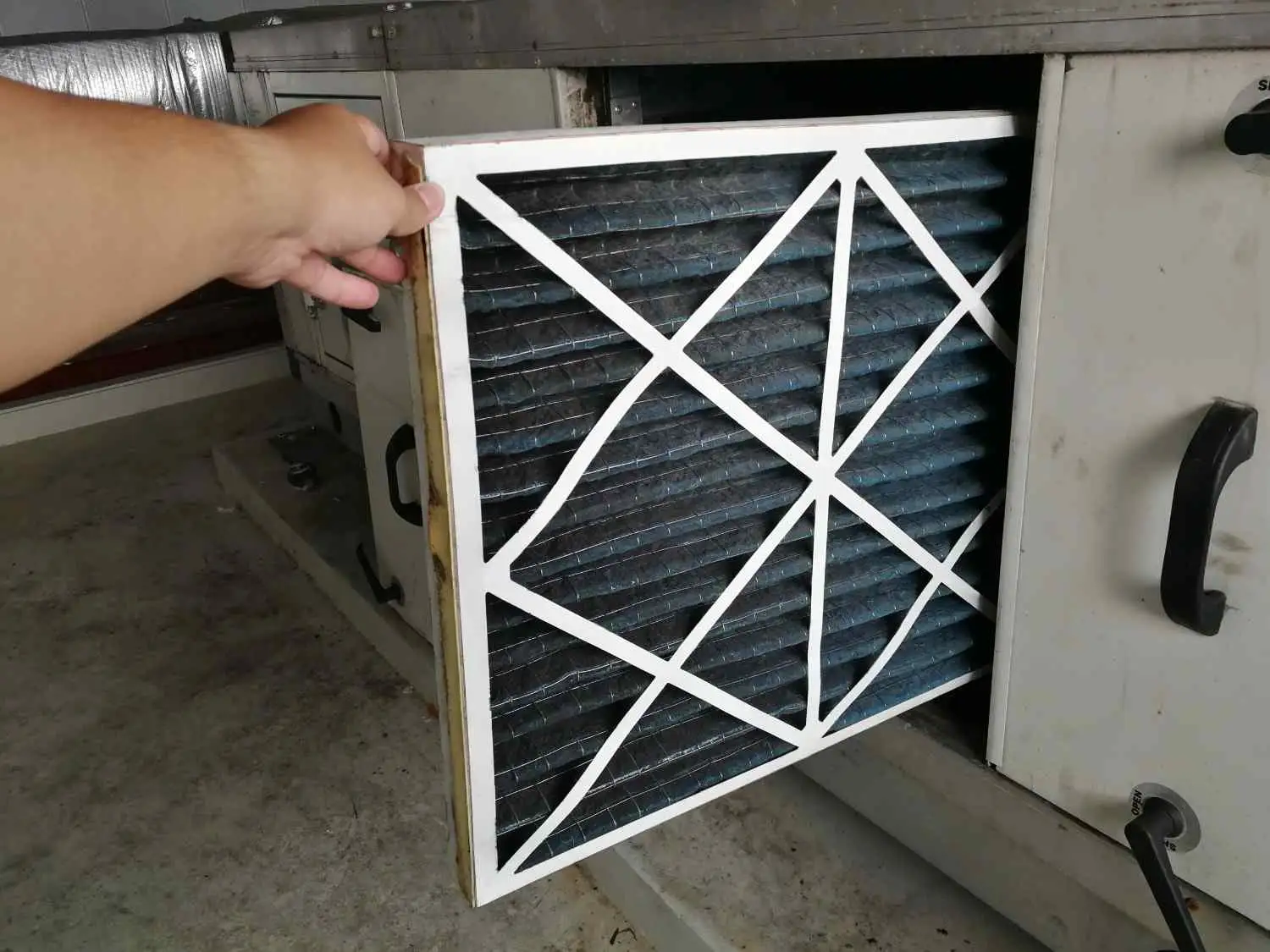
Yes, and this is the part that catches people off guard. A denser filter doesn’t just catch more particles. It also resists airflow more, and HVAC folks call that resistance static pressure. Every furnace is designed around an expected static pressure range. Push past it with a filter that’s too restrictive, and the whole system starts fighting itself.
Here’s what that actually looks like on a service call: airflow drops noticeably at the vents, the system runs longer to reach the set temperature, and in worse cases the evaporator coil (if you’ve got central air paired with the furnace) starts icing over because not enough air is moving across it. Energy bills creep up because the blower motor works harder for the same result, and over time that extra strain shortens the motor’s life.
We’ve replaced blower motors that failed years early simply because someone upgraded to a MERV 13 filter without checking if the system could actually handle it.
The rule we give every customer is simple. Check your furnace manual for its rated filter slot and maximum recommended MERV before you upgrade anything. If the manual doesn’t specify, or you can’t find it, that’s a quick question for a licensed technician rather than a guess.
MERV Rating and Filter Size: Why Slot Size Matters As Much As MERV Number
Filter thickness plays into this too, and it’s an angle that gets overlooked constantly. A standard 1-inch filter has less surface area than a 4-inch or 5-inch media filter, which means it has to work harder per square inch to hit the same MERV rating. That’s part of why 1-inch filters need replacing every one to three months, while a properly sized 4-inch filter can often go six to nine months between changes.
If your furnace has a 1-inch slot and you’re determined to run a high MERV rating, you’re asking a small filter to do a big job, and that’s usually where airflow problems show up fastest. Homes with 4 or 5-inch media cabinets have more breathing room to run a higher MERV furnace filters rating without the same airflow penalty, because there’s simply more surface area spreading that resistance out.
How Often Should You Change Your Furnace Filter in Houston?
As a general rule, a standard MERV 8 filter should get swapped every one to three months. During peak pollen season here, especially February through May, we tell customers to check monthly rather than waiting for the full window, because filters clog faster when pollen counts are high. Higher MERV filters, ironically, often need changing more often too, since they’re trapping more material per pass and filling up faster.
If you’re in the middle of planning a new furnace, this is also the moment when filter slot size and MERV compatibility actually get decided, not something you figure out after the fact. That decision happens during the load calculation and site prep stage of a proper installation, where a technician sizes the system to your home and confirms what filter rating it can support long term.
Our full walkthrough on how to install a furnace covers exactly what that process looks like step by step, including where filter compatibility fits into the bigger picture.
Quick Diagnostic: Is Your Current Filter Too Restrictive?
Before you call anyone, here’s a short self-check you can run in five minutes:
- Airflow at your vents feels weaker than it used to, even on a fresh setting
- Your system runs noticeably longer to reach the thermostat’s target temperature
- Energy bills have crept up without an obvious reason like extreme weather
- You’ve noticed ice forming on refrigerant lines or the indoor coil
- The filter itself is visibly packed with dust well before your usual replacement date
If two or more of these sound familiar, there’s a real chance your current filter is fighting your system rather than helping it. That’s usually one of the first things we check on a furnace repair in Houston call, and it’s often a simple fix once we identify it.
Closing Thoughts
Picking the right filter isn’t about grabbing the highest number on the shelf and hoping for the best. What does MERV mean on furnace filters when you boil it all down? It’s a measurement of how fine a particle your filter can consistently catch, and the right choice depends on your specific furnace, your household’s needs, and what Houston’s climate throws at your system throughout the year.
If you’re not sure what your furnace can handle, or you’ve noticed any of the airflow symptoms we covered above, Kenny Ho and the team at 75 Degree AC are a phone call away. We’ll check your system, confirm what MERV rating actually fits your equipment, and get you set up with something that protects both your air quality and your furnace itself. Contact us today to schedule a filter check or furnace tune-up.
FAQs
What does MERV mean on a furnace filter?
MERV stands for Minimum Efficiency Reporting Value. It’s a 1 to 16 scale that measures how well a filter captures particles of different sizes, based on lab testing developed by ASHRAE.
What MERV rating is best for a furnace in Houston?
For most residential furnaces in the Houston area, MERV 8 to 11 offers the best balance of filtration and airflow, especially given local humidity and pollen levels. Higher ratings can work but should be confirmed against your furnace’s specifications first.
Can MERV 13 damage my furnace?
It can, if your system wasn’t designed to handle the added airflow resistance. Symptoms include reduced airflow, longer run times, higher energy bills, and in some cases a frozen evaporator coil or early blower motor failure.
Is MERV 11 too high for residential furnaces?
Not usually. MERV 11 is a common, well-tolerated rating for most modern residential systems. It’s MERV 13 and above where compatibility becomes more of a concern for older or standard-efficiency furnaces.
How often should I change a MERV 8 vs MERV 13 filter?
A MERV 8 filter typically needs replacing every one to three months. A MERV 13 filter often needs changing on a similar or slightly shorter schedule, since it traps more material and can clog faster despite the higher rating.
What’s the difference between MERV, MPR, and FPR?
MERV is the ASHRAE-developed industry standard used across most manufacturers. MPR is 3M’s proprietary scale for their Filtrate filters, and FPR is Home Depot’s in-house rating system. The three scales don’t convert to each other directly, so it’s best to look for a MERV equivalent printed on the packaging when comparing brands.
Jumping to too high a MERV rating without checking your system’s static pressure can strain the blower — our indoor air quality team can recommend the right rating for your equipment.