
Houston summers can be exceptionally intense. Temperatures regularly reaching 100degF and humidity over 70% put undue strain on HVAC systems here compared to elsewhere across the US, which makes knowing your HVAC system components even more valuable in saving both money and avoiding breakdowns at inconvenient moments. Knowing them could save thousands and prevent unexpected breakdowns altogether!
This guide covers every part of your system in detail, what it does, its lifespan and replacement costs in Houston. No matter if you are a first time homeowner or running a small business with zero tolerance for downtime. Here is your go-to resource.
What Is an HVAC System Components?
HVAC system components stands for Heating, Ventilation and Air Conditioning and refers to an integrated system designed to heat your home during winter and cool it during summer while moving fresh air through your living spaces all year-round. In Houston specifically, cooling plays the biggest part in fact it operates eight-9 months out of every year!
Every part has a specific job. When one fails, the whole system suffers. Understanding the components of an HVAC system helps you catch problems early and talk confidently with your technician. Our Professional HVAC Replacement Service across Houston handle any type of HVAC replacement.
The 4 Main Categories of HVAC Components

All HVAC unit components fall into four groups: cooling, heating, air delivery, and controls. Here is a full breakdown of each.
Cooling Components Most Critical in Houston
Houston’s climate puts extreme stress on your cooling system. These parts carry the heaviest workload.
- Compressor The compressor is the heart of your outdoor unit. It pressurizes refrigerant gas and pushes it through the system. Compressor failure signs include warm air, loud buzzing, hard starting, and a tripped breaker. Replacement in Houston runs $900–$2,500.
- Condenser coil Mounted in your outdoor unit, the condenser coil releases heat pulled from inside your home to the outside air. Dirt buildup is the top killer. Clean it every spring before the cooling season starts.
- Evaporator coil Sitting inside your air handler, the evaporator coil absorbs heat from your indoor air. As refrigerant passes through, it triggers a refrigerant phase change from liquid to gas, pulling heat and moisture out of the air. This also handles humidity control, which matters enormously in Houston. A frozen evaporator coil usually means low refrigerant or restricted airflow.
- TXV / thermal expansion valve The TXV / thermal expansion valve controls how much refrigerant enters the evaporator coil. It drops the pressure rapidly, making the refrigerant cold enough to absorb heat. A bad TXV causes temperature swings and poor cooling performance.
- Refrigerant and refrigerant lines Refrigerant is the fluid that moves heat from inside your home to outside. Most modern systems use R-410A refrigerant, which replaced the older R-22 formula. The refrigerant lines including the suction line, liquid line, and discharge line connect your indoor unit and outdoor unit. Only technicians with EPA 608 certification can legally handle refrigerants.
- Condensate drain and drain pan As your system cools air, moisture collects on the evaporator coil and drips into the drain pan, then flows out through the condensate drain line.
In Houston’s humidity, this line clogs fast. A backed-up drain causes water damage and can shut down the system automatically.
Heating Components
Houston winters are mild, but freezing nights do happen. Your heating parts need to work when called.
Furnace and combustion chamber The furnace burns natural gas or propane inside a sealed combustion chamber to generate heat. Efficiency is measured by AFUE rating older units may be 60% efficient, while modern high-efficiency furnaces reach 98% AFUE. That gap shows up directly on your gas bill.
Heat exchanger The heat exchanger is a critical safety barrier. It lets heat from combustion warm your home’s air without mixing combustion gases into what you breathe. A cracked heat exchanger is a serious carbon monoxide risk CO is colorless and odorless. If a technician finds a crack, do not run the furnace. This is a heat exchanger crack danger that requires immediate attention.
Heat pump A heat pump moves heat rather than generating it, which makes it very efficient in Houston’s mild winters. Many homeowners here use a heat pump for heating and a traditional AC for the hottest months.
Air Delivery Components
Creating conditioned air means nothing if it cannot reach every room. These parts are your distribution network.
Air handler and blower motor The air handler is the indoor cabinet housing the evaporator coil and the blower motor. The blower motor powers the fan that moves air across the coil and through your ducts. The blower wheel attached to the motor must stay clean or airflow drops.
Older systems use PSC motors, which run at one fixed speed. Modern systems use an ECM blower motor, also called a variable speed motor, which adjusts speed automatically and cuts electricity use by up to 75%. For energy efficiency, this upgrade pays for itself quickly in a Houston home.
Ductwork and dampers Ductwork is the network of channels that carries conditioned air to every room. In a typical Houston home, duct leakage wastes 20–30% of conditioned air before it reaches living spaces. Sealing ducts is one of the best investments you can make. Dampers are movable plates inside the ducts that control airflow to specific zones, used in air balancing and zoning setups.
Supply vents and return vents Supply vents blow conditioned air into rooms. Return vents pull room air back to the system to be reconditioned. Never block return vents with furniture; it forces the blower motor to work harder and can cause damage over time.
Fan coil unit A fan coil unit includes a coil and fan used in systems without a traditional air handler. Common in commercial buildings and apartments, it delivers heating or cooling directly to a specific space.
Air filter The air filter catches dust, pollen, and allergens before they reach your coil. In Houston, change filters every 4–6 weeks heavy dust, pet dander, and outdoor allergens load up filters fast. A clogged filter drops indoor air quality and strains your entire system.
Control and Electrical Components
These parts tie everything together and keep the system running safely.
Thermostat The thermostat is the brain of your system. A programmable thermostat lets you set temperature schedules. A smart thermostat learns your habits, connects to your phone, and cuts heating and cooling costs by 10–15% annually. For long-term thermal comfort and savings, a smart thermostat is one of the easiest upgrades available.
Capacitor and contactor The capacitor stores electrical charge and gives motors the jolt they need to start. A bad capacitor is the most common reason an outdoor unit will not start and it is one of the cheapest fixes. The contactor is a heavy-duty switch that connects power to the compressor and fan. Houston heat wears out contactors faster than average.
Relays and sensors Relays control when electrical circuits open and close. Sensors monitor temperature and pressure so the system adjusts automatically to maintain thermal comfort and indoor air quality.
HVAC Component Lifespan and Replacement Cost in Houston
|
Component |
Average Lifespan | Houston Replacement Cost | Warning Signs |
| Compressor | 10–15 years | $900–$2,500 |
No cold air, loud noise, tripped breaker |
|
Evaporator coil |
10–15 years | $600–$2,000 | Ice buildup, warm air, refrigerant leak |
| Condenser coil | 10–20 years | $700–$2,000 |
Hot output air, dirty fins |
|
Heat exchanger |
15–20 years | $600–$1,200 | CO alarm, cracked metal |
| Blower motor (ECM) | 10–20 years | $400–$1,200 |
Weak airflow, overheating |
|
TXV |
10–15 years | $200–$600 | Temperature swings, frozen coil |
| Capacitor | 5–10 years | $100–$400 |
Unit won’t start, humming |
|
Contactor |
5–10 years | $75–$300 | Chattering, unit won’t turn on |
| Thermostat | 10–15 years | $100–$500 |
Wrong readings, no response |
|
Ductwork sealing |
Varies | $300–$1,500 |
High bills, uneven cooling |
Split System vs. Packaged Unit: Which Components Do You Have?
Most Houston homes use a split system: a separate indoor unit (air handler or furnace) and outdoor unit (compressor and condenser coil), connected by refrigerant lines. The indoor unit handles evaporation; the outdoor unit handles heat rejection.
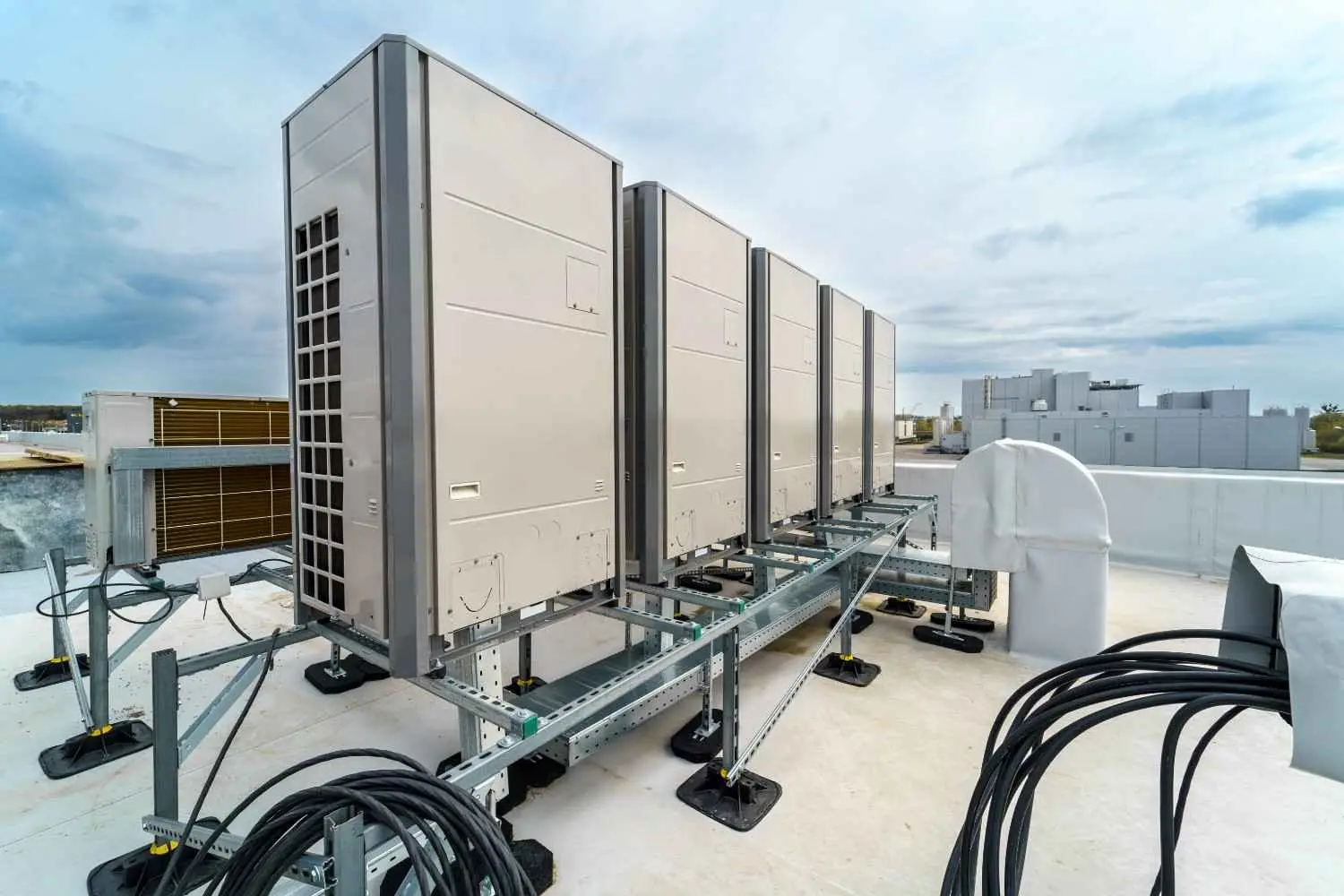
A packaged unit combines everything compressor, coils, and blower motor into one cabinet placed outside on a roof or pad. It connects directly to your ductwork. Packaged units are common in south Texas and smaller commercial properties.
A ductless mini-split system skips ductwork entirely. A small outdoor unit connects to one or more wall-mounted indoor unit heads via refrigerant lines. It is ideal for room additions, older homes, and residential vs commercial HVAC applications where installing ducts is not practical. Two-stage vs single-stage systems are available in all three configurations; two-stage runs at lower capacity most of the time, saving energy and better managing humidity.
We provide Professional HVAC Replacement Service for all three system types across Houston, including full packaged unit installation and removal.
How to Maintain Each HVAC Component
Houston’s climate demands more maintenance than the national average.
Spring checklist (March–April):
- Clean condenser coil and clear 2 feet around the outdoor unit
- Test capacitor and contactor
- Flush condensate drain line with diluted bleach
- Replace air filter
- Test thermostat calibration
- Inspect refrigerant lines for damage or ice
- Check refrigerant charge
Fall checklist (October–November):
- Inspect furnace and combustion chamber
- Test heat exchanger for cracks carbon monoxide risk check
- Verify blower motor and blower wheel condition
- Check dampers and zone controls
- Test contactor and electrical connections
Filter schedule in Houston: every 4–6 weeks. Homes with pets or allergy concerns should check monthly.
Preventive HVAC maintenance twice a year is the single best way to extend system life and avoid emergency calls. 75 Degree AC offers seasonal tune-up packages covering every component above. Our Professional Air Conditioning Service keeps Houston homeowners and business owners comfortable year-round.
Conclusion
Every HAVC system component plays a role in keeping your Houston home or business comfortable. Knowing what each part does and when it typically fails puts you ahead of expensive emergency breakdowns. The heat transfer process running through your system is only as reliable as its weakest part.
Whether you need a seasonal tune-up, an emergency repair, or a full system replacement, our team covers it all. Contact 75 Degree AC today or book your HVAC inspection online before Houston’s heat catches you off guard.
FAQs
What are the main components of an HVAC system?
The main HVAC system components are the compressor, condenser coil, evaporator coil, TXV / thermal expansion valve, air handler, blower motor, ductwork, thermostat, furnace, and heat exchanger. Each handles a specific part of the heating, cooling, or air delivery process.
How long does an HVAC compressor last?
Most compressors last 10–15 years with proper maintenance. In Houston’s heat, units that run year-round often reach the lower end of that range. Regular tune-ups extend compressor life significantly.
What happens when the heat exchanger cracks?
A cracked heat exchanger lets combustion gases including carbon monoxide mix with your home’s air. This is a heat exchanger crack danger and a health emergency. Shut the system off and call a Professional HVAC Repair Service immediately.
What does the TXV do?
The TXV / thermal expansion valve controls refrigerant flow into the evaporator coil. It drops pressure quickly, making refrigerant cold enough to absorb indoor heat. Without it working correctly, your system loses cooling capacity fast.
Why is my AC not cooling?
Common causes: low refrigerant, dirty evaporator coil, failed capacitor, blocked air filter, or bad compressor. Starting with the air filter it is a 30-second fix that solves the problem more often than most people expect.
How much does it cost to replace a compressor in Houston?
Compressor replacement in Houston typically runs $900–$2,500. If your system is over 10 years old, a full replacement may be more cost-effective than a compressor swap alone.
What is two-stage vs single-stage?
A single-stage system runs at 100% or off. A two-stage vs single-stage comparison shows that two-stage systems run at lower capacity most of the time, saving energy, reducing humidity better, and extending equipment life. In Houston’s long cooling season, a two-stage is usually worth the investment.