
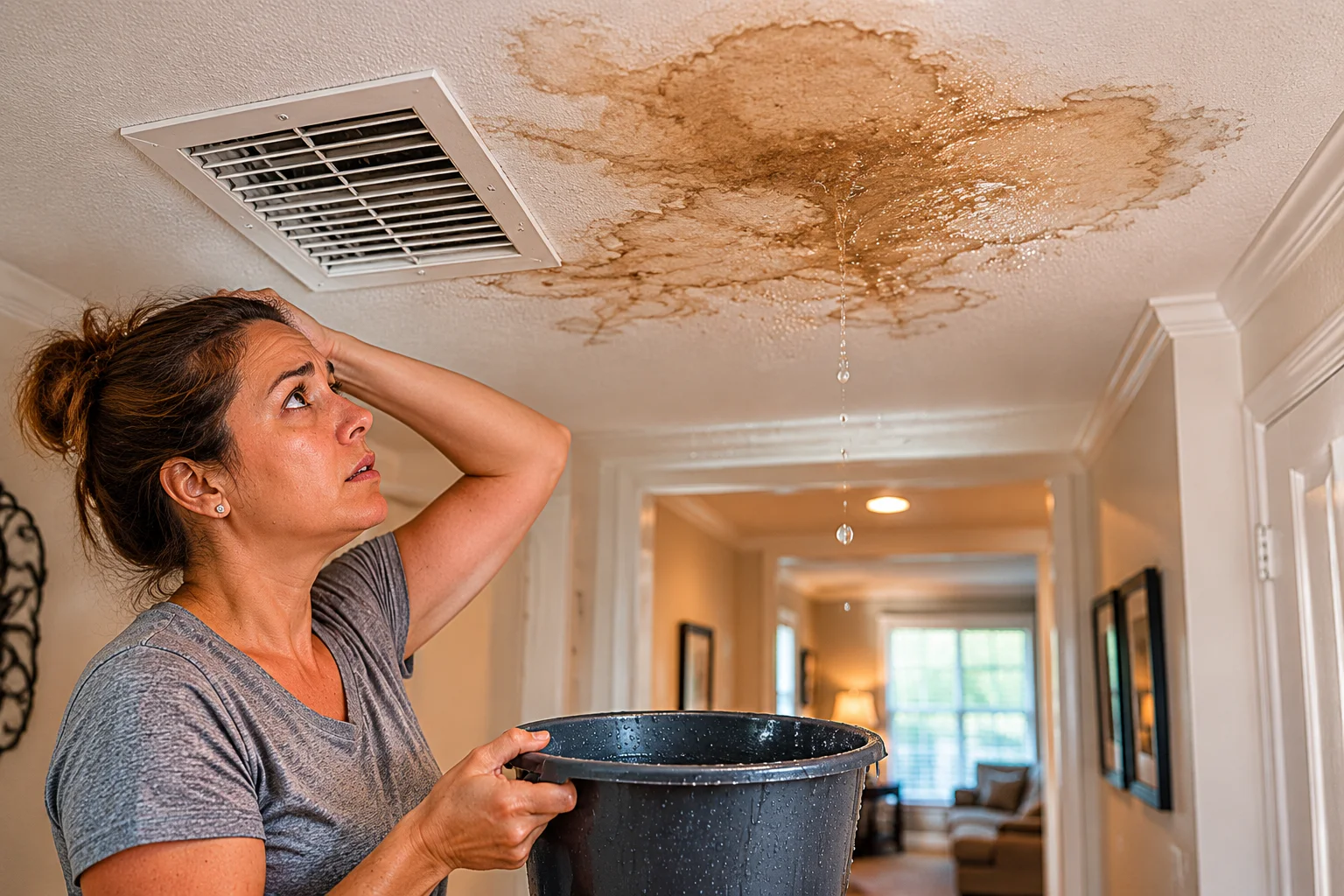
If your AC is leaking water inside the house right now, here’s the short version: the water itself won’t hurt you today, but it gets expensive within 24 to 48 hours. A stain spreading across the ceiling, a drip from a vent, a puddle by the air handler closet all of it means the condensate path failed.
This guide covers what to do right now, why an AC leaking water inside home is so common in Houston, real 2026 repair costs, and whether insurance pays for the damage.
Is AC Leaking Water Inside House Dangerous?
An AC leaking water inside house is not immediately toxic, but it turns dangerous within 24 to 48 hours. Standing water saturates drywall, insulation, and ceilings and the EPA confirms mold can start growing in that window. Turn the AC off and call a licensed technician. Don’t run it until the cause is found.
Here’s the fuller picture on why an AC leaking water inside house needs fast action, even though the water itself starts out clean:
- A clogged condensate drain line the most common cause in Houston homes can dump up to 20 gallons a day into your attic or ceiling cavity before you ever see it.
- The EPA documents mold starting on wet drywall within 24 to 48 hours, and Houston’s summer humidity shortens that window further.
- Most Houston homes built before 2000 have attic-mounted air handlers, so an air conditioning leaking water problem up there soaks the ceiling from above with zero warning until the stain shows.
75 Degree AC (TACLA72152E, founded 2016) runs same-day diagnostics across Houston for exactly this problem. Call (713) 598-2737, seven days a week.
Should You Turn Off an AC Leaking Water Inside Home?
Yes, shut it off at the thermostat immediately. Every minute it runs, the coil pulls more moisture out of the air and pushes it toward a drain path that’s already failed.
Then work through these five steps:
- Kill the cooling at the thermostat. Switch to OFF, not just a few degrees up. If the coil is frozen, set the fan to ON so it can thaw without adding more condensate.
- Check the air filter. A clogged filter starves the coil of airflow, freezes it, and the meltwater becomes your leak. A $15 filter causes a surprising number of these calls.
- Find the air handler attic, closet, or garage and check for standing water or dripping.
- Check the secondary drain pan. Water sitting there means the primary drain already failed and you’re on backup.
- Photograph everything with timestamps. If this becomes an insurance claim, dated photos plus a same-day service record are what gets it paid.
If water is actively coming through the ceiling, skip the steps above and call for emergency service.
Where Does the Water Actually Come From?
Your AC is a dehumidifier that happens to cool. Warm, humid indoor air crosses the evaporator coil, moisture condenses on the cold fins, and gravity carries it into a pan and out through a 3/4-inch PVC drain line. No pump, no pressure on most setups just slope.
The volume is bigger than people expect. With Houston’s summer dew points around 73°F, a central system can pull up to 20 gallons of water out of the air per day at peak load. Houston logged 145 days at or above 90°F in 2025, an all-time record and the average local system runs roughly 2,800 hours a year, nearly double the national average. That’s a lot of condensate funneling through one narrow pipe that almost nobody flushes.
When that pipe clogs, 20 gallons a day has to go somewhere and “somewhere” is usually your ceiling. Than contact professional Trusted AC Leak Repair in Houston.
Why Is Your AC Leaking Water Inside? (6 Real Causes)
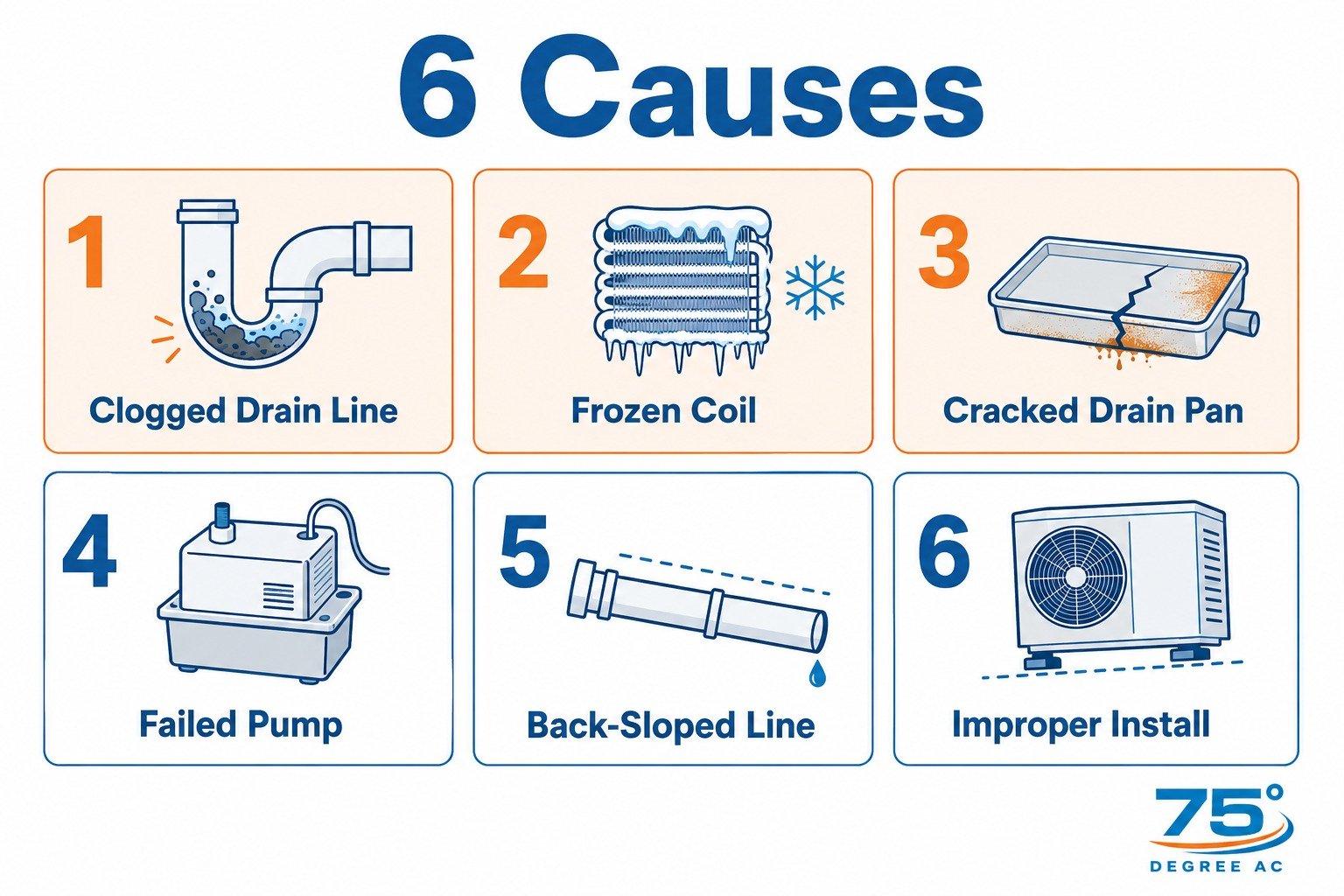
Six causes account for nearly every AC leaking water inside house call we run, ranked by how often our techs find them:
- Clogged condensate drain line. Algae and bacterial sludge grow inside the warm, wet PVC line, and Houston heat speeds this up. The line backs up, the pan overflows, water escapes.
- Frozen evaporator coil. Restricted airflow (dirty filter, blocked returns) or low refrigerant drops the coil below freezing. Ice builds, then thaws into more water than the pan can hold.
- Cracked or rusted drain pan. Common past the 12-year mark, especially in attic units cycling between 130°F summers and damp winters.
- Failed condensate pump. Closet and garage installs that can’t drain by gravity use a small pump. When the float sticks or the motor dies, water overflows onto the floor.
- Disconnected or back-sloped drain line. Code requires 1/8 inch of fall per foot of run. Foundation settling or a stepped-on attic line kills that slope.
- Improper installation. An unleveled air handler tips condensate away from the drain port common on rushed summer change outs.
Notice what’s not on this list: “your AC is dying.” An AC dripping water almost never means you need a new system. Five of the six causes above are sub-$600 repairs.
Why Are Houston Attic Units the Worst Case?
Most pre-2000 Houston homes have attic-mounted air handlers. A drain failure up there behaves differently than one in a garage:
- The leak starts invisible. Water soaks attic insulation and the top of your drywall first. By the time a ceiling stain shows, the leak has usually been running for days.
- A backup pan is code, but only if installed. IRC section M1411.3.1 requires a secondary pan or shutoff device under attic units where overflow could damage the ceiling. Older Houston homes often predate enforcement.
- A float switch is the tell. If water reached your secondary pan, a working float switch should have already shut the system down. If it keeps running until the ceiling is stained, you likely don’t have one or it’s dead.
- Attic heat compounds everything. At 130°F+, algae grows faster in the line and pans corrode faster.
A wired float switch runs $150–$350 installed. It’s the single best ceiling insurance a Houston homeowner can buy.
How Fast Does Mold Grow After an AC Leaking Water Inside House Problem?
Fast. The EPA states that materials dried within 24 to 48 hours of a leak generally won’t grow mold. Read that in reverse: past 48 hours, assume mold is establishing in wet drywall and insulation.
Under IICRC S500, the water-damage industry’s own standard, AC condensate starts as Category 1 (clean water). After 24 to 48 hours in contact with drywall and dust, it reclassifies as Category 2 gray water which changes what restoration crews have to tear out versus dry.
Houston’s humidity, sitting above 60% through the cooling season, makes both clocks run faster. “We’ll deal with it this weekend” is the most expensive sentence in this entire topic the repair cost barely changes between Tuesday and Saturday, but the remediation bill can grow by thousands.
Can You Fix AC Dripping Water Yourself?
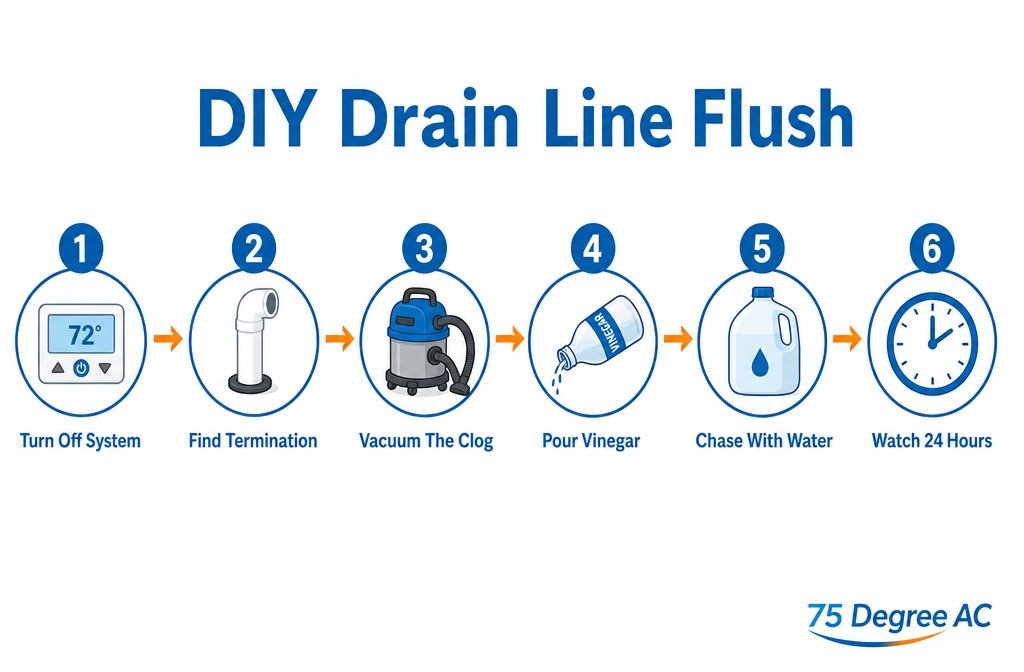
Often, yes if the cause is a simple drain clog. Here’s the method our techs use:
- Turn off the system at the thermostat and breaker.
- Find the drain line’s outdoor termination of the 3/4-inch PVC stub near your outdoor unit or exterior wall.
- Pull the clog with a wet/dry vacuum. Seal the hose to the pipe end and run it for 2–3 minutes.
- Pour a cup of distilled white vinegar into the vent tee near the air handler. Skip bleach it’s harsher on glue joints and doesn’t clear matured growth any better.
- Chase it with a quart of water after 30 minutes and confirm it drains at the termination.
- Watch the unit for 24 hours.
Call a pro instead if: the coil is frozen (refrigerant work needs EPA 608 certification), the pan is cracked, the clog returns within weeks, water reaches the secondary pan, or vinegar flushes aren’t holding.
What Does the Repair Cost in Houston (2026)?

|
Repair |
Houston 2026 Range | Typical Time |
DIY-able? |
| Drain line clear + flush | $99–$175 | Under 1 hour |
Sometimes |
|
Float switch installed |
$150–$350 | ~1 hour | No |
| Drain pan replacement | $250–$600 | 2–3 hours |
No |
|
Condensate pump replacement |
$230–$450 | ~1 hour | Handy DIYers, maybe |
| Frozen coil diagnosis + refrigerant work | Varies | 1–3 hours |
No |
|
Ceiling drywall repair |
$500–$2,500 | Days | Contractor work |
| Mold remediation (if it sat) | $2,000–$13,500 | Days to weeks |
No |
A drain clear caught early is a $99–$175 fix. The same clog ignored for a week can turn into a four-figure remediation job. A water leak almost never justifies full system replacement get a second opinion if that’s the first pitch you hear.
Call (713) 598-2737 and we’ll tell you which problem you actually have before recommending any repair.
Does Homeowners Insurance Cover an AC Leaking Water Inside House Problem?
Usually yes for the resulting damage, never for the AC repair itself and timing decides everything.
Standard Texas HO-3 policies typically cover “accidental discharge or overflow” of water from an AC system. Sudden event, ceiling and floor damage: usually covered. The clog or pan repair itself is maintenance and comes out of your pocket.
The exclusion that catches Houston homeowners: leaks running roughly 14+ days get classified as long-term seepage and denied as deferred maintenance.
Protect your claim:
- Photograph everything with timestamps the day you find it
- Get a licensed technician out same-day
- Keep the dated service report
Is It Water or a Refrigerant Leak?
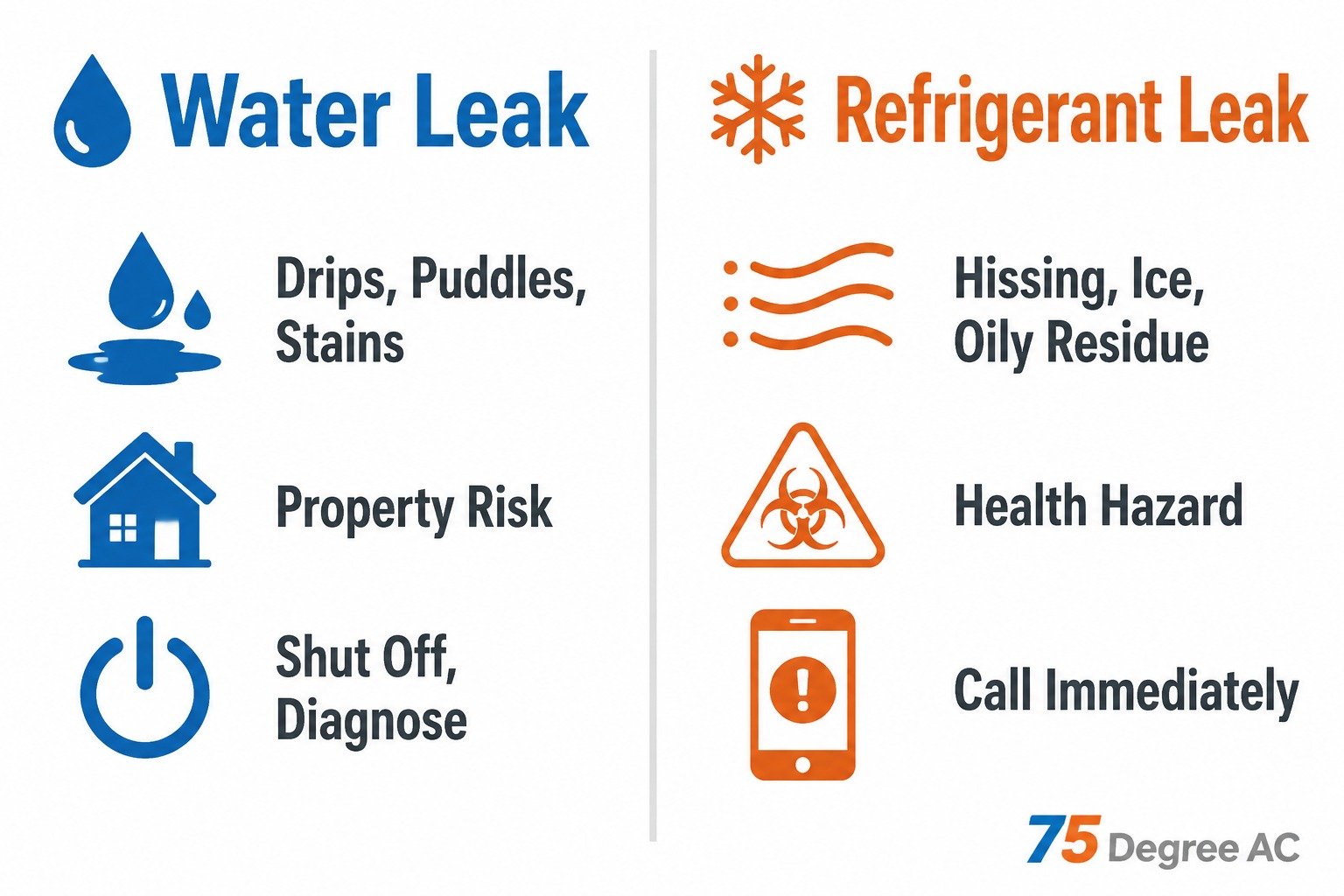
| Water (condensate) leak | Refrigerant leak | |
| What you notice | Dripping, puddles, ceiling stains |
Hissing, ice on copper lines, oily residue, chemical smell |
|
Danger level |
Property risk: drywall, mold, flooring | Health/system hazard, can damage compressor |
| Action | Shut off, diagnose within 24–48 hrs |
Shut down, call immediately EPA 608 certification required |
Quick gut check: water you can wipe up is condensate. Ice on the lines or a sweet chemical smell means refrigerant never DIY that one.
How Do You Stop the Next Leak?
Five habits separate the homeowners we see once from the ones we see every June:
- Install a wired float switch $150–$350, shuts the system off before overflow
- Flush the drain line monthly during cooling season with a cup of white vinegar
- Change the filter every 30–60 days in Houston summers
- Walk the attic twice a season and check the secondary pan
- Book a spring tune-up catches the float switch, pan, and drain line before summer heat hit
Our trucks stock float switches, drain pans, and condensate pumps, so prevention work and most leak repairs happen in one visit instead of a parts-ordering wait.
When to Call 75 Degree AC
Water on the floor or a stain on the ceiling right now? The mold clock and the insurance clock are both already running. Dispatches same-day repair across Houston, seven days a week, with drain parts stocked on every truck. Contact us diagnosis first, honest numbers before any work starts.
75 Degree AC is a Houston-licensed HVAC contractor (TACLA72152E, founded 2016) serving Greater Houston and Fort Bend County. Verify our license at TDLR.
FAQs
Is it safe to wait a few days if my AC is leaking?
No. The EPA puts mold growth at 24–48 hours on wet materials, and insurers deny claims for leaks that sat as “gradual damage.” Shut the system off and get it looked at today.
Can I still run my AC if it’s leaking water inside home?
No. Every hour of runtime adds more condensate up to 20 gallons a day in Houston summer toward a drain that’s already failed.
Is water in my attic unit’s secondary pan normal?
No. It means your primary drain has failed and a working float switch should have already shut the system down.
Why is my AC leaking water but still cooling fine?
The drain system and cooling system fail independently. A clogged line doesn’t affect cooling capacity, so water can pool out of sight while the house stays comfortable.
Is an AC leaking water inside house always an emergency?
Water actively comes through the ceiling yes, same-day. A small, contained drip with the system off can wait a day, not a week.
How much does it cost to fix an AC leaking water inside house problem in Houston?
$99–$175 for a standard drain clear and flush in 2026. Add $150–$600 if a float switch or pan needs replacing.
I poured vinegar down the drain and it still leaks. Do I need a new AC?
Almost certainly not. Vinegar prevents clogs but rarely clears a matured algae mat that needs vacuum extraction. It’s still a sub-$600 fix far more often than a replacement conversation.
A clogged or cracked condensate line rarely fixes itself — if the drip keeps coming back, have it looked at through our AC repair service before it damages your ceiling or flooring.