
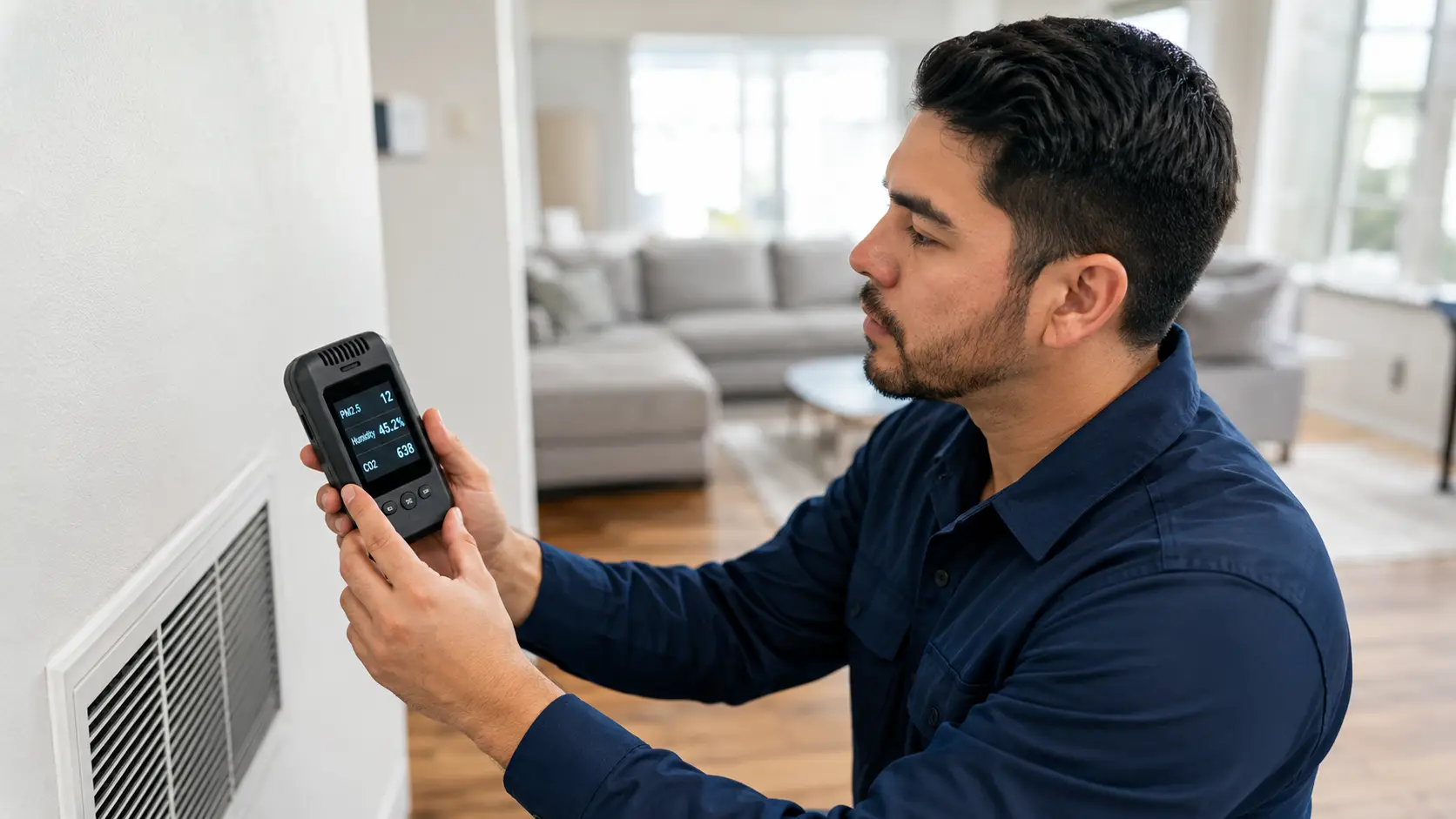
Most of what’s polluting your home’s air is invisible like radon seeping through foundation cracks, VOCs off-gassing from new couches, carbon dioxide building up in closed bedrooms at 2 AM (and likely leading to headaches!), or carbon monoxide that builds up when sleeping with closed bedroom doors shut. That is one of the frustrating features of indoor air quality; everything seems fine until someone starts coughing night after night.
Learning how to test indoor air quality matters more here than in most cities. Houston homes are designed to keep cooling costs at bay by sealing tight; unfortunately, however, this traps any pollutants that enter. At 75 Degree AC, we often hear similar stories: people assume their air is fine because their home appears tidy when an air monitoring test reveals something they never anticipated; then when monitoring is undertaken by technicians they find something unexpectedly.
Why Indoor Air Quality Testing Matters in Houston
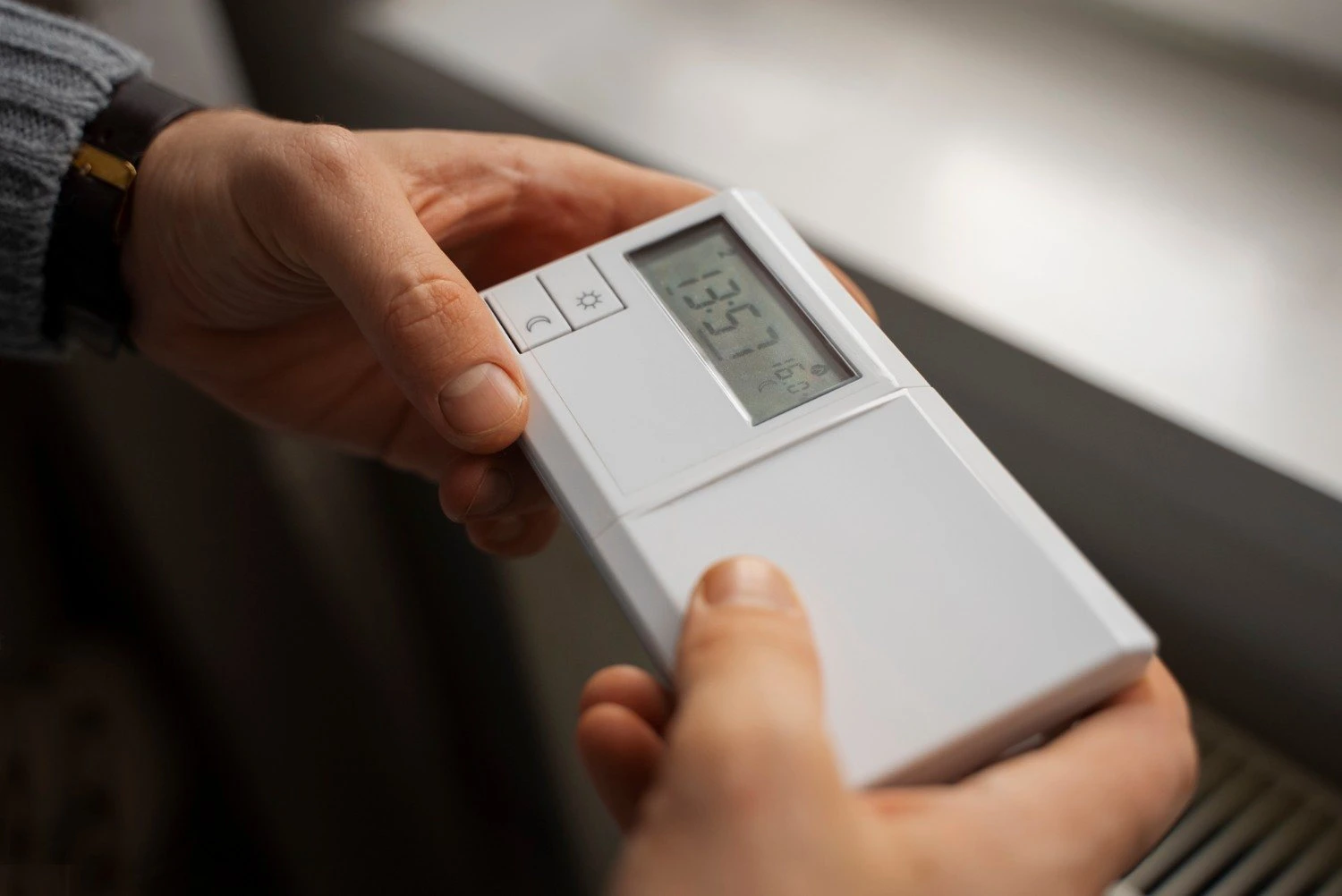
People spend about 90% of their time indoors. That’s not a scary statistic, it’s just how modern life works between homes, offices, and cars. The problem is that indoor air can run two to five times more polluted than the air right outside your front door, according to the EPA. Dust, off-gassing furniture, cooking fumes, and pet dander all build up with nowhere to go.
Houston makes this worse. Average humidity sits above 75% for a good chunk of the year, and that kind of moisture is exactly what mold and dust mites need to thrive. Add in energy-efficient construction, which is great for your electric bill but terrible for natural air exchange, and you get homes that hold onto pollutants instead of letting them escape. This is exactly why how to test indoor air quality isn’t just a curiosity question for Houston homeowners. It’s practical maintenance, the same way you’d check your AC filter or your smoke detector batteries.
Common Indoor Pollutants You’re Actually Testing For
Before you buy anything or call anyone, it helps to know what you’re actually looking for. Every method of how to test indoor air quality is really just measuring some combination of these:
|
Pollutant |
Common Source | Health Effect | Houston Relevance |
| PM2.5 (particulate matter) | Dust, smoke, cooking, outdoor pollution | Lung and heart irritation, worsens asthma |
Wildfire smoke and traffic pollution can spike indoor readings |
|
VOCs |
Paint, new furniture, cleaning products, carpet | Headaches, eye/throat irritation, nausea | New builds and recent renovations trap VOCs longer in sealed homes |
| CO2 | Human breathing in closed rooms | Fatigue, headaches, poor sleep |
Common in bedrooms with AC running and windows sealed |
|
Radon |
Soil gas seeping through foundation | Leading cause of lung cancer after smoking | Varies by neighborhood and soil type, worth a one-time check |
| Mold spores | Damp areas, leaks, poor ventilation | Allergic reactions, respiratory issues |
Gulf Coast humidity makes mold a year-round risk, not just after a leak |
|
Humidity |
Weather, poor HVAC dehumidification | Fuels mold and dust mite growth | Consistently high, especially April through October |
| Carbon monoxide | Gas appliances, attached garages | Dizziness, nausea, can be fatal at high levels |
Rare but serious, especially with older gas furnaces |
|
Formaldehyde |
Pressed wood, some insulation, adhesives | Irritation, long-term exposure risks |
Common in newer cabinetry and flooring |
3 Ways to Test Indoor Air Quality: And Which One You Actually Need
Here’s how to test indoor air quality. They’ll tell you to “buy a monitor” and stop there. But that’s only one option, and it’s not always the right one. If you’re asking how can I test the air quality in my home, there are really three paths, and each one answers a different question. That’s where a full indoor air quality inspection from a technician makes the difference.
Consumer air quality monitors (continuous DIY monitoring)
These small plug-in or battery devices track PM2.5, VOCs, CO2, and sometimes humidity in real time through an app. They’re good for spotting patterns, like whether your CO2 spikes every night in a specific bedroom. They’re not built to catch everything, though. Most budget monitors miss mold spores and can’t confirm radon or formaldehyde levels accurately.
At-home mail-in lab test kits
You collect an air or dust sample yourself and send it to a certified lab. This is the better route for mold, formaldehyde, and VOC identification, since a lab can name the exact compound instead of just flagging “elevated VOCs.” It’s a one-time snapshot rather than ongoing tracking, so it won’t tell you how things change over a week or a season.
Professional HVAC technician IAQ assessment
A technician physically inspects your ductwork, checks humidity control, looks for mold near vents and coils, and often uses commercial-grade equipment that’s more accurate than consumer devices. This is the only option that also tells you why a problem exists, not just that it exists.
|
Method |
Cost Range | Turnaround | Accuracy | Best For |
| Consumer monitor | $50 to $300 | Real-time, ongoing | Moderate |
Tracking trends over time |
|
Mail-in lab kit |
$150 to $400 | 5 to 10 business days | High for tested pollutants | Confirming a specific concern (mold, VOCs) |
| Professional HVAC assessment | Varies by scope, often bundled with service call | Same day results, follow-up report | Highest, includes root-cause diagnosis |
Whole-home evaluation and system-related issues |
Step-by-Step: How to Test Your Home’s Air Quality Yourself
If you’re going the DIY route, doing it right matters more than which device you buy. Here’s how do you test air quality in a house without wasting money on inaccurate readings.
- Figure out what you’re actually worried about. A newer home with fresh paint or flooring points toward VOCs. An older home or one with recent water damage points toward mold and humidity. Match the test to the symptom.
- Place the monitor correctly. It needs to sit in your breathing zone, roughly chest height when seated, not on the floor and not right next to a supply vent or an open window. Placement near airflow sources will skew every reading.
- Let it calibrate before trusting the numbers. Most consumer monitors need anywhere from a few hours to a full week to stabilize, especially for VOC and CO2 sensors. Don’t panic over the first hour of data.
- Track patterns, not a single reading. One high spike could just mean you were cooking dinner. Look at trends across one to two weeks to see what’s actually normal for your home.
- Compare against known reference points. The EPA’s radon action level is 4 pCi/L. If a reading crosses that consistently, it’s worth a follow-up test, not just a one-time glance.
Signs Your Air Quality Needs Testing Right Now
Some homes don’t need to wait for a scheduled check. If you’re seeing any of these, it’s time to look into how to test indoor air quality sooner rather than later:
- Your AC filter gets dirty within a few weeks instead of lasting the recommended one to three months
- Windows show condensation or you notice a musty smell that won’t go away
- Someone in the house has ongoing allergy symptoms, coughing, or headaches that ease up when they leave the home
- You can see mold or discoloration near supply vents or in bathrooms and laundry areas
- You just finished a renovation, new flooring, or bought new furniture and someone’s noticed irritation
When to Call a Licensed HVAC Technician Instead of DIY Testing
A monitor can tell you that something’s off. It can’t tell you if your ductwork is leaking humid attic air into your supply lines, or if your evaporator coil has mold growing on it where you’ll never see it.
At 75 Degree AC, our licensed technicians handle whole-home IAQ assessments across the Houston area, checking ductwork, humidity control, and ventilation, and matching solutions like HEPA filtration or humidity balancing to what’s actually happening in your specific system. If you’ve already run a DIY test and the numbers keep coming back high, or if a mail-in kit confirmed mold or elevated VOCs, that’s the point to bring in a professional instead of guessing at a fix.
Houston-Specific Testing Considerations
Testing in this climate isn’t quite the same as testing in a dry state. High humidity throws off some consumer monitor readings, since certain sensors interpret moisture as particulate matter and report inflated numbers. Pollen season, which runs long here, can also spike PM2.5 readings temporarily without meaning your baseline air quality has actually changed.
And your HVAC system itself plays a bigger role in test results than most homeowners expect. A system with a dirty coil or leaky ductwork can push humidity and dust back into your living space no matter how good your filter is. That’s part of why how to test indoor air quality in this region really should include a look at your system’s condition, not just the air sitting in a room.
What to Do After You Get Your Results
Getting a number back is only half the job. If your results point to particulate matter or allergens, a properly sized HEPA filtration system captures particles as small as 0.3 microns, well below what a standard filter catches. If VOCs or odors are the concern, pairing filtration with better ventilation makes a bigger difference than filtration alone. If humidity is consistently above 50%, a whole-home dehumidifier paired with air purifier installation addresses both the moisture and the particles it’s feeding.
We’ve written a more detailed breakdown of how HEPA filtration actually works if you want to understand the mechanics before deciding what to install.
Conclusion
Testing your air doesn’t have to be complicated, but it does have to be done right. Whether you start with a monitor, a lab kit, or go straight to a technician, understanding how to test indoor air quality is the first step toward actually fixing what’s making your home’s air worse. If your results raise more questions than answers, contact 75 Degree AC is available to walk through what’s really going on in your system.
FAQs
How much does indoor air quality testing cost?
Consumer monitors run $50 to $300. Mail-in lab kits typically cost $150 to $400 depending on what you’re testing for. Professional assessments vary but are often bundled into a standard HVAC service call.
Can I test air quality without buying a monitor?
Yes. Mail-in lab kits and professional technician assessments don’t require you to own a monitor. They’re often more accurate for specific concerns like mold or formaldehyde.
How long should I monitor before trusting the data?
Give it one to two weeks minimum. Most sensors need a calibration period, and a single day’s reading can be thrown off by cooking, cleaning, or weather.
Do air quality monitors detect mold?
Most consumer monitors don’t detect mold spores directly. They may pick up on related humidity spikes, but confirming mold requires a lab test or a physical inspection.
Is a professional IAQ assessment worth the cost?
If DIY testing keeps flagging a problem you can’t explain, or if you’re dealing with recurring symptoms without an obvious cause, yes. A technician can find root causes a monitor simply can’t see.
How often should I retest my home’s air?
Once a year is reasonable for most homes. Retest sooner after a renovation, a water leak, a new HVAC installation, or if anyone develops new respiratory symptoms.