
This knowledge can assist you with planning your maintenance routine, spotting warning signals, and recognizing when replacement or repairs offer more advantages than an aged unit. Most common residential furnaces can reliably produce heat for 15–20 years, assuming they receive care like proper installation, regular maintenance and operation.
It largely is contingent upon its construction, use, maintenance logs, initial installation and neighborhood condition. If your heating system is freshly installed or years into its useful service life, calculating a few years remaining to prevent unnecessary heat failure and financial waste will make a wise decision on its destiny. The Facts of the Average Furnace Life Span Let’s answer the question; how many years do furnaces live?
How Long Does a Furnace Last?

If you ask How long does a furnace last then the honest answer would be around 15-20 years on most of our residential units given regular maintenance. Sure some can live past that with a great maintenance plan, others can simply burn out in less than that range due to constant demand, poor install or simply to be retired after years of repair.
That old heater doesn’t mean retirement necessarily!
Many 15 yr. Furnace could out last a newer system if we have consistently seen it. But age may call but performance more likely will dictate replacement.
Well, most standard home furnaces are estimated to have a lifespan of between 15–20 years.
What Is the Average Lifespan of a Furnace?
So, how long does a furnace live?
As a generalization, furnaces generally have an average lifespan of 15 to 20 years. The number, however, could change for a variety of reasons: A furnace which gets routine inspections by professionals will generally last longer than one which does not.
Installation is also a consideration; a system that is too big or too small or one that was improperly installed will experience unnecessary stresses which can shorten the system’s life.
Other things that can affect your furnace’s lifespan are:
- Quality of furnace design
- Usage rate
- Quality of installation
- Routine maintenance
- Airflow and ventilation
- Indoor air quality
- The weather and your particular climate
- Repair history
- Repair of necessary parts
Rather than just considering the furnace’s age, look at its current condition and overall performance.
How Many Years Does a Furnace Last?
As to the question on how long furnaces last, there is no single number answer for every system out there. The system which is installed in many homes can be expected to function effectively for around fifteen to twenty years. However, the system’s continued functionality depends on what type of furnace is installed and the operating environment, among other factors.
Keeping the furnace on a regular maintenance schedule can lead it to perform well for several years.
Nevertheless, poor maintenance including dirty furnace filters, poor air circulation, neglected mechanical issues, etc., will significantly shorten the life of the appliance. Keeping a record of any repair and annual maintenance performed could allow you to observe whether or not it will be too costly for you to operate the system.
How Long Do Furnaces Last With Regular Maintenance?
Regular maintenance is one of the best ways for helping to maintain the efficiency and the functional longevity of a furnace over time. The maintenance process involves letting an HVAC specialist see the most vital parts to look for any signs of damage and to see if the unit as whole is functioning correctly.
Among many other tasks in the service the HVAC tech may look into;
- Filters and their current condition
- The operation of the thermostat electrical circuits and wiring various blower-related parts safety controls
- The performance of the heat exchanger
- The components in charge of fuel ignition and the burners
- Long term function of the unit
Overall functionality will not provide the promise of a furnace lifespan, but it can uncover complications that turn very expensive and more difficult.
Read more How to Install a Furnace
How Long Should a Furnace Last?
So, how long should a furnace last before it needs to be replaced?
For most homeowners this 15-20 year time frame is a good rule of thumb. However, replacement should not be made solely on the basis of age.
You may want to start considering replacement when your furnace:
- Requires frequent repairs
- Produces inconsistent heat
- Causes unusually high energy bills
- Makes new or unusual noises
- Having a hard time holding the thermostat setting
- Experiences repeated ignition problems
- Requires increasingly expensive replacement parts
- Much more inefficient than newer systems.
A professional inspection may be able to identify whether further repairs are cost effective, or if replacement will offer superior value.
Signs Your Furnace May Be Nearing the End of Its Life
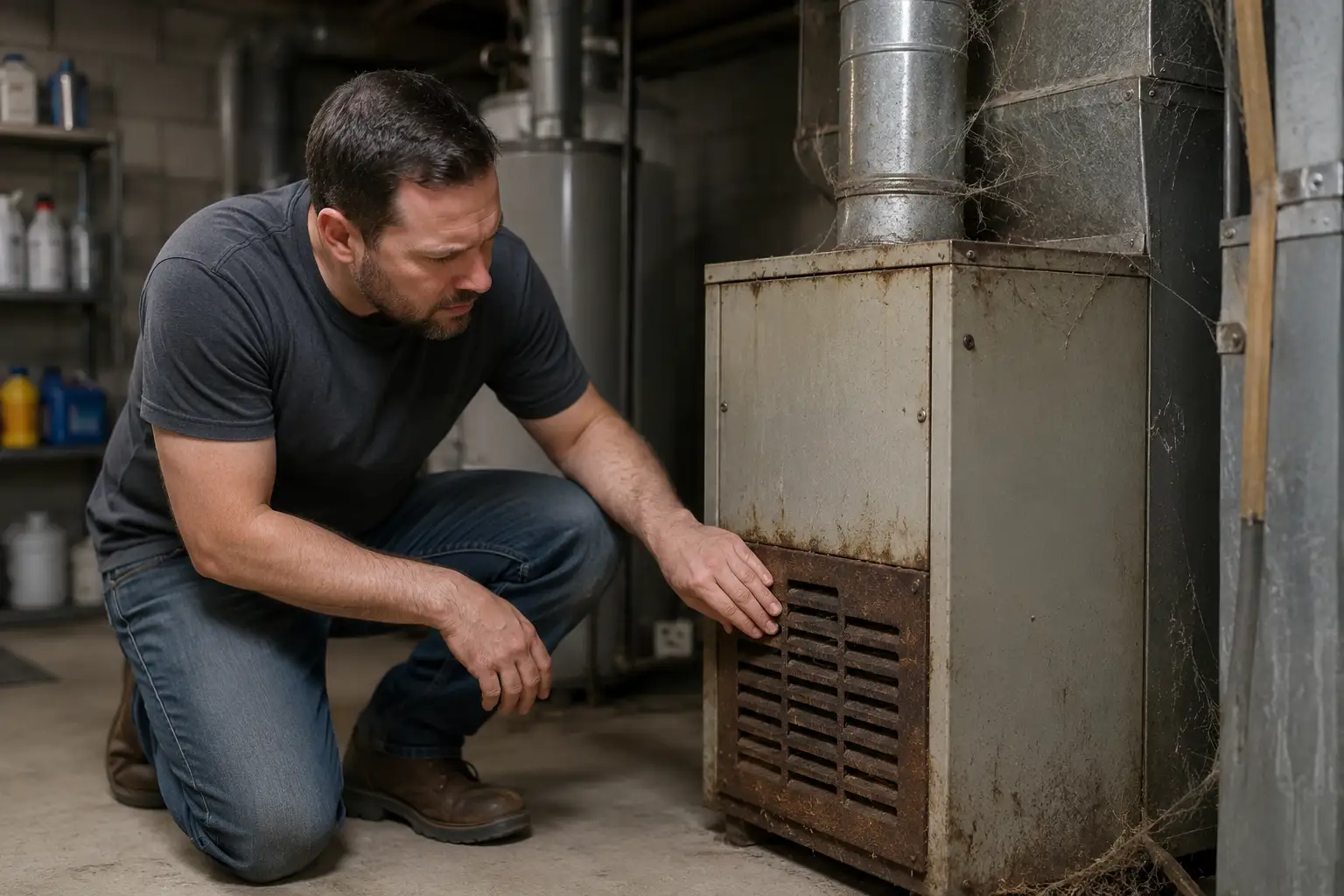
Your furnace doesn’t necessarily quit in an instant. It usually has warnings ahead of time.
The Need for Repairs Increases
One repair usually doesn’t signify the end of a furnaces lifespan. Frequent service calls, on the other hand, may indicate several parts are beginning to deteriorate and be serviced simultaneously.
Rising Energy Costs
Even if your home heating needs have remained the same, continued rising energy bills might reveal that an old or failing furnace is starting to be less efficient and increasing overall cost.
Inconsistent Heating
Cold rooms, uneven temperature variations and difficulty staying at temperature may reveal airflow and or heating issues.
Unusual Sounds
Banging, rattling, squeaking, grinding, and squealing sounds can’t be ignored as they could be mechanical, so service is recommended to identify potential problems.
Excessive Cycling
The issue with a frequent-cycling furnace could range from airflow problems, thermostat issues, sizing of the furnace/house, to mechanical issues which need to be checked out by a professional.
Weak Airflow
Little to no airflow from vents to any vents will likely leave your home uncomfortably cool and could be related to a clogged filter, ductwork/airflow issue, blower problem or some other HVAC problem.
What Can Shorten a Furnace’s Lifespan?
Factors That can shorten the lifespan of a furnace.
Things that may make an otherwise healthy furnace break down prior to the estimated lifespan includes:
Poor Maintenance
Routine maintenance can save money and the furnace. If your routine heating check-ups have been neglected. Little issues will develop into bigger problems for heating system failures.
Dirty Filters
Furnace filter maintenance is very vital because they become very clogged which causes airflow restriction. That causes your heating unit system to stress more and then it causes issues, for that reason be scheduled when the guide specifies to change out the filter.
Improper Installation
If Your Home heating system was improperly installed. As the furnace gets older because of wrong installation it causes the unit extra-pressure.
Oversized or Undersized Equipment
An oversize or under size thermal device.
If the furnace sizing is wrong for your house heating desires then it makes your heating device work more as a result of improper sizing.
Heavy Usage
Intensive utilization of your furnace in addition if it gets really cold where your house or apartment you may need to use your furnace for much longer durations throughout the heating period.
How to Make Your Furnace Last Longer

If you want to increase the average life of a furnace, maintenance will help.
Replace the Air Filter
Inspect your filter often and change it according to instructions. Use more frequently in the home with pets, allergies or if the house seems more dusty.
Schedule Professional Maintenance
HVAC maintenance once a year will head off worn parts and performance issues.
Keep Vents Clear
A perfectly maintained, functional thermostat can control the house temperature setting and enable you to optimize the work performed by your heating system. It ensures your house is properly conditioned for meeting the heating requirements.
Pay Attention to Warning Signs
Always notice these warning signs such as noises from a heating system , smells , poor air flow or the device starts running too many times on its own as doing so at an early stage may help reduce the eventual repair costs significantly.
Keep Your Thermostat Properly Maintained
While managing a home’s heating and air, it’s crucial that all supply or return vents be kept free of obstructions such as rugs, pieces of furniture, window curtains or any other objects obstructing airflow.
Repair or Replace an Aging Furnace?
Homeowners with an older furnace that develops problems will need to consider whether to have it repaired or replaced.
Repair might be a viable option if:
- The furnace is relatively new
- The problem is minor
- Repairs are cost-effective
- The system is operating efficiently
- It has a well-maintained history
Consider replacement if:
- The furnace is approaching or exceeding its lifespan
- There are frequent repairs
- Major components have failed
- Energy costs are escalating
- It is no longer efficiently heating your home
- The repair costs become cost-prohibitive
Have an experienced HVAC technician assess your system and weigh repair costs against possible long-term replacement benefits.
Read more How to Reset Furnace
Does Furnace Maintenance Really Matter?
You Bet! It’s so much more than the life span of your equipment that your furnace maintenance impacts.
Having your unit professionally serviced may even help to ensure:
- Reliable heating
- System peak performance
- Comfortable room temperature
- Airflow
- Detect potential malfunctions
Safe operation You will also have a more accurate report on your furnace and if it may soon need to be serviced or replaced.
When Should You Replace Your Furnace?
There is no magic number of years that applies to every house. If your furnace is around the age of 15 or 20 and has been failing more and more, then you have to make it time to consider replacing it . You should not let your furnace give its life when it is the coldest part of the year and you would have only yourself to be sorry and then consider purchasing a completely new furnace in a rush, knowing that it is an urgent situation.
Planning to replace a furnace gives you additional time to do some comparisons, consider installation prices, and figure out the perfect heater as part of your house as.
An heating & cooling contractor can do the work to ascertain the status of the existing heating and then tell you a furnace would be the cost efficient and simplest possible way or, as per the circumstances of your existing heating system, the most useful would either be the maintenance work or repair service instead of the heater installment.
Professional Furnace Services From 75 Degree AC
At 75 Degree AC, we know the importance of trustworthy heating in your home. If you have an old furnace, inconsistent heating, or are in need of maintenance, the expertise of a licensed HVAC technician will help you figure out what to do next.
Our technicians can help homeowners assess your furnace’s performance, detect problems, and look at your heating options.
If you are not sure how long your furnace is supposed to last or if your current system needs to be replaced, getting an assessment by professionals can give you a better idea.
Final Thoughts
With that said, how long does a furnace last? For most home systems, expect to get between 15 to 20 years out of your furnace, but performance varies.
There are several things that influence the average furnace lifespan: installation, maintenance, operating conditions, usage, and equipment quality. While it helps to know how many years a furnace lasts, its current condition is much more important than its age.
If you have an old furnace, do not simply assume it needs to be replaced. Have your system inspected by a professional to determine if repairs and maintenance will suffice or if a new furnace is necessary.
If you need professional HVAC service, contact 75 Degree AC to consult with your furnace condition and heating needs.
FAQs
How long does a furnace typically last?
Most residential furnaces last between 15 and 20 years with proper installation and regular maintenance.
Can a furnace last longer than 20 years?
Yes, a well-maintained furnace can sometimes exceed 20 years, though performance and efficiency should guide replacement decisions more than age alone.
What shortens a furnace’s lifespan?
Poor maintenance, dirty filters, improper installation, incorrect sizing, and heavy usage during extreme weather can all shorten a furnace’s life.
What are the signs my furnace needs replacing?
Frequent repairs, rising energy bills, inconsistent heating, unusual noises, and repeated ignition problems are common warning signs.
Should I repair or replace an aging furnace?
If the furnace is relatively new, the issue is minor, and repairs are cost-effective, repair makes sense. If it’s near or past its expected lifespan with frequent breakdowns, replacement is usually the better long-term value.
How can I extend my furnace’s lifespan?
Replace air filters regularly, schedule annual professional maintenance, keep vents unobstructed, and address warning signs early.

