
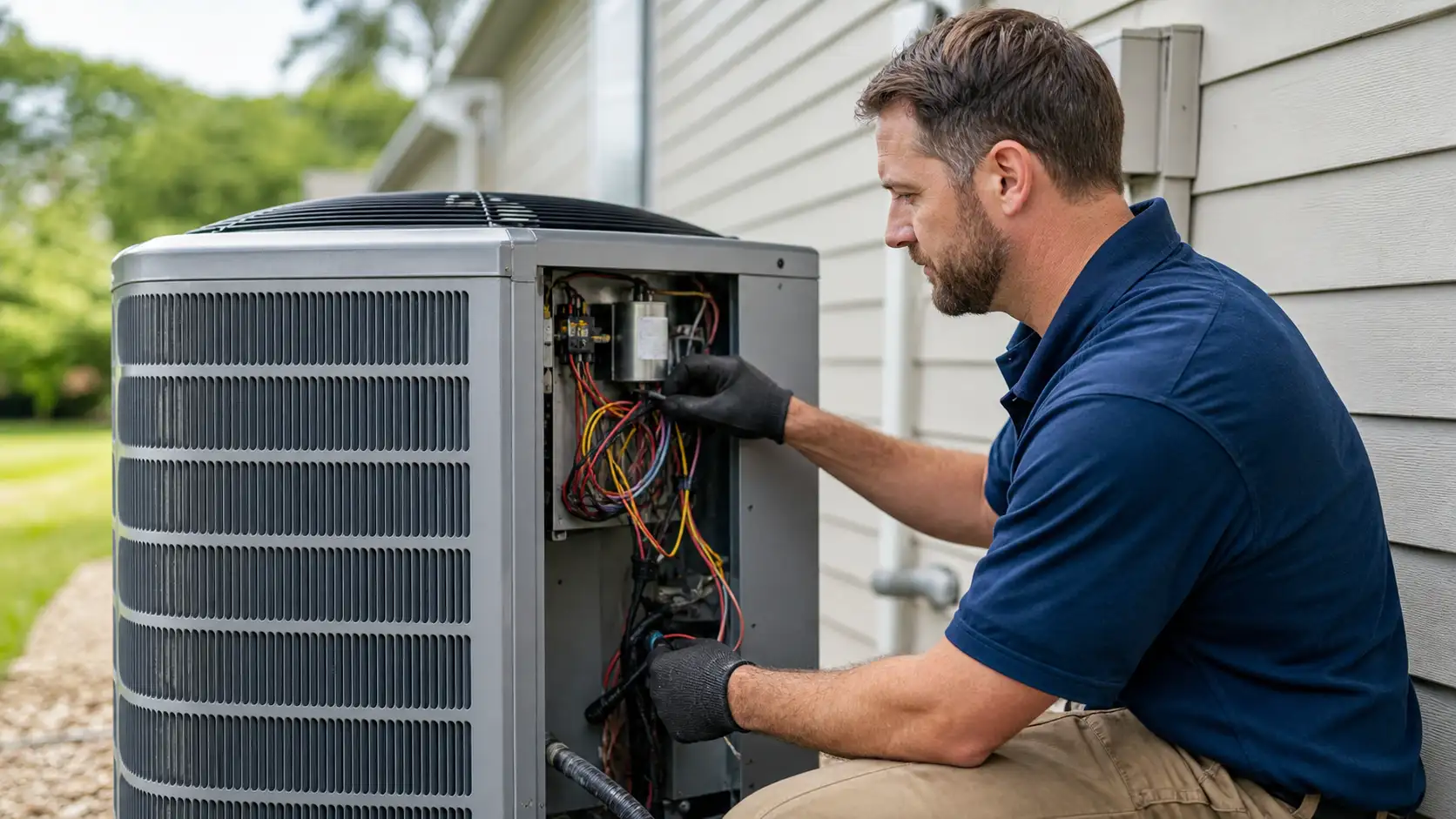
When the air conditioner starts leaving our rooms feeling warm, the word “compressor” immediately pops into every homeowner’s head. After all, a failing compressor will directly impact the overall performance and function of the cooling system, given its importance. This is why most of our clients are asking us: is it possible to fix a broken AC compressor, or would you have to replace a faulty one instead?
In short, it’s a situation-specific response. Some compressor issues can be mended on the go, but sometimes, internal system damage simply makes it financially smarter to get a new part. What every client needs to know here: AC compressor functions, common signs of problems, and the way you’d know about the issue.
No matter if you’re a homeowner or a commercial building administrator needing help to understand what went wrong with the compressor in the first place and the smartest solution you could go for, there will always be the 75 Degree AC team of certified technicians ready to back you up.
What Does an AC Compressor Do?
This is often referred to as the heart of a heating/air conditioning system. The fundamental purpose of this unit is to squeeze and circulate refrigerant back and forth between your outdoor condenser unit and indoor handler. By doing so, it’s able to extract excess heat from within your home and radiate it out of your home into the atmosphere.
If the AC compressor isn’t working correctly, the coolant can’t flow throughout the AC system. This could be contributing to the unit emitting warm air or being less effective and not able to adequately maintain your set temperature. Don’t ignore symptoms of AC compressor problems, as they’ll typically warrant careful investigation.
Don’t always assume that a compressor is going to suddenly die. More often than not, AC compressor problems can show up over time due to faulty electrical issues, refrigerant concerns, overuse, lack of maintenance, or internal wear. Knowing what is behind your AC compressor issues in advance can sometimes allow you to alleviate any extra stress that could put your whole system into danger.
Can an AC Compressor Be Repaired?
Could the AC compressor be repaired? The answer, in some cases, can be yes. Some external, related issues can be repaired without swapping out the compressor. For instance, if you experienced what looks like compressor failure because of electrical issues, the capacitor is damaged, the relay is failing, or loose wires or refrigerant may be problematic.
However, some damage that occurs internally to the compressor can present more of an issue. If key internal components have been damaged, or the compressor is physically broken beyond a certain point, it is usually best to go ahead and replace the unit rather than repair it.
An expert assessment will help determine the best course of action to proceed, as the cost to repair is high, and waiting to replace it if necessary would cause more damage to the air conditioner. The cost-effectiveness between repair and replacement is a major decision and can vary based on factors like the age of the air conditioner, the condition of the compressor, the extent of the damage, and the overall price.
Only a professional examination can determine if the problems are inside the compressor itself or external.
Problems That May Be Repairable
Low refrigerant is another performance killer, and it is often the result of another underlying issue. You can’t just throw more refrigerant into the system in hopes it fixes it; the problem must be pinpointed and resolved to avoid future problems and further wear on your compressor.
Airflow restriction (dirt or debris clogged coils) or a system that is running hot due to dirt/clogged fans, etc can overheat a compressor, causing the unit to shut down. Again, addressing the issue directly early on can save the life of the compressor.
Problems That May Require Replacement
Severe mechanical damage inside a compressor might not make repairing worthwhile. Pieces inside might be worn, broken, or dirty and difficult to fix, so the repair won’t last. Sometimes, replacing broken inner parts might run nearly as much as replacing the entire compressor unit.
Another risk is burnout. If a compressor motor fails, then small pieces and debris might spread throughout various parts of your HVAC system. Another part is that sometimes it takes further inspection and cleaning in different areas by an HVAC professional for the system in general after a compressor fails so that the failure does not happen again immediately afterward with another compressor replacement.
If the compressor needs replacing and there have also been many instances of problems with your air conditioner and your compressor is aging, then installing a newer system would possibly be a wiser, long-lasting decision than simply replacing a specific system that isn’t fully running, as a replacement compressor might not result in reliable performance.
Common Signs of a Bad AC Compressor

Understanding these warning signs may prompt homeowners to address minor issues to prevent more serious, extensive component damage. Although these may point toward compressor issues, other faults in your AC system could also create the same warning signs.
One common warning sign could be cool air blowing hot. Less significant cooling could also point to a need for AC repairs and maintenance. Inconsistent or prolonged cooling cycle times could be another indicator.
Warning signs for other issues could also be present when your AC system has problems, such as:
- Grinding, rattling, and clicking sounds
- Blows warm air instead of cold
- Frequently tripping circuit breakers
- Cooling reduced to an unacceptable performance rate
- Higher-than-average energy bills
- Outdoor unit vibrating/odd noise
- AC unit short-cycling
As mentioned earlier, none of the listed items should be considered a definite diagnosis. An AC system’s issues are for a trained technician to solve.
Why Is Your AC Compressor Not Turning On?
When the AC compressor refuses to start, especially in the heat of summer, it can be a very frustrating experience. But usually, the AC compressor itself is not actually to blame. Any of these different electrical or mechanical problems may cause the air conditioner’s outdoor unit not to come on.
The capacitor may be one such issue.
The air conditioner components can be affected by various malfunctions because of a lack of capacity to get the electrical energy, in addition to getting it to perform. But we should also consider possible issues in electrical wiring, such as a faulty contactor, a bad breaker, bad electrical outlets, wiring failures, etc.
Luckily, for all of these potential problems, the part is considerably cheaper to replace; for a lot of parts, you won’t need an air conditioning professional to carry it out. In this article, we look at various possible electrical/mechanical issues that can cause your air conditioner not to turn on or start.
Electrical Problems
It all seems evident, and yet many problems with an AC have been rooted not in the air conditioning machine itself but in electrical problems. Power sources can fail, or wiring issues can result in problems, in most cases, when it comes to starting or working normally for an appliance like an AC.
Many AC electrical malfunctions of that kind (connections that fail due to wiring malfunction or worn circuits) may end with problems for all their components to work, making your outdoor unit, in the case of an AC, not work as desired.
The safest choice for such problems would surely involve testing electrical circuit components with a professional and suitable tester, but even that must be done only by well-trained professionals.
Regular checks and examinations may help avoid such scenarios.
Thermostat and Control Issues
For this particular problem, we all rely on the thermostat to switch our machine on and control some basic functions to start performing its task. A faulty thermostat or the wrong temperature setting on our appliance may result in problems with our unit initiating AC operations.
Furthermore, issues on board controllers or a different sensor failing can result in similarly visible symptoms as if a component has failed. A comprehensive analysis of possible causes should, at first, focus not on excluding other reasons but on the issues mentioned so we can easily determine that it is indeed the case of AC components.
Understanding AC Compressor Repair Costs
The cost of AC compressor repair varies depending on the exact problem. Some faults, if it’s an electrical part or the capacitor, the repair will be much cheaper than replacing the compressor due to irreparable damage. Depending on the AC model and size, prices could be different.
Labor may also add to the total amount to be paid. Some jobs can take a longer time for diagnostics, for filling refrigerants, or for access to several parts of the HVAC. Other issues may also come up upon initial diagnosis.
If you want to know how much you can be expected to pay, seek an HVAC technician for a professional diagnosis and a thorough explanation of the necessary work that can be done. As a homeowner, one must know exactly whether the compressor has failed and whether, by repairing it, we won’t face repeated problems in the future.
| Factor | How It Can Affect Cost |
| Type of problem | Minor electrical issues may cost less than mechanical failures. |
| Compressor condition | Severe internal damage may require replacement. |
| System age | Older systems may need additional repairs. |
| AC size | Larger systems may use more expensive components. |
| Labor requirements | Complex repairs can increase labor costs. |
| Refrigerant issues | Leak repairs and refrigerant work can affect pricing. |
AC Compressor Replacement vs. Repair: Which Is Better?
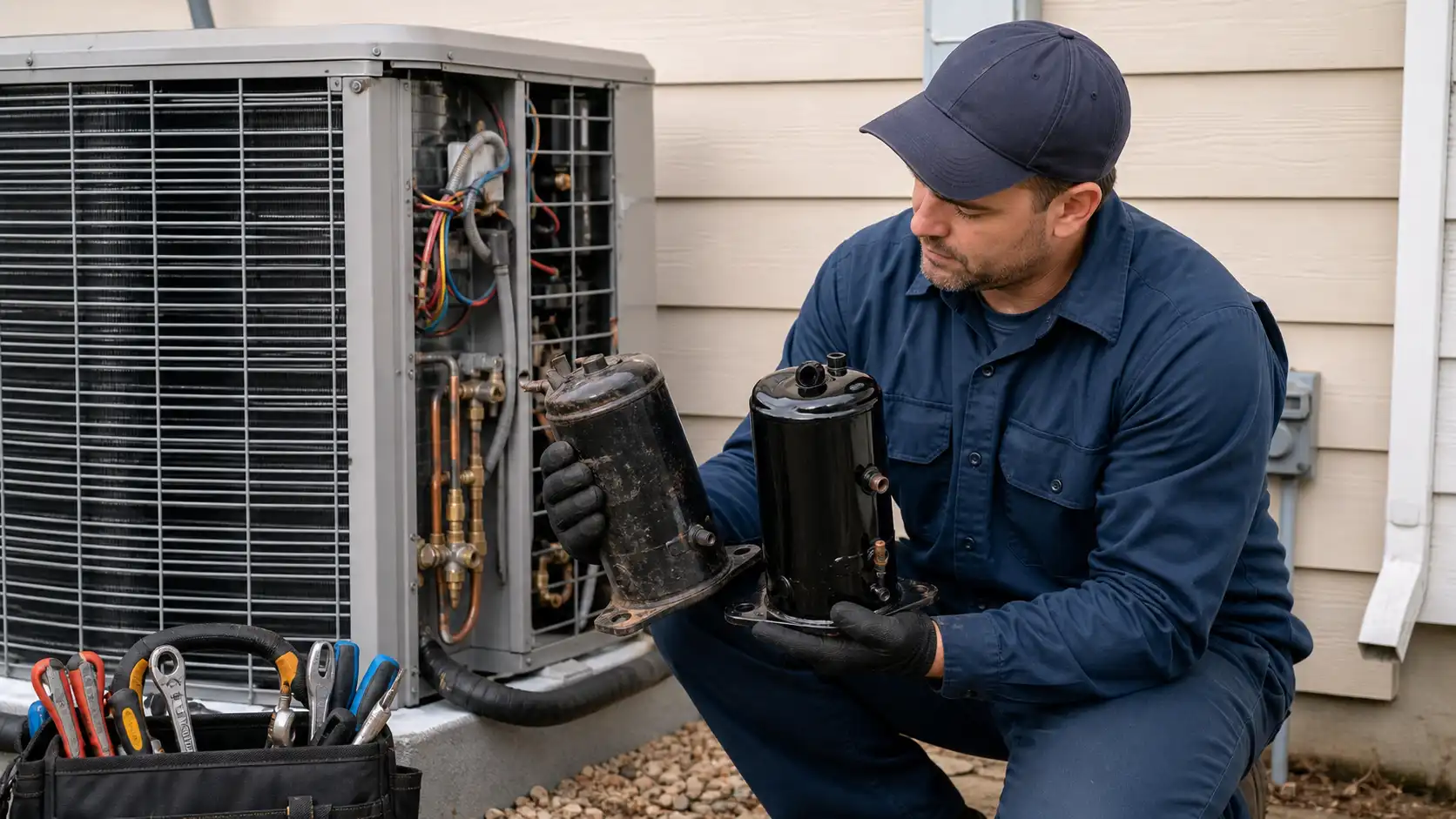
Deciding to replace or repair the AC compressor hinges on some important aspects of the issue. Repair is the appropriate choice when only an external component has gone bad, and the compressor itself is still working perfectly well.
Conversely, replacement makes sense for severely internally damaged, failing, or repeat compressors. Additionally, replacing the unit may make sense if the whole AC system is older with other problem components. Otherwise, putting more money into repeated repairs may not bring you long-term reliability.
The age and condition of the entire air conditioning system need to be considered. The HVAC professional you choose can make some judgments on how appropriate it is to spend a considerable amount more to replace only your compressor.
When Repairing May Be the Best Choice
If only a specific part other than the actual AC compressor has failed, repair is a legitimate option if the compressor itself is functioning correctly. If the problem is just with an external capacitor, contactor, relay, or electrical connection, repair may be appropriate.
Also, repair is reasonable when the AC system is otherwise new and performing well, as timely fixes may even extend the life of the compressor by preventing subsequent complications. Always know why your compressor failed and whether it is guaranteed to solve the issue and get you reliable performance afterward.
When Replacing the Unit May Be the Best Choice
Damage to the internal aspects of the compressor is typically a reason to replace it. Severe mechanical problems are very hard, unreliable, and sometimes too expensive to repair correctly; replacement would offer longer-term solutions.
Repeated AC compressor complications can point to issues within the overall system. Simply replacing the failed compressor will move the problem around without taking into account other contributing issues to the compressor breakdown.
A seasoned HVAC technician can inspect the entire AC system and can give you an honest perspective on which is the better choice, be it repair or replacement. At 75 Degree AC, we help you know and understand all of your options, be it repairing the existing system or replacing components.
How to Avoid Future Compressor Issues
While it may be impossible to avoid some compressor failures, a little maintenance can reduce additional wear on your A/C system. Whether it is blocked air filters, dirty coils, failing electrical components, or bad refrigerant, certain issues add excess strain to this key system.
Swap those A/C filters on a regular basis so that you aren’t impacting airflow. If you’ve got any yard art or you haven’t had a chance to clean your coils, consider this another incentive to keep anything interfering with your unit removed.
Why an Expert Diagnosis Is So Important
Compressor problems can also be somewhat harder to self-diagnose, as several air conditioner problems will generate the same effects. Any AC system exhibiting abnormal noise, poor cooling (even warm temperatures), and unusual output is not an automatic symptom of a faulty compressor.
A proper examination utilizing specific electrical, refrigerant, control, mechanical, and behavioral checks by technicians is in play during the assessment and would help pinpoint the area of the issue and avoid unnecessary part replacement costs and time.
Working with an honest HVAC team also affords you a better view of your current predicament and possible solutions, rather than trying to guess and remove the most expensive AC parts simply by correlating symptoms.
Final Thoughts
While it’s a big question, the answer depends on the nature of the problem and how bad it is. Some AC compressor problems are repairable.
Often, electrical problems or components can be fixed.
However, when it comes to deeper system- or engine-related damage to your air conditioner, the solution may involve a replacement. As always, we recommend you get a qualified technician to inspect before undertaking a pricey repair.
Assessing the current status of your AC’s compressor and the rest of your HVAC system can provide you with the confidence you need when making either a repair or replacement decision. Air conditioners that fail to cool, make strange noises, or aren’t starting up can be diagnosed at 75 Degree AC!
Frequently Asked Questions
How long does an AC compressor usually last?
Depending on proper maintenance, the service life can vary for each compressor. System operation, as well as the quality of installation and the surrounding environment, eventually affect the working life of the compressor. Regular maintenance can also minimize the additional stress to the system.
Should I replace the compressor or the entire AC system?
It varies according to the age and condition of the complete system, the cost of repair, and whether other major components are suffering too—a professional opinion is worth seeking.

