
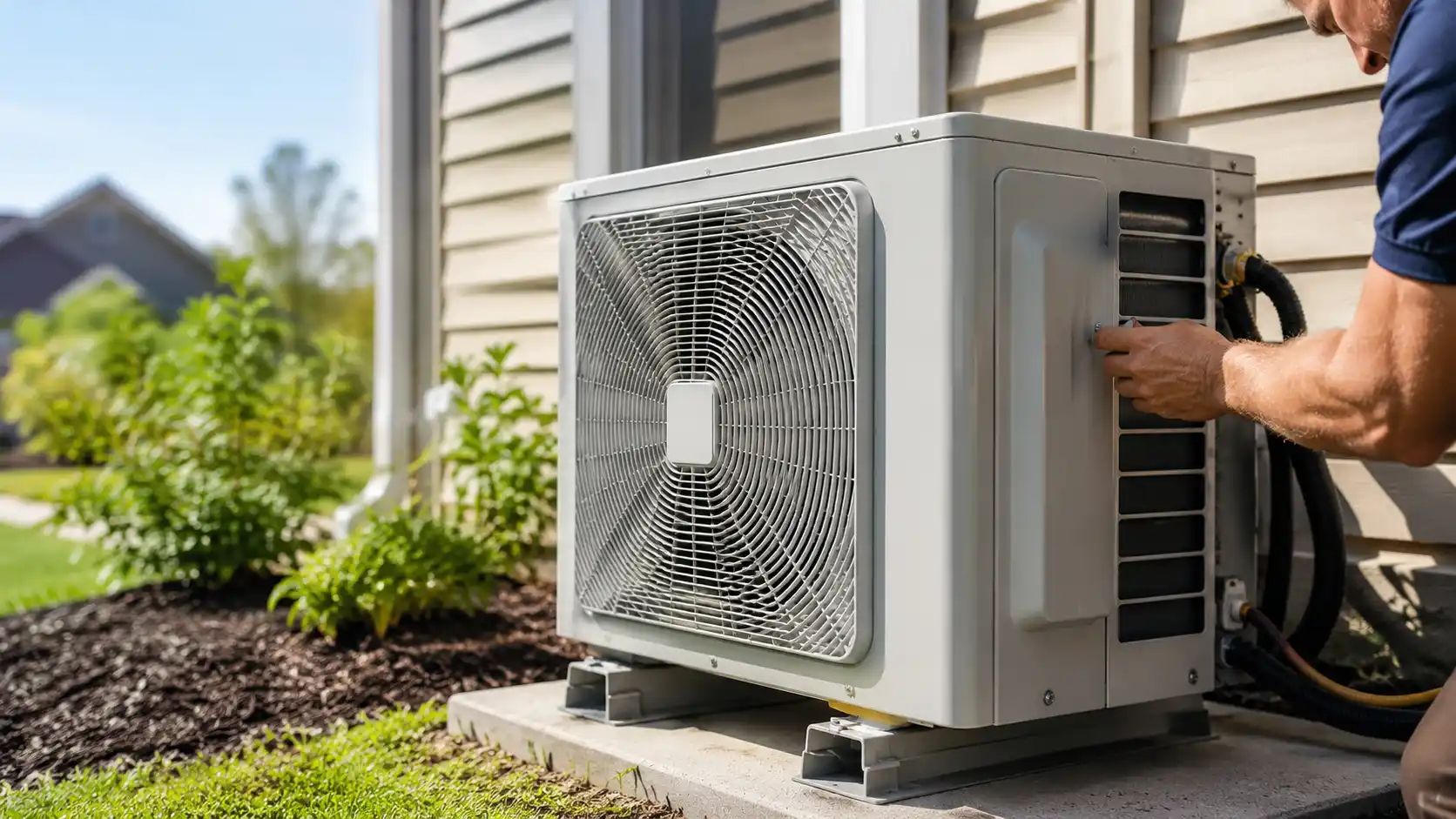
Heat pumps are receiving increased focus as an efficient means of electrification for space heating and cooling. They’re all wondering: How many watts does a heat pump use? What are the factors that determine heat pump energy usage? It’s a fairly big heat pump, and a not-small one can consume easily 5,000 watts or more, but that all depends on how big it is, so these things aren’t exactly tiny.
When you start to think about watts and amps and how much power you have to start to power up things, the energy cost of running those things, that gets you a little bit of a feel for the power usage in your house.
Quick Answer
Heat pump energy consumption is a very output-dependent figure, as a heat pump’s energy usage is very much dependent on what you purchase and how efficient the unit is. When running, a compact heat pump for a small home could use as little as 1,500 watts, or as much as 2,500 watts. A whole-house gas-electric heat pump system is probably in the range of around 3,000 to 5,000 watts or more for a central one.
Suppose the heat pump is pulling 3000 watts when operating. Run time of 1 hour × 3=3kw of electricity used. The rule of thumb is:
Watts/1,000 = kilowatts.
As such:
- 3,000 watts ÷ 1,000 = 3 kW
Don’t expect heat pumps to run all-out all the time.
Read more What Size Heat Pump Do I Need
What Factors Affect Heat Pump Wattage?
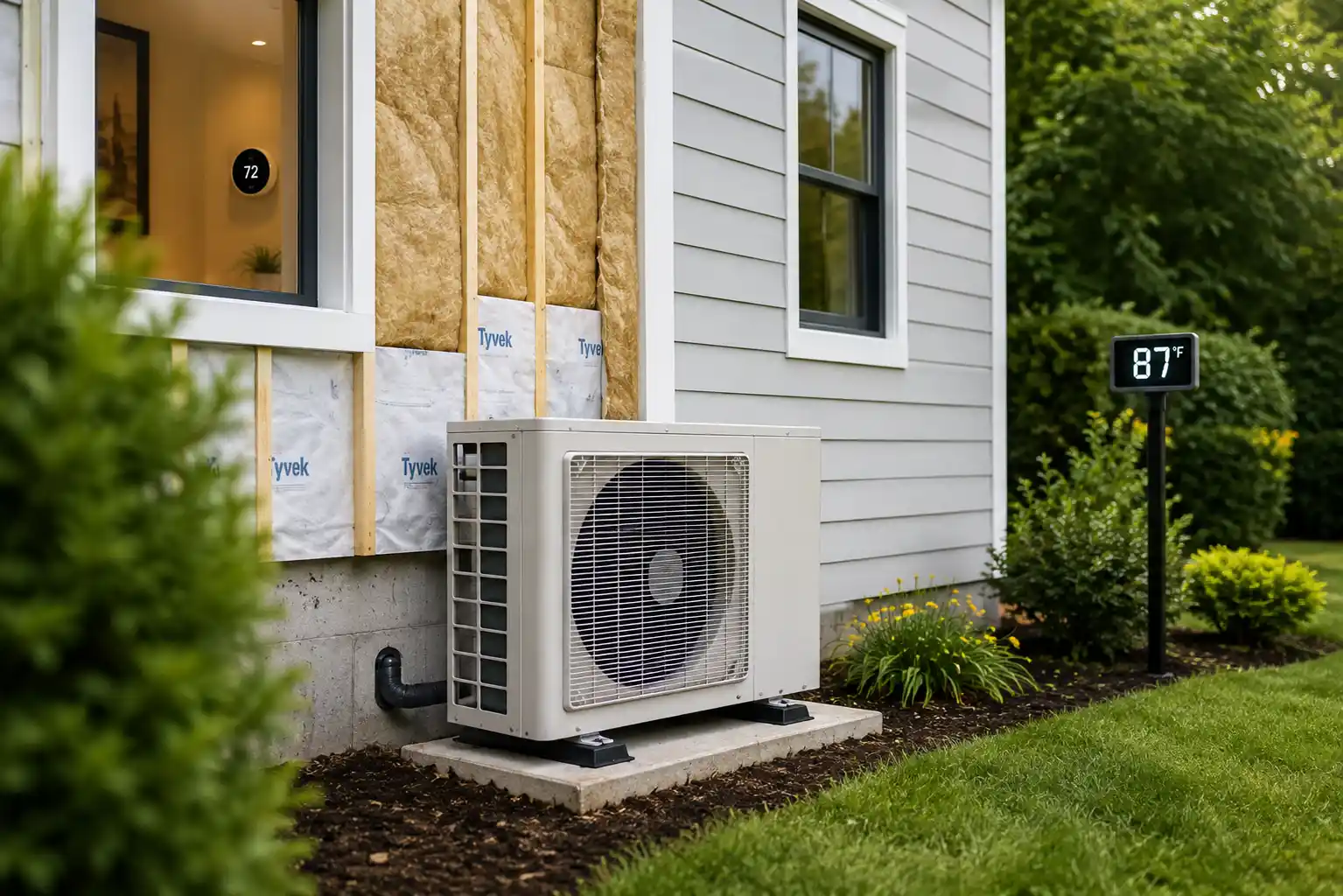
How much power a heat pump uses depends on a number of things, such as:
Heat Pump Size
On size: Large heat pumps generally require the most electrical power, compared to a small heat pump. The size should be dictated by the heating and cooling load of the house and not by an automatic selection of the largest unit available.
Efficiency
Energy-efficient heat pumps can deliver the same heating or cooling output as conventional heat pumps while consuming less electricity. Seasonal efficiency ratings can be used by homeowners to differentiate among systems.
Outdoor Temperature
Heat pumps can be more challenged in extremely cold weather as they work to draw heat from outside air that is very cold. That could increase electricity use.
Home Insulation
Better insulated houses need less heating and cooling. Heat pumps have to work harder and use more energy due to poor insulation, drafts from windows, and holes in the walls.
Thermostat Settings
Big changes in temperature can make the heat pump work longer. Moderate thermostat repair can help avoid wasting energy.
How Many Amps Does a Heat Pump Use?
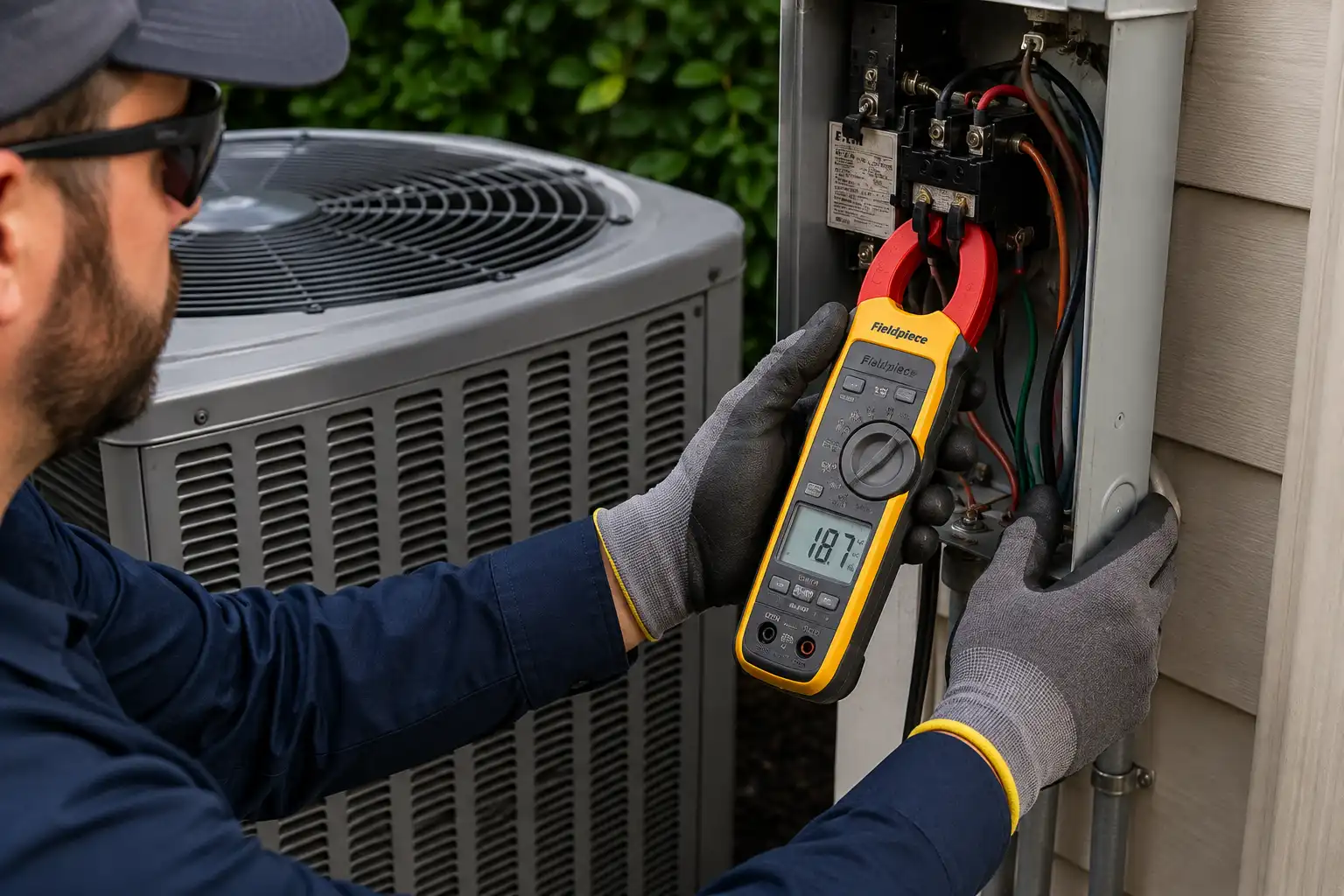
How many amps does a heat pump run on is a common question for a heat pump! Amperage is voltage x wattage of the system.
The typical calculation is:
- Amps = Watts / Volts
- For example, if a heat pump runs on 3,000 watts on 240 volts electrical supply:
- 3,000 ÷ 240 = 12.5 amps
So for the unit to draw 12.5amps on that count seems fair; how about it?
Nevertheless, the actual current may vary depending on the compressor, the fan motors, the operating conditions, and the electrical design. The best source of information on the electrical requirements for a particular unit is the manufacturer’s nameplate.
Heat Pump Running Wattage vs Starting Wattage
Heat pump starting and running wattage are, or should be, a part of your consideration when evaluating electrical requirements or those of a generator.
Running wattage is the amount of electricity that the heat pump uses when it is running, after the components have begun working. Startup power, also known as surge wattage, is a higher power usage and may be needed for a short time when the compressor starts up.
Heat pumps, for instance, typically draw 3,000 watts but can draw much more power during compressor startup. The actual starting requirement depends on the design of the equipment.
Although modern inverter-based heat pumps can operate somewhat differently by ramping up the compressor speed instead of just turning “on” at full speed, This is to be expected, as “soft start” of other (non-inverter) compressor systems with initial runs at lower capacities, or cycling (load matching) on seasonal stand down with full (or near full) Throughout is Some old-style systems have a day or two of “soft start” both on initial run-up and in they are being cycled. In this way, sudden power demand is flattened out over time compared to certain traditional systems.
If you are thinking about a generator or backup power, always consult the heat pump manufacturer electric specification; don’t try to guess the starting watts.
Read more How to Choose a Heating and Air Conditioning Contractor
Does a Furnace Use More Electricity Than a Heat Pump?
This varies between models of heat pumps and furnaces.
A gas furnace burns natural gas or another fuel for warmth, but it also requires electricity to power the blower, controls, and other components. Electric furnaces can also be heavy electricity users, as they are essentially electric resistance heating.
Well, does a furnace use more electricity than a heat pump? A heat pump can use one-quarter the electricity or less as an electric resistance furnace when it is moving heat rather than making all of the heat with electric resistance.
For a gas furnace, the comparison is apples-to-oranges because the energy for the furnace comes from the gas, not the electricity. Local prices for electricity and fuels, climate, equipment efficiency, and contracts will all have an impact on the total cost of heating.
Heat pumps also have the ability to cool, so one system could potentially serve both heating and cooling needs.
How Much to Run Heat Pump, Cost Hourly to Run a Heat Pump?
The energy consumed and local rates will affect how much it costs to run a heat pump per hour.
The formula is:
- Charge per hour = consumption (kWh) × price per kWh for electricity.
- Let’s say the heat pump uses 3kW to run and the cost of electricity is $0.15 per kWh.
- 3 kW × $0.15 = $0.45 per h
So that will be around 45 cents an hour to run at that output level.
If the system operated for 8 hours at that power level, here’s the cost estimate:
- 3 kW × 8 hours × $0.15 = $3.60
This is just a sample. Actual operating expenses may be much higher or lower based upon the local electricity costs, heat pump COPs (efficiency), outside temperatures, thermostat temperatures, and how often the system is used.
How to Calculate Your Heat Pump’s Electricity Use?
You can work out electricity usage from the wattage of the device.
Say your heat pump runs at 2,500 watts (2.5 kilowatts):
- 2,500 ÷ 1,000 = 2.5 kW
- It is used for 5 hours:
- 2.5 kW × 5 heures = 12.5 kWh
- If electricity is, say, $0.20 per kWh:
- 12.5 × 0,20 $ = 2,50 $ US
That’s just estimating 25 cents per kw-hr over 5 hours of usage.
Just remember — that’s assuming the heat pump kicks on and pumps 2,500 watts for the whole five hours.
A variable-speed heat pump uses a different amount of power at different rates.
Final Thoughts
How many watts does a heat pump use? Although a standard air conditioning unit for a home can consume anywhere between 1,500 and 5,000 watts when in use, power usage varies widely from model to model.
You can estimate the cost to run your household by using these wattage, starting power consumption, current, and electricity rates. Several things determine a heat pump’s energy consumption – its size and efficiency, outdoor temperature, the insulation capacity of your home, your thermostat settings, and how long you run it.
For a more precise estimate, consult the rated electrical specifications of your heat service and calculate its consumption according to your real electricity rate. If you’re purchasing a new system, 75 Degree AC can also assist you in finding the size and efficiency best suited to your home.
FAQs
How many watts does a heat pump take?
A domestic mini-split or heat pump will consume about 1500 to 5,000 watts during operation. The real power consumption varies with operating conditions, size, outdoor temperature, efficiency of heat pump.
What is the amp drawn on a heat pump?
Both the wattage and voltage of the heat pump determine the current. Running a 3,000-watt, 240-volt heat pump at those rates would likewise pull approximately 12.5 amps. Verify the precise electrical requirements with the manufacturer.
What’s the difference between heat pump running wattage vs starting wattage?
The power that the heat pump usually requires to operate at its normal level is the running wattage. Starting wattage (also called surge wattage) is the increased load a compressor sometimes puts on the system’s electrical supply when it initially starts running. Starting demand may be greater than steady-state consumption.
Does a heat pump consume more power than a furnace?
It depends on the type of furnace. In many cases, a heat pump will consume less power to provide the same amount of heat as an electric resistance furnace. A gas furnace runs primarily on natural gas, so the electricity usage is not comparable to the total energy use of the heat pump.